How to change a watch strap, and get the fit right.
A new strap changes the character of a watch in minutes, no watchmaker required. Here is how the spring bar mechanism actually works, how to measure the width you need, and how to spot a genuinely good leather strap from one that will let you down in a few months.
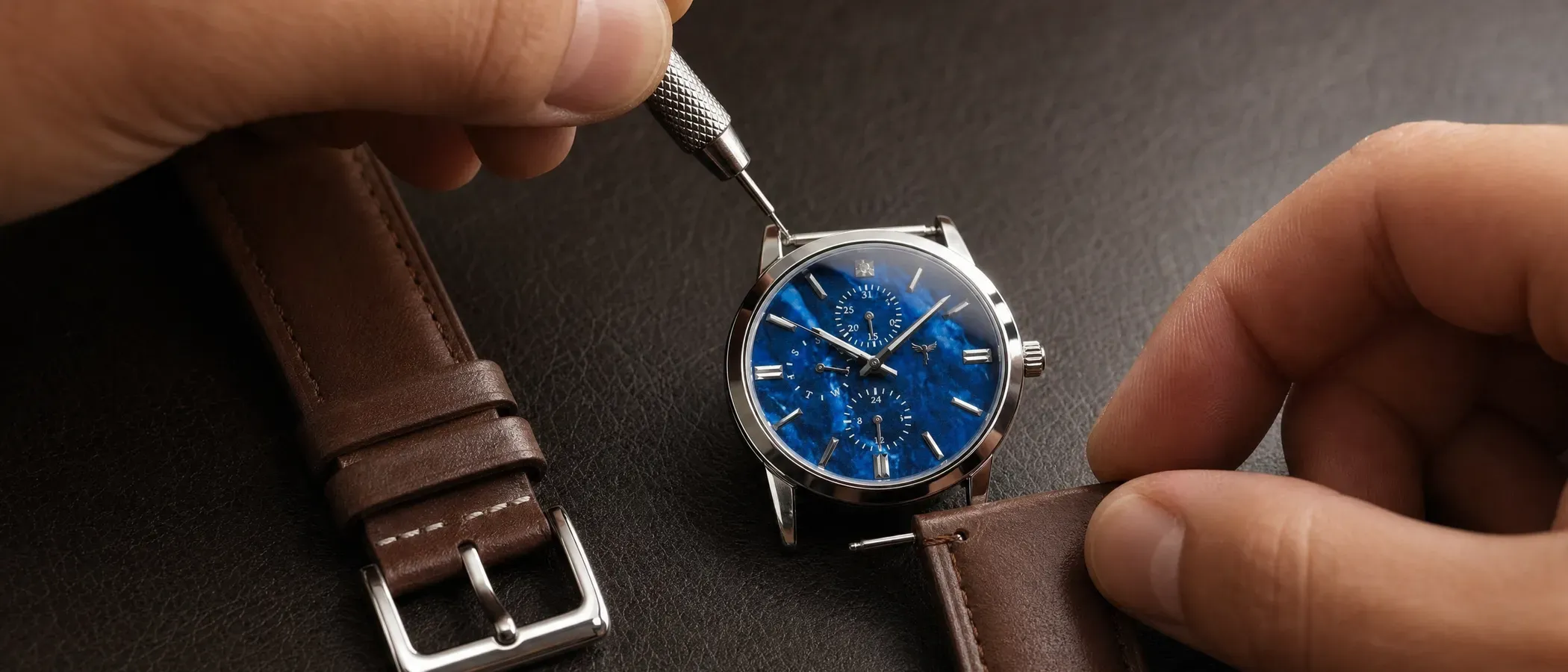
Most watch straps sit on a spring bar, and a spring bar tool has it off in under five minutes. The number that matters is lug width, the gap between the lugs, usually 16 to 24mm and most often 18, 20 or 22mm. A good leather strap shows full-grain leather, a clean stitch, a lined interior and finished edges. Leather's real limit is sweat, which wears it out over months rather than years, which is exactly why a metal bracelet exists for anyone who'd rather not think about it.
Changing the strap: five minutes, one tool.
On the large majority of watches, the strap is held by a spring bar, a thin spring-loaded pin that spans the gap between the two lugs. Learn to recognize it and the rest is routine.
| Step | What to do |
|---|---|
| 1. Set up | Lay the watch face-down on a soft cloth, with the lug you're working on facing you |
| 2. Release the bar | Slot the tool's fork between the strap and the lug, and press to compress the spring bar until one end pops free of its hole |
| 3. Remove the old strap | Lift it away now that the bar is disengaged |
| 4. Fit the new one | Slide the new strap's spring bar into place: compress one end into its hole, then guide the other end into place on the opposite lug. On most watches, the buckle half sits at 12 o'clock and the half with the holes at 6 o'clock, so the tail tucks away toward the wrist |
| 5. Check it | Give the strap a firm tug. If the bar is properly seated, it won't budge. Repeat on the other side |
Many modern straps skip the tool entirely with a quick-release mechanism: a small lever on the underside of the spring bar that you pull toward the strap's center with a fingernail to release it, no tool at all. Check the underside of your current strap for that lever before you reach for a spring bar tool.
A NATO strap, or any other pass-through style, needs no spring bar removal at all, the spring bars stay exactly where they are. Instead, you thread the strap around them: feed the long end through the gap between the top spring bar and the case, pass it under the case back, and bring it out through the same kind of gap at the bottom spring bar. Fold the end back over itself and run it through the keeper loops to hold it in place. A two-layer NATO adds one extra pass, a second, shorter layer that threads under the case the same way and sits beneath the main strap. The one thing to check before buying a pass-through strap is the gap itself: if the space between a spring bar and the case is too narrow for the strap's thickness, it simply will not thread through.
The most common slip-up is the tool skidding off the spring bar and scratching the case. Work slowly, keep the watch on a soft surface, and consider a strip of painter's tape across the lugs for extra scratch protection. If a bar feels stuck rather than just stiff, stop and take it to a watchmaker rather than forcing it. Screw-in lugs, used on some sport watches, need a screwdriver bit instead of a spring bar tool entirely.
Getting the width right.
Before you order a replacement strap, you need one number: the lug width, the exact gap between the two lugs where the strap sits. Get this wrong by even a millimeter and the new strap simply won't fit.
Measure it in millimeters. A ruler gives you a rough figure, calipers get you an exact one, and often the easiest route is to check your current strap: many are stamped with their width on the inside.
| Width | Typically found on |
|---|---|
| 14 to 16mm | Slim women's watches and smaller cases |
| 18mm | Classic, more understated men's and unisex watches |
| 20mm | The most common width, standard on many men's watches |
| 22mm | Larger cases and sportier models |
| 24mm | Large, heavier watches |
One thing worth being clear on: lug width is set by the case, not by the size of your wrist. A slim wrist doesn't call for a narrower strap on its own, it simply narrows which case sizes will sit well. Strap length, separately, is adjusted through the buckle and hole row once the strap is on, which we cover further down.
What makes a leather strap good.
Not all leather straps are equal, and the gap between a strap that ages beautifully and one that peels apart in months is often smaller in price than you'd expect. Four things separate them.
| Feature | Good sign | Warning sign |
|---|---|---|
| Leather grade | Full-grain, with a natural, irregular surface | A perfectly repeating "grain" pressed onto bonded or split leather |
| Stitching | Even, secure stitches with no loose threads | Crooked stitches, fraying, or stitching that's missing entirely |
| Lining | A lined interior, more comfortable and more durable | An unlined, single layer that thins out and sweats through quickly |
| Edges | Cleanly finished or rolled edges | Edges that peel or discolor within weeks |
A quick, low-tech check: full-grain leather feels warm and slightly alive as you flex it, and it smells like leather rather than chemicals. Bonded or heavily coated material feels stiffer and more uniform. For a deeper dive into telling real leather from an imitation, our guide to types of leather covers the grades in full.
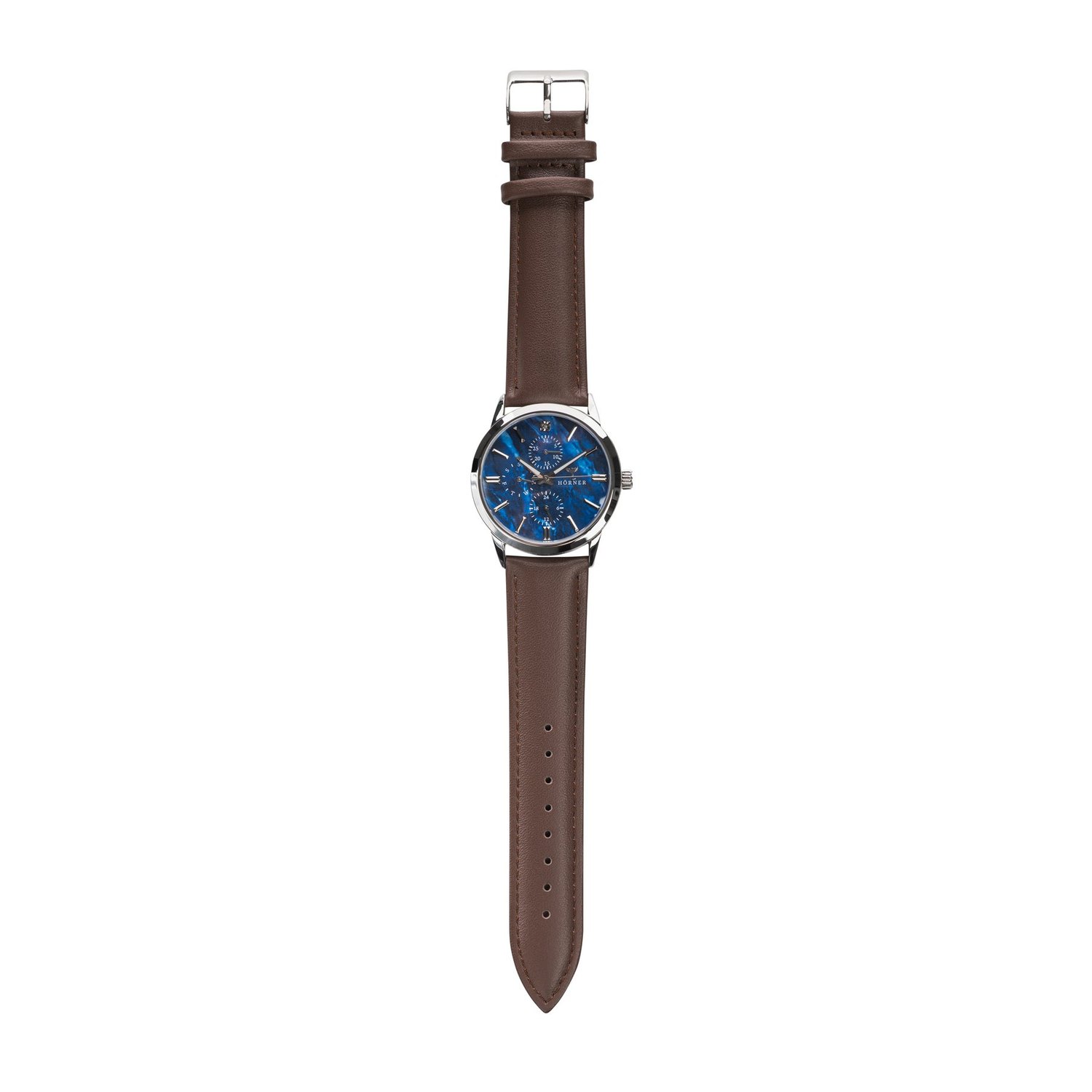
A well-made strap also tapers slightly toward the buckle, following the natural narrowing of the wrist. It costs more to cut than a straight strap and is a reliable sign of care, the same care behind the Italian leather strap on our Nova, which tapers from a wider lug width down toward the clasp.
Leather and sweat: the honest chapter.
Here's what most strap listings leave out: a leather strap is a wear item. It's one of the most attractive things you can put on a wrist, and also one of the least forgiving of what sits right underneath it.
A leather strap isn't built to last forever, it's built to be replaced before it looks bad. Knowing that in advance is more useful than being surprised by it later.Aus der Praxis · Andre Hörner
Sweat is mildly acidic, and over weeks and months it works into the leather, hardening and darkening the inner surface and, eventually, creating an odor. Heat and physical activity accelerate all of it. That's the practical reason a leather strap has no place at the gym or in a sauna, and why giving it a rest on especially hot days pays off.
How long a strap lasts depends heavily on the wearer. For daily use against skin, expect somewhere around six to twelve months before it's worth replacing. Worn in rotation, or simply on someone who sweats less, a strap can go a year or two and beyond. The honest way to think about it: a leather strap is a comparatively inexpensive, easily swapped component, not a part meant to outlive the watch.
Caring for a leather strap.
The same rule applies here as with any good leather item: less is more. The most common care mistake isn't neglect, it's overdoing it. Soaking a strap in conditioner or oil leaves it soft, dark and prone to picking up dirt rather than protecting it.
| Do | Don't |
|---|---|
| Wipe the inside occasionally with a dry or barely damp cloth | Soak it or hold it under running water |
| Let it air out for a day after a humid day | Dry it on a radiator or in direct sun, which hardens leather |
| Rotate between two straps if you sweat heavily | Load it up with conditioner "just in case" |
For the fuller version of this, including how care differs by leather type, see our dedicated guide on how to care for leather. For a strap specifically, the simplest version holds: keep it dry, let it rest, and let it age on its own terms.
Leather, steel, or rubber?
Sometimes the most honest answer to a worn-out leather strap is a different material entirely. Each has a place.
| Material | Strengths | Limits |
|---|---|---|
| Leather | Warm, light, dresses up an outfit, wide range of finishes | Sensitive to sweat, not water-friendly, a genuine wear item |
| Metal bracelet | Rugged, water-friendly, essentially maintenance-free | Heavier, cooler on the wrist, needs a tool to resize |
| Rubber / silicone | Fully water-resistant, sweat-proof, built for sport | A sportier look, less dressy for most occasions |
| Fabric (NATO) | Light, simple, washable, inexpensive | Adds some bulk under the case, casual by nature |
This also clears up a common mix-up around the word "shortening." A leather strap isn't cut down, you set its length through the buckle and hole row, with any extra length simply tucked through the keeper loops. A metal bracelet works differently, and usually in two separate steps.
Getting the bracelet off the case in the first place often means finding a second spring bar: on most bracelets, the end link next to the case is held on the same way any strap is, by a spring bar reached from the side, or through a small hole drilled into the lug on some watches. The fork end of a spring bar tool helps locate and press it. Go slowly and keep the tool steady, an end link that slips scratches the case and lugs easily.
Resizing the bracelet itself is the separate job that calls for a link tool or a jeweler: individual links come apart at pins or small screws, and many bracelets mark an arrow on the inside to show which way to push. Take out the same number of links from each side of the clasp so it stays centered on the wrist rather than drifting to one side. It's fiddly work with small parts that like to roll away, and a jeweler can usually do it in a few minutes if you'd rather hand it over.
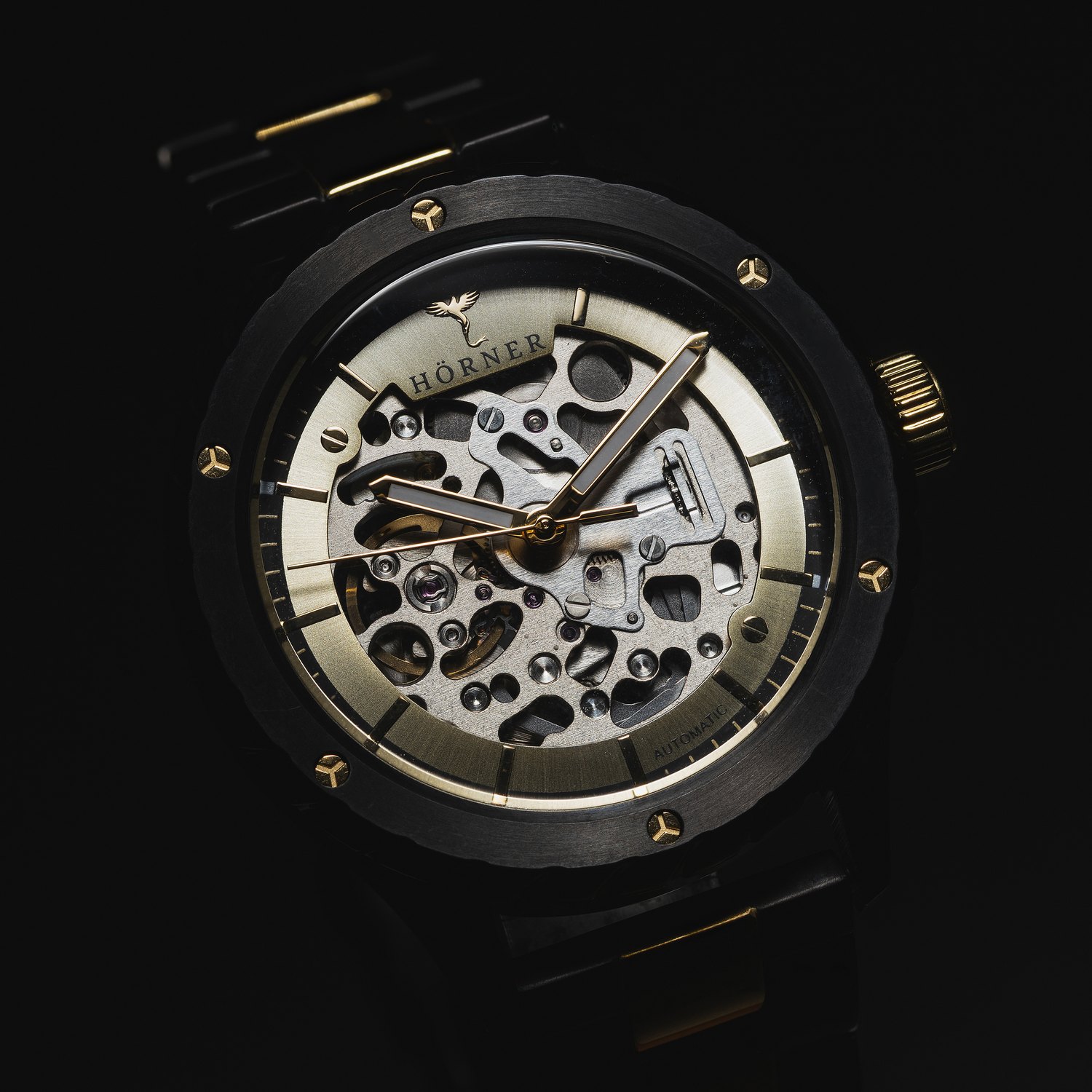
If sweat and water are the deciding factor for you, a steel bracelet sidesteps the whole question, which is exactly what the Pulsar's solid stainless-steel bracelet is built for.
Which strap for which watch.
Last, the enjoyable part: a new leather strap is one of the cheapest ways to change a watch's whole character, from the office to the weekend and back.
- Black reads formal and quiet. It suits dark dials and a suit, and is the safer choice whenever a watch needs to look businesslike.
- Cognac and brown feel warmer and more everyday. They sit well against both light and dark dials and move easily from jeans to a blazer.
- Lighter tones make more of a statement and want to be chosen deliberately, since they show wear sooner.
A useful rule of thumb: let the strap color roughly match your shoes, brown strap with brown shoes, black with black. More important than any rule, though, is that strap, watch and occasion feel of a piece. And the best part about leather: if it isn't working, it's a five-minute fix.
Curious what else separates a well-made watch from an average one? Our guides on automatic vs quartz and what a skeleton dial actually shows round out the rest of the buying decision. See every current model in the watch collection, each with a clearly stated strap or bracelet material.