How to care for leather, without overdoing it.
Most leather is not ruined by neglect. It is ruined by too much care: too much oil, too much balm, a hairdryer on a wet bag. Good leather care is mostly restraint and a little routine. Here is how to clean, condition and protect leather the right way, what to keep well away from it, and how a patina actually forms.
Leather care is three steps, in order, and none of them is needed often. Clean with a soft brush or dry cloth. Condition smooth leather with a thin layer of balm, only every six to twelve months. Protect with an impregnation spray. The cardinal rule is that over-care does more damage than too little: too much balm, household oils and heat are what actually wreck leather. Suede is cared for dry only, never fed. And a patina, the deepening and softening of good leather, is something to encourage, not prevent.
Clean, condition, protect.
All of leather care comes down to three steps in a fixed order: clean, then condition, then protect. The skill is not in doing more, it is in knowing how little is needed.
You clean to lift dirt before it grinds in, condition to keep the leather supple so it does not dry and crack, and protect to keep moisture and stains out. But not every piece needs all three every time, and most need far less attention than people give them.
That is the single most useful thing to know about leather: the most common way to damage it is to care for it too much. Too much balm, the wrong oil, drying it with heat. Get the restraint right and the rest is easy, which is what the rest of this guide is about.
Know your leather first.
Before any product touches it, work out what the leather is, because the right care for one kind is exactly the wrong care for another. There are two questions.
First, smooth leather or suede? Smooth leather, including nappa, has a sealed grain side facing out, feels smooth and is cleaned and occasionally fed. Suede and nubuck are worked to a velvety nap and are cared for dry only, never balmed or wetted. Getting this wrong, feeding suede, is one of the quickest ways to ruin a piece.
Second, among smooth leathers, how open is the surface? An open, aniline leather has no covering layer, so it feels natural and warm but soaks up water and stains and needs a gentle, sparing touch. A pigmented leather has a sealed surface, so it is tougher and lower-maintenance. A simple test on a hidden spot: a drop of water that slowly sinks in and darkens the leather means it is open-pored; a drop that beads and rolls off means it is sealed. The more open the surface, the more sparing your care. If you are unsure what grade you have, our guide to the types of leather walks through them.
The three-step routine.
Here is the routine in full. For most wallets, folders and bags you will only ever do the first step often, and the others rarely.
1. Clean. Brush or wipe off loose dust with a soft brush or microfiber cloth, working along the grain on smooth leather. If it needs more, put a little mild leather soap on the cloth, never straight onto the leather, and work small sections without soaking them, then wipe down and air-dry. 2. Condition. On smooth leather only, keep it supple with a leather balm, ideally wax or lanolin based. Use a pea to coin-sized amount, work it in thinly in small circles, let it absorb, then buff with a clean cloth. Better little and often than a lot, rarely: every six to twelve months is plenty, and about twice as often on high-wear spots like handles and corners. 3. Protect. An impregnation spray adds a barrier against moisture and dirt; on smooth leather it tops off a clean, on suede it is the main line of defense.
Over-care does more damage than too little. With leather, a little and often beats a lot and rarely.The one rule worth remembering
Two rules run through all of it. Always test a new product on a hidden spot first and wait a few minutes, since light leather reacts more than dark. And remember that suede breaks the routine entirely: brush it dry to lift the nap, use a suede eraser on marks, impregnate it for protection, and never put balm, oil or water near it.
What harms leather.
More leather is damaged by the wrong treatment than by honest wear. These are the things to keep away from it, in rough order of how often they do harm.
Over-care tops the list: too much balm, applied too often, saturates the fiber until the leather darkens unevenly and the surface turns dull or tacky. Heat is next: never dry wet leather with a hairdryer, on a radiator or in blazing sun, all of which pull moisture out too fast and leave the leather hard, shrunken and cracked. Let it air-dry slowly instead.
Then the things that should never touch leather at all. Household oils, olive, coconut, sunflower, turn rancid in the fiber and leave permanent blotches. Vaseline and petroleum products sit on the surface, darken it for good and block it from breathing. Sunscreen and perfumed lotions leave whitish films. And alcohol, solvents and universal cleaners, including alcohol wipes and nail-polish remover, dissolve the finish and the color.
Never put any of these on leather: kitchen oils (olive, coconut, sunflower), Vaseline or petroleum jelly, hand cream or sunscreen, alcohol or alcohol wipes, solvents like nail-polish remover, or a hairdryer or radiator to dry it. And never store leather sealed in a plastic bag: with no air it can grow mold. A breathable cloth bag, somewhere cool and dry, is all it needs.
Patina: what it is and how it forms.
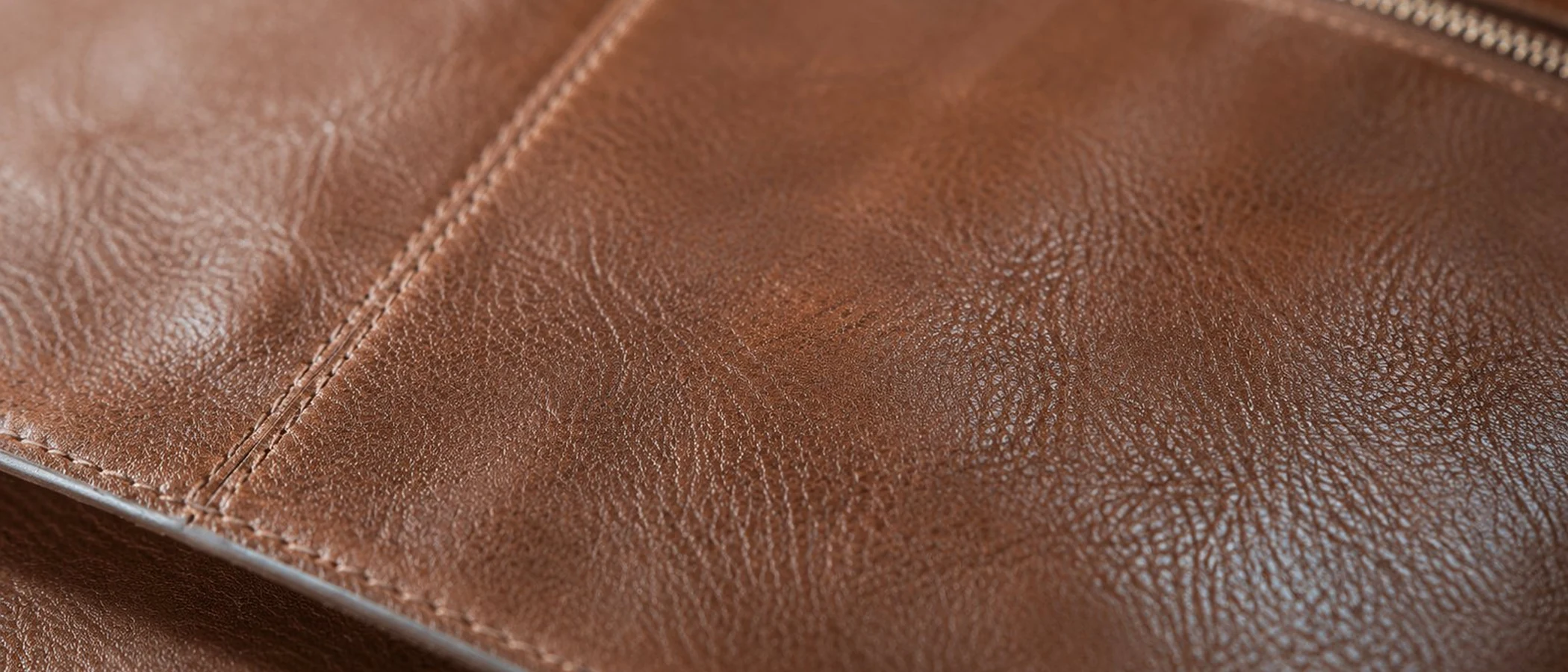
A patina is the natural change good leather develops with use, and on the right leather it is the whole point. It has three parts: the color deepens evenly, the surface gains a soft gloss, and gentle creases form where you handle it most.
It comes from three things happening at once. Skin oils transfer into the open pores at the points you touch, the grip, the corners, deepening the color there first. Friction at folds and edges compresses and smooths the fibers, so they catch the light differently. And light slowly oxidizes the natural tannins in vegetable-tanned leather, warming the base color over months, a light honey deepening toward amber. Because chrome-tanned leather lacks those tannins, it changes far less, which is why the best patinas come from vegetable-tanned, open-pored hides.
So patina is strongest on full-grain aniline, vegetable-tanned, pull-up and similar open leathers; moderate on semi-aniline; and barely there on pigmented, coated or patent leather, where the sealed surface blocks the reaction. A useful point that surprises people: caring for leather does not speed a patina up. Gentle, occasional conditioning simply keeps the wear even, so the patina develops smoothly rather than in dry patches. Over-conditioning actually suffocates it. The one way to truly avoid a patina is not care at all, but choosing a sealed leather in the first place.
Fixing water, grease and stains.
Most everyday accidents are manageable if you act calmly and resist the urge to scrub. A few work well, and one mostly does not.
Wet leather: blot it gently, never rub, and let it air-dry at room temperature away from any heat. Once it is fully dry, a thin touch of balm on smooth leather restores any lost suppleness. Grease stains: blot the excess, then cover the spot generously with an absorbent powder, cornstarch, talcum or baking powder, and leave it overnight to draw the grease out. Brush it off and repeat if needed. Do not put water on a grease stain, which only sets it deeper.
Water rings can often be softened by lightly dampening the whole panel and letting it dry evenly, so the hard edge of the ring disappears into the surrounding leather. Light scratches on smooth leather frequently buff out under a warm fingertip or a little balm, which redistributes the natural oils. Ink and ballpoint are the hard case: blot it fresh, but do not reach for hairspray or solvents, which damage the leather more than the ink. For a stubborn stain on fine or open-pored leather, a professional is wiser than a home experiment, because the wrong treatment usually costs more than the mark.
Caring for your Hörner leather.
We make leather goods, not care products, so this is genuinely the advice we would give whatever leather you owned. Match the care to the leather and keep it light.
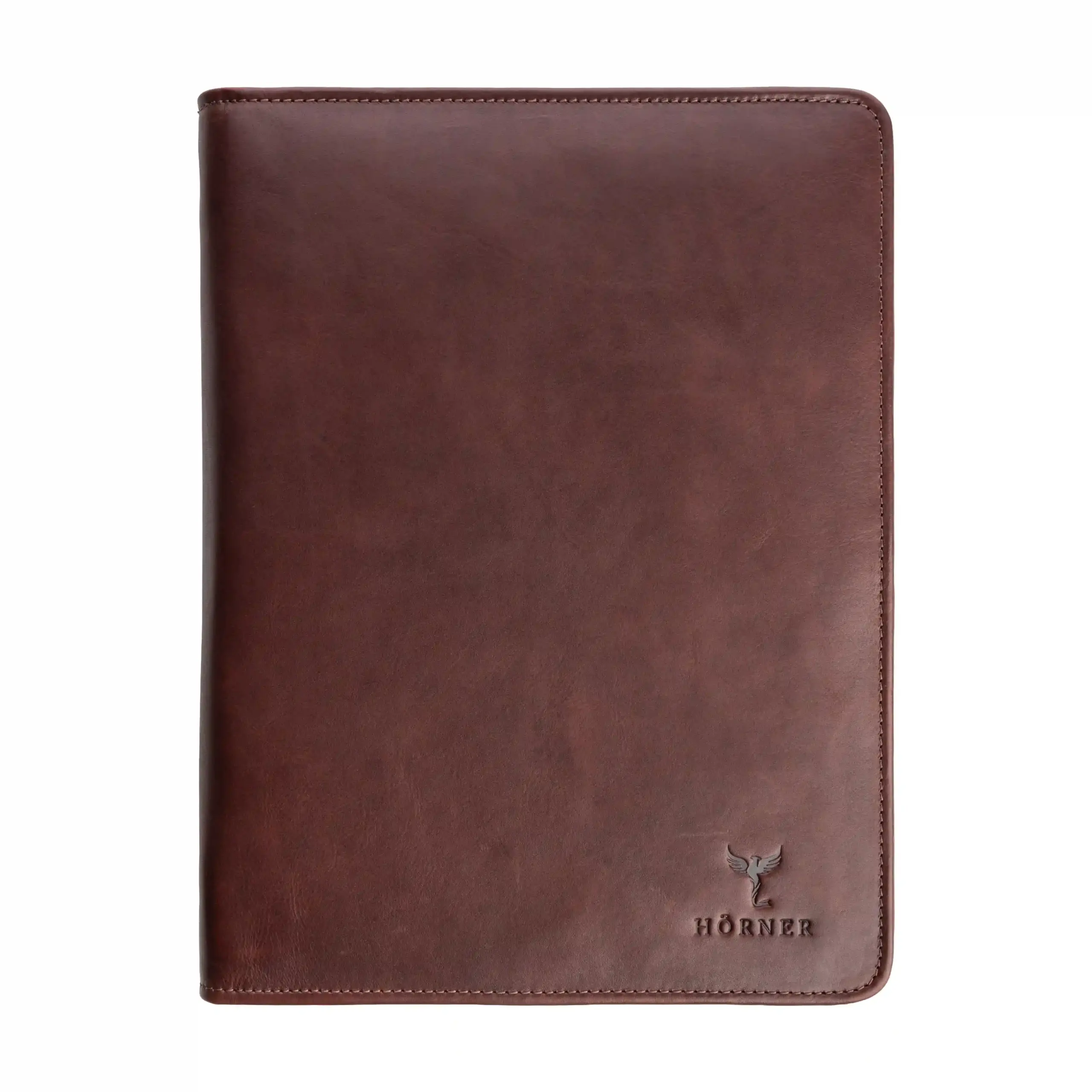
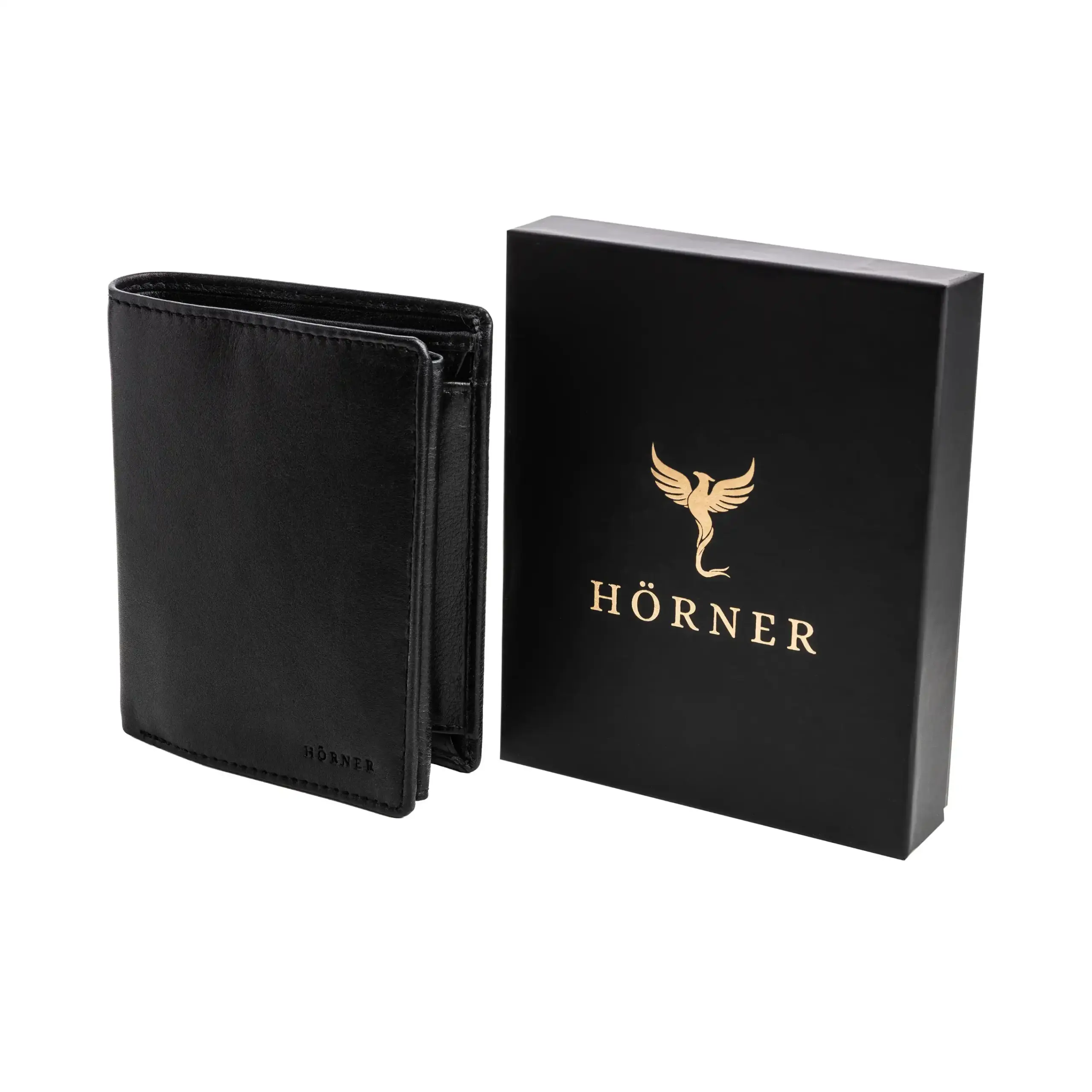
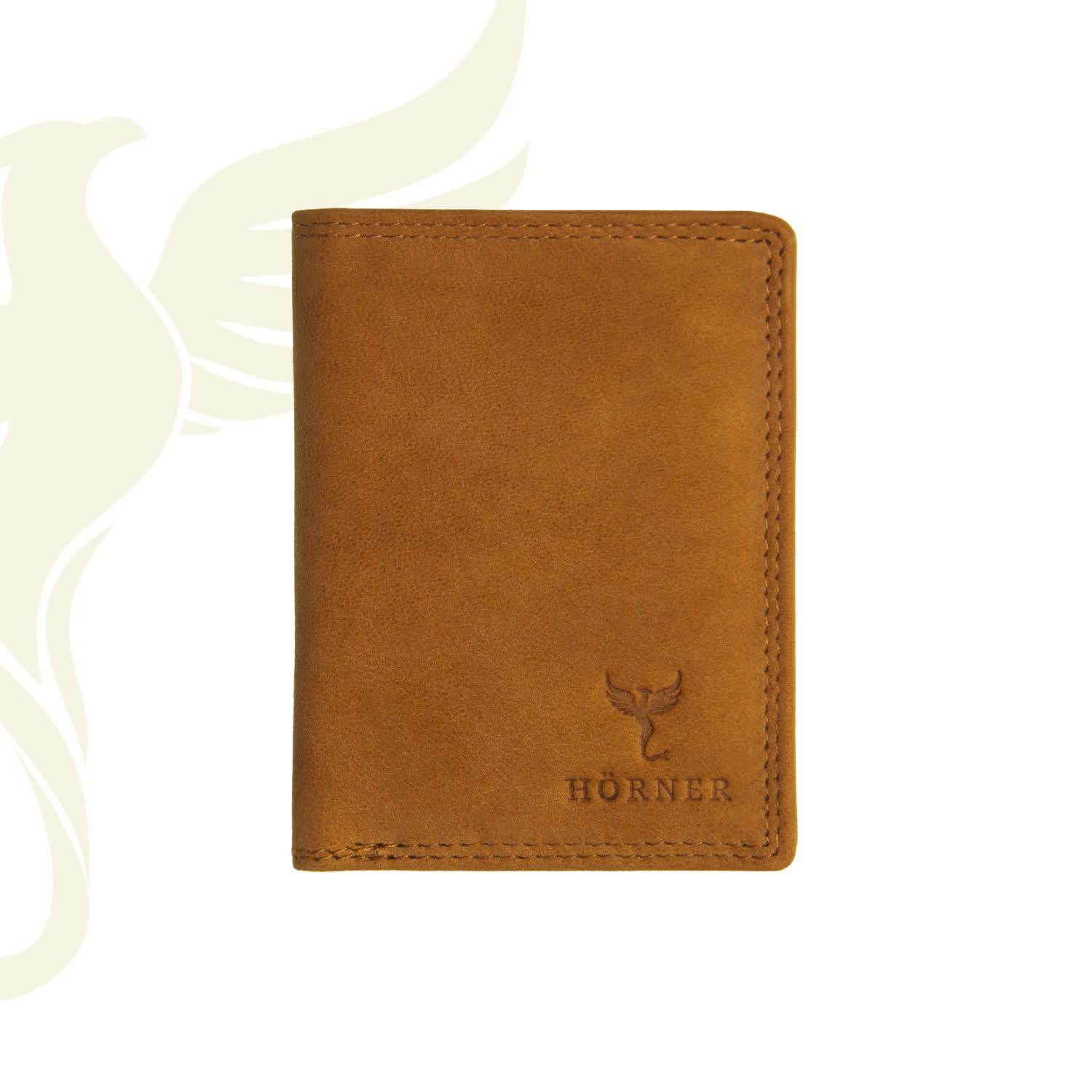
Our full-grain pieces, like the cognac Paris folder with its waxed pull-up finish, are the ones that earn a real patina: wipe them weekly, feed them sparingly once or twice a year, and let them deepen with use. The smooth nappa wallets are the easy-care end, a dry cloth and the occasional thin balm. The suede card holders want dry care only, a brush and an impregnation spray, never balm. Each product page names the leather it is made from, so you always know which routine applies.
If you want to understand the grades behind all this, our guides to the types of leather and to nappa leather go deeper, and the full leather collection is below. Everything ships from Germany with duties prepaid, built to be the kind of thing you care for once a year and keep for many.