Fountain pen or ballpoint: which pen for the way you write.
One writes with liquid ink through a nib; the other with oil paste through a tiny ball. That single difference decides everything: how the pen feels, how much it asks of you, whether the writing survives a splash, and how it feels to give. Here is the plain difference, and how to choose the one that fits your hand and your day.
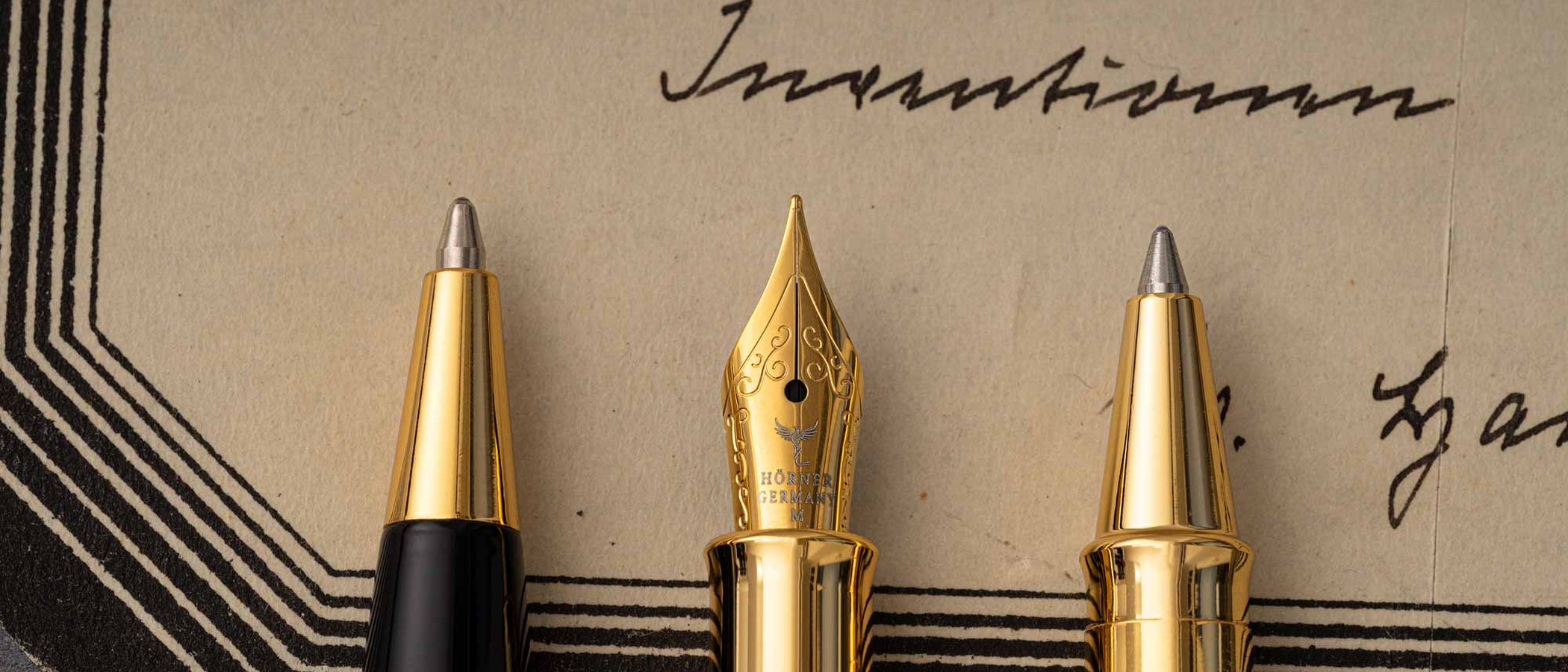
A fountain pen writes with water-based liquid ink drawn through a nib, so it glides with no pressure, varies the line and makes writing an experience, in exchange for a little upkeep and care on planes. A ballpoint writes with thick, oil-based paste through a rolling ball, so it dries instantly, resists water, needs no maintenance and travels anywhere, in exchange for a firmer, plainer line. Choose a fountain pen for the pleasure of writing and for gifts that mark an occasion; a ballpoint for rugged, do-anything reliability. Hörner makes both, in metal and in real wood.
Which to pick, and when.
Both are good pens; they simply reward different things. A fountain pen is the expressive, effortless one you notice while you write. A ballpoint is the rugged, dries-anywhere one you never have to think about. Neither is universally better, so work back from how and where you write.
Here is the whole comparison at a glance, then the rest of the guide takes each point in turn.
| Feature | Fountain pen | Ballpoint |
|---|---|---|
| Writing tip | Metal nib, capillary feed | Rolling ball, oil paste |
| Ink | Water-based liquid | Thick, oil-based paste |
| Writing feel | Glides, no pressure | Firmer, a little pressure |
| Line | Wet, expressive, variable width | Even and rather fine |
| Upkeep | Occasional rinse and refill | None but a new refill |
| Drying and water | Slower, ink can run | Instant, water-resistant |
| Travel | Carry full or empty, nib up | Goes anywhere, pressure-proof |
| Best for | Desk, letters, signatures, gifts | Travel, forms, everyday carry |
If you want writing to feel special and you write mostly at a desk, lean fountain pen. If you want a pen that just works in any condition with zero fuss, lean ballpoint. The sections below explain why.
Not sure which one you are holding? A fountain pen has an open metal nib with a slit and a breather hole, and it almost always caps (pull off or screw). A ballpoint has a tiny ball in a cone-shaped metal tip and usually clicks or twists out rather than capping. On paper, a fountain pen lays a wet, slightly shaded line that takes a moment to dry; a ballpoint lays an even, paste-like line that is dry the instant you lift the pen.
Nib and liquid ink, vs ball and paste.
Both pens leave ink on paper, but they get it there in opposite ways, and that is the root of every difference that follows.
The fountain pen writes through a metal nib. Water-based liquid ink travels from a cartridge, converter or piston down to the nib by capillary action, so the ink almost places itself on the page. You need no pressure at all, and because the nib can be ground fine or broad and even flexed a little, the line has width and character. That freedom is the whole appeal, and it is why our guide on what makes a good fountain pen spends so long on the nib.
The ballpoint writes through a tiny ball in the tip that rolls as you move it, picking up thick, oil-based paste from the refill behind it. The ball meters out only a little ink per stroke, which is why a ballpoint resists smudging, copes with poor paper and keeps writing for a very long time. The trade-off is feel: the paste needs a touch of pressure, so the line is even and rather fine, and the pen is firmer in the hand. The format was shaped to answer exactly this: the journalist Laszlo Biro patented his ballpoint in 1938, motivated by fountain pens that blotted and smeared, pairing a rolling ball with a paste that dries on contact. For the full origin story, see who invented the ballpoint pen.
So the fountain pen trades a little ruggedness for expression and ease; the ballpoint trades some smoothness for toughness and reach. If you also want to compare the softer, liquid-ink middle ground, our guide on what a rollerball pen is covers the third option.
Expressive, or effortless and sure.
This is where most people decide. It is not only how the writing looks, but how it feels to make it.
The fountain pen glides. Because the ink flows on its own, the nib needs only to touch the paper, so the hand stays relaxed over pages of writing and the line comes out wet, dark and alive, thinner or broader as you shift the pen. Nib widths run from extra-fine to broad, so you can tune that character to your hand; our guide on fountain pen nib sizes walks through the choice. For anyone who writes for pleasure, this is the pen.
The ballpoint is sure. It asks for a little pressure, so the feel is firmer and the line stays even and rather fine, clean even when you scribble fast or write standing up. For quick notes, forms and signatures on the move, that firmness is no drawback at all, and the pen never lets you down.
A fountain pen makes you want to write more. A ballpoint lets you write anywhere. Both are worth owning.On choosing · Hörner
A rollerball sits between the two: a rolling ball like a ballpoint, but fed with thin, water-based liquid ink for a softer, darker line closer to a fountain pen, without the nib to learn. If the fountain pen tempts you but the upkeep gives you pause, a rollerball is the natural halfway step. See our guide on rollerball vs fountain pen.
Which pen asks more of you.
The fountain pen's expressiveness comes with a little responsibility. The ballpoint's ruggedness comes with none. For many people this is the deciding line.
Upkeep. A fountain pen you use often needs an occasional rinse with clean water and a refill when the ink runs low, whether from a cartridge, a converter or a bottle. Leave one unused for weeks and the ink can dry in the feed, which a simple flush clears. A ballpoint needs nothing at all beyond a fresh refill when it runs dry. If you want a pen you can ignore for a month and pick straight back up, that is the ballpoint.
Drying and water. A ballpoint's paste sets on contact and is water-resistant, which is why it smudges less, suits left-handers better and belongs on documents meant to last. A fountain pen's water-based ink dries a touch slower and can run if the page gets wet, unless you fill it with a permanent or document ink. On very absorbent paper a wet nib can also feather, where a ballpoint stays crisp.
Travel. A ballpoint goes anywhere: its ink is sealed and pressure-insensitive. A fountain pen wants a little thought in the air, since cabin pressure can coax ink from a half-full pen. The old rule still works: fly with it full or empty, store it nib upward, and open it slowly on landing.
Refills, and the case for a proper pen.
On paper the ballpoint is the cheaper pen to feed; in practice both are made to last far longer than anything disposable.
Because a ballpoint releases only a little thick paste per stroke, a single refill can write on the order of ten kilometers of line. A fountain pen uses more ink for its wetter, more expressive line, so you refill it more often, and a bottle of ink is the most economical way to do it. Neither figure is a hard rule, but the ballpoint clearly goes further between top-ups.
What matters more is that both are built to be refilled, not thrown away. When the ink runs low you top it up and carry on, in metal or in real wood, the pen itself made to last for years. That is the quiet case for a proper pen over a drawer of disposables: it is cheaper over its life, kinder to throw out far less, and a great deal nicer to write with. If you are choosing one as a present, our guide on how to engrave a pen shows how to make it personal.
Which one should you choose?
Choose by how you write, not by which pen sounds more impressive. Both have a place; the right one matches your habits.
For desk work, journaling, letters and long sessions, a fountain pen: it glides with no pressure, tires the hand less, and reads back richer and more personal. For a gift that marks an occasion, the fountain pen again, especially engraved, because it feels like an object rather than a tool. For anyone who loves the act of writing, it is the pen that makes you want to do more of it.
For travel, field notes and everyday carry, a ballpoint: it dries at once, resists water and copes with poor paper and odd angles. For forms, records and anything that must survive time and moisture, the ballpoint's water-resistant, document-grade ink. For a present that anyone can use with no learning curve, a fine ballpoint is the safe, universal pick.
Think about your last week of writing. If most of it was at a desk and you wished the pen glided more, start with a fountain pen. If most of it was quick, on the move, on forms, or somewhere it might get wet, a ballpoint will serve you better. Still torn? A matching set lets you keep a fountain pen at the desk and a ballpoint in the bag, and settle the question by using both.
What we offer in each.
You do not have to choose between the look you like and the system you want. Hörner makes fountain pens and ballpoints across the same lines, in metal and in real wood, all engravable in our Dresden workshop.
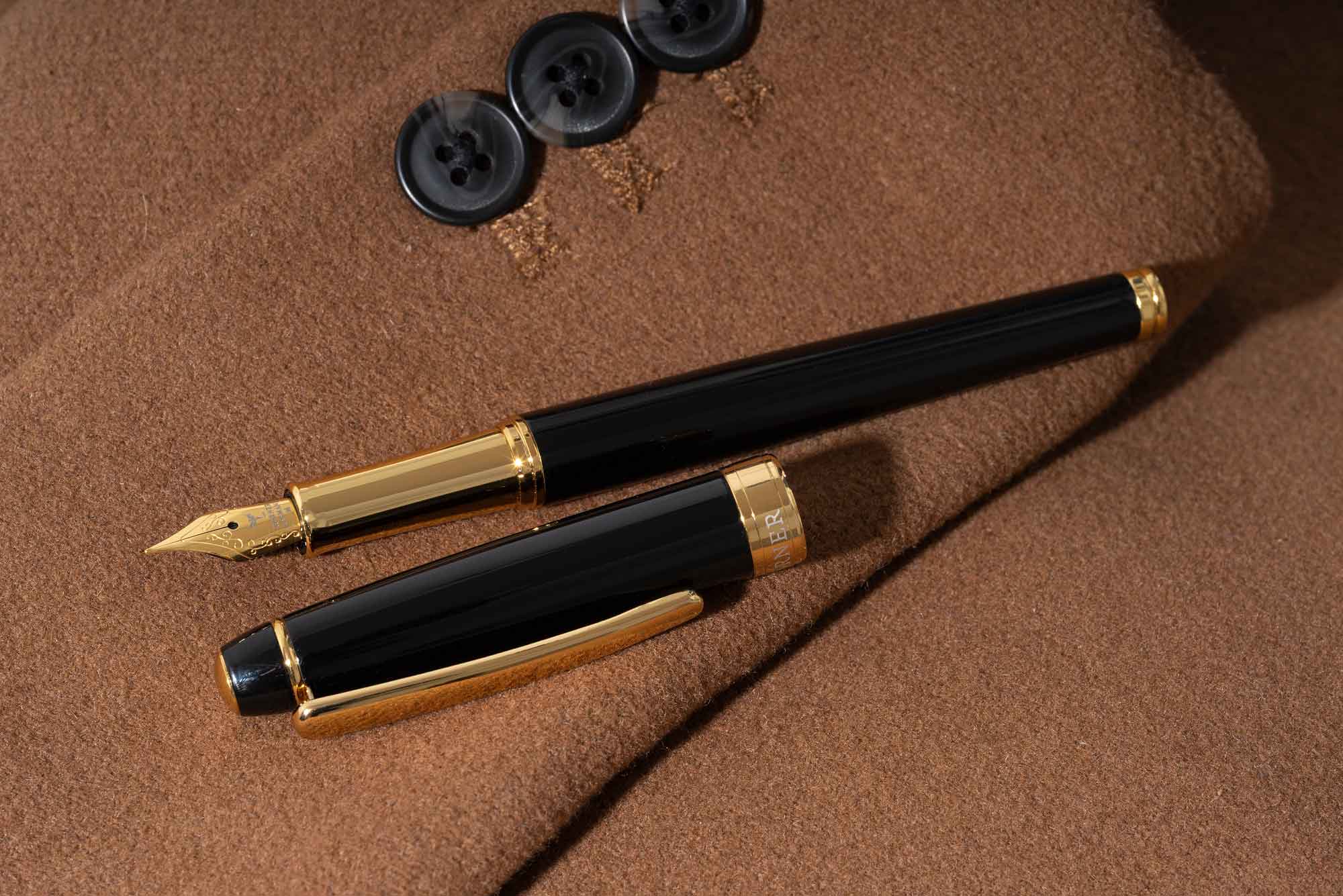
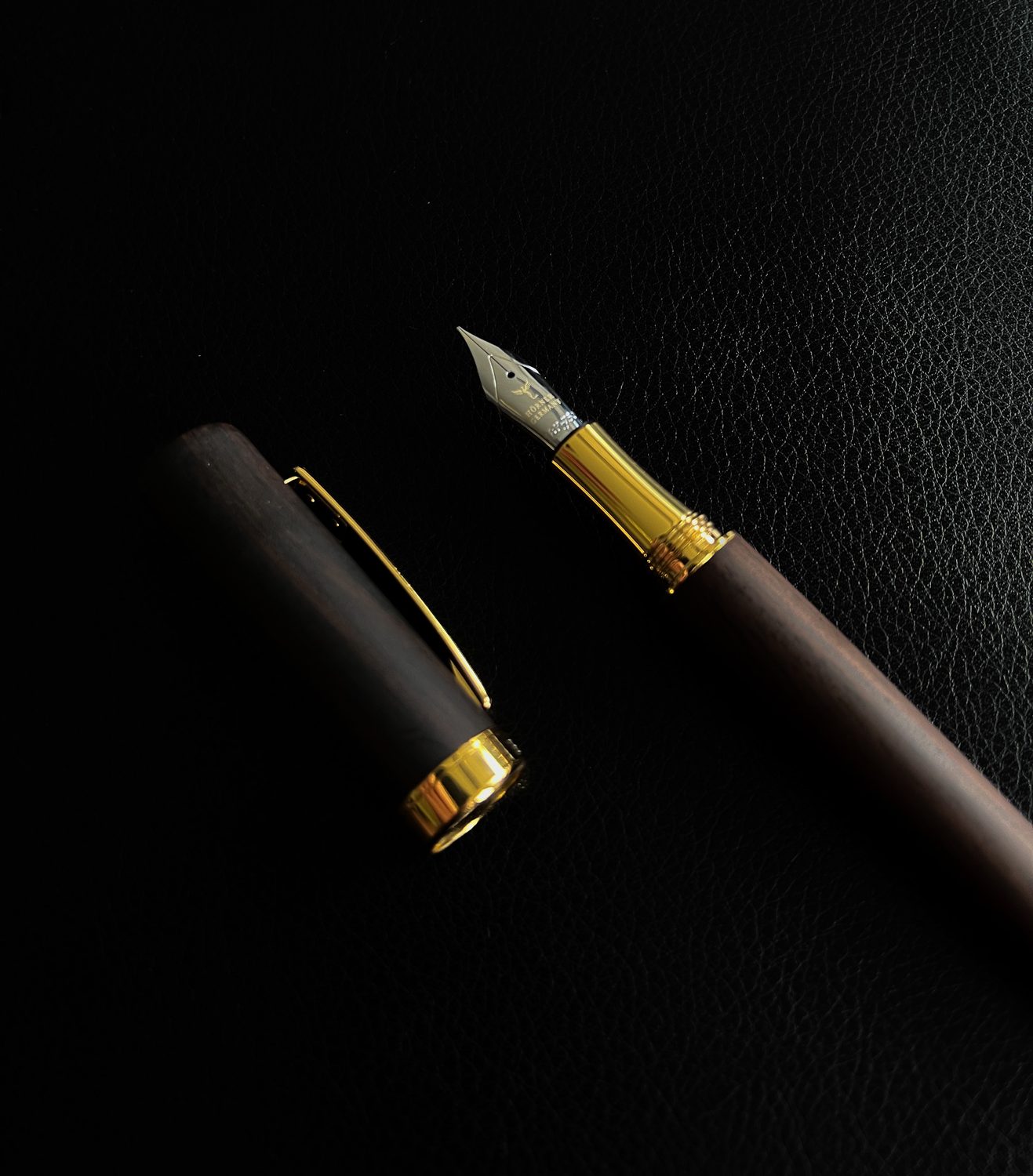
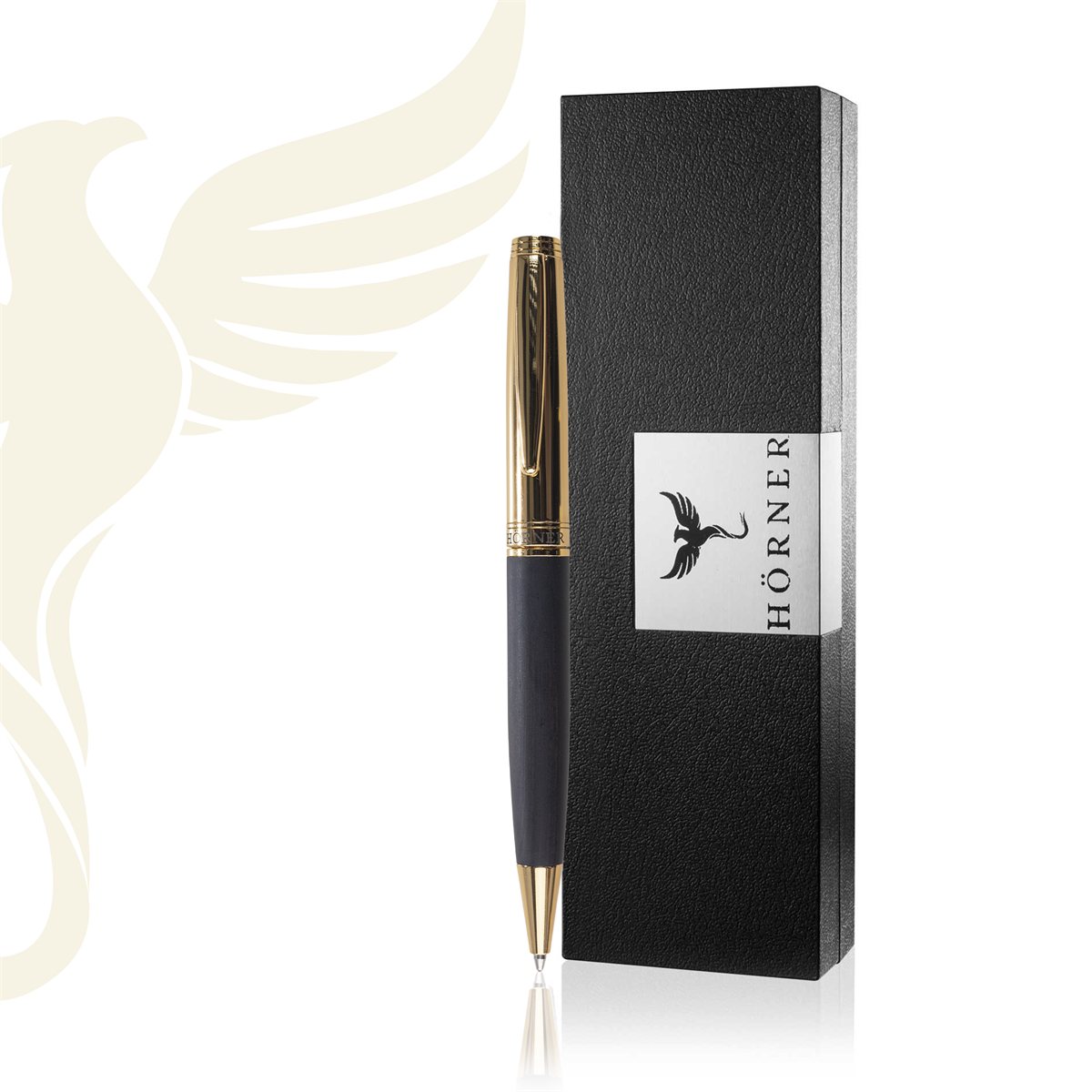
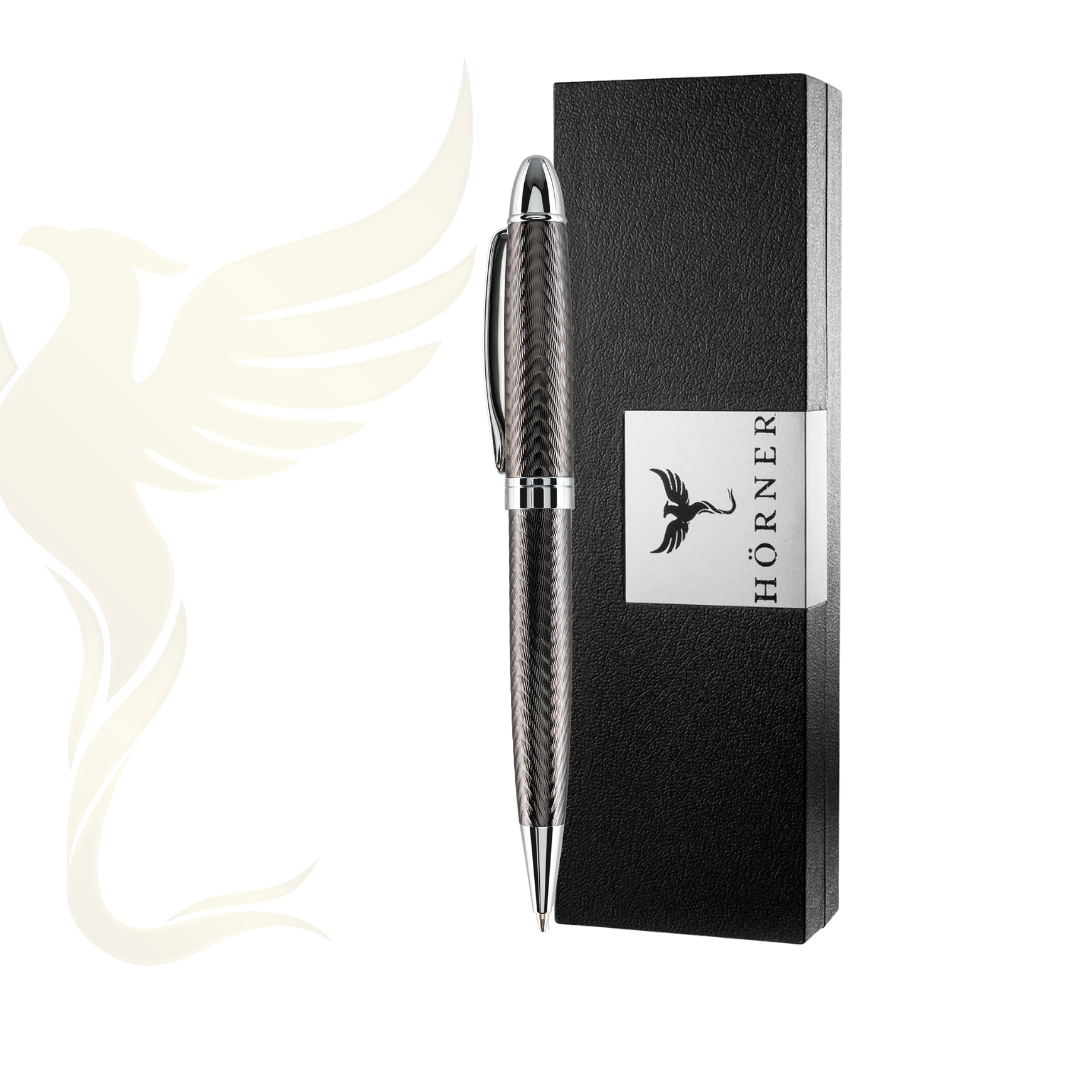
On the fountain-pen side, the metal Nobilis is an easy first fountain pen to live with, and the ebony Scriptum, with its gold-plated JoWo No. 6 nib, turns writing into an occasion. On the ballpoint side, the ebony Legno and the guilloché-metal Solaris both take a standard German refill, dry on contact and ask nothing of you. Prefer the same body in either system? Several lines come as a fountain pen, a rollerball and a ballpoint, so the decision is only about how you like to write. A few good places to start are below.