What makes a good fountain pen: the three things that matter.
A good fountain pen is not about the highest price or the longest spec sheet. It comes down to three things: the material it is built from, the nib that does the writing, and the ink system that decides how you live with it. Here is what to look for, and what you can safely ignore.
A good fountain pen is defined by three things. A quality material, metal or wood over a solid core rather than plastic, so it lasts. A precise nib, steel or gold with a hard tip, since the nib is where the writing quality sits. And a flexible ink system, ideally cartridge and converter, so you can write the way you want. Get those three right and the price matters less than you think. Every Hörner fountain pen pairs a German JoWo nib with the cartridge and converter system.
What actually makes a pen good.
There is no single right answer, because the best pen depends on how you write and what you will use it for. But almost every good fountain pen shares the same three strengths, and almost every disappointing one falls down on the same three points.
The strengths are a quality material, a precise nib, and a flexible ink system. Get those right and you have a pen that writes well and lasts. Everything else, the finish, the clip, the color, is taste. You do not need the rarest or most expensive pen in the world to write beautifully: past a modest point, more money buys materials and prestige, not a better line.
The sections below take each of the three in turn, then look at how weight and the nib width change the way a pen feels in the hand.
The parts of a pen, and what each does.
Whatever the price, most fountain pens are built the same way. Knowing the few parts makes the rest of this guide easier to follow.
A fountain pen has a barrel, which is the body you hold; a front section with the grip; and a cap. Inside sits the ink, held either in a cartridge or drawn into a mechanism, plus a feed that carries ink down to the nib, and the nib itself. That is the whole pen. The differences between one good pen and another come down to how those few parts are made and what they are made of.
Two of those parts decide most of the experience: the nib, which writes, and the ink system, which decides how you refill. We come to both shortly. First, the part you actually hold.
Material, design and build.
You should like the look of your pen, so the outside matters. But material is not only about appearance: it decides how the pen feels in the hand and how long it lasts.
As a rule, fountain pen bodies fall into two camps: plastic, and metal or wood. For durability, quality and longevity, brass, carbon or a dense hardwood are clearly preferable to plastic. Metal pens are heavier, which, as the next-to-last section explains, is not the drawback it sounds like.
Watch the threads above all. The threads are where the cap screws on, and they take the most wear. Metal threads hold up for years; plastic threads are prone to cracking, and once they go the pen is hard to live with. Good build at that one strategic point separates a pen that lasts from one that does not.
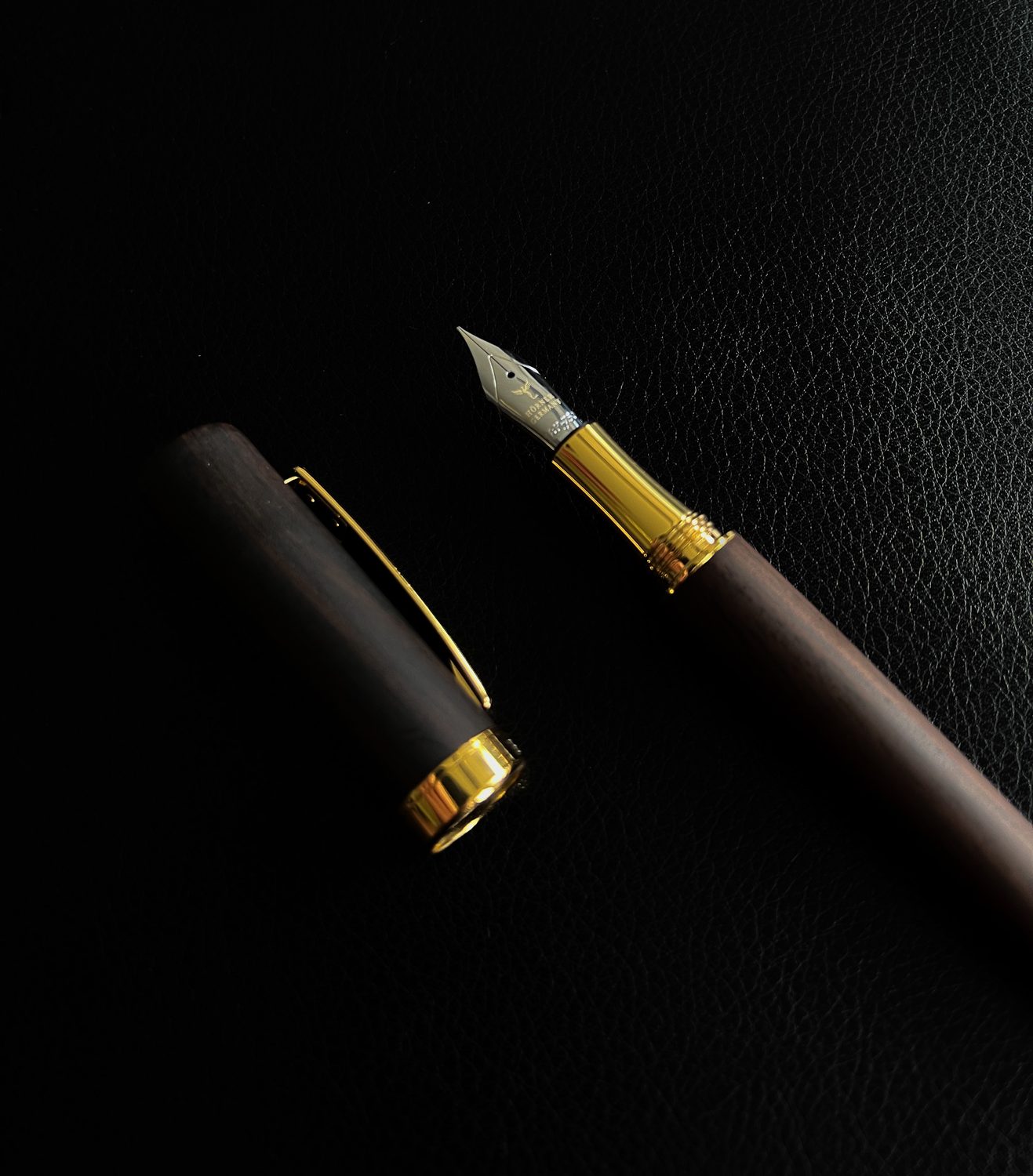
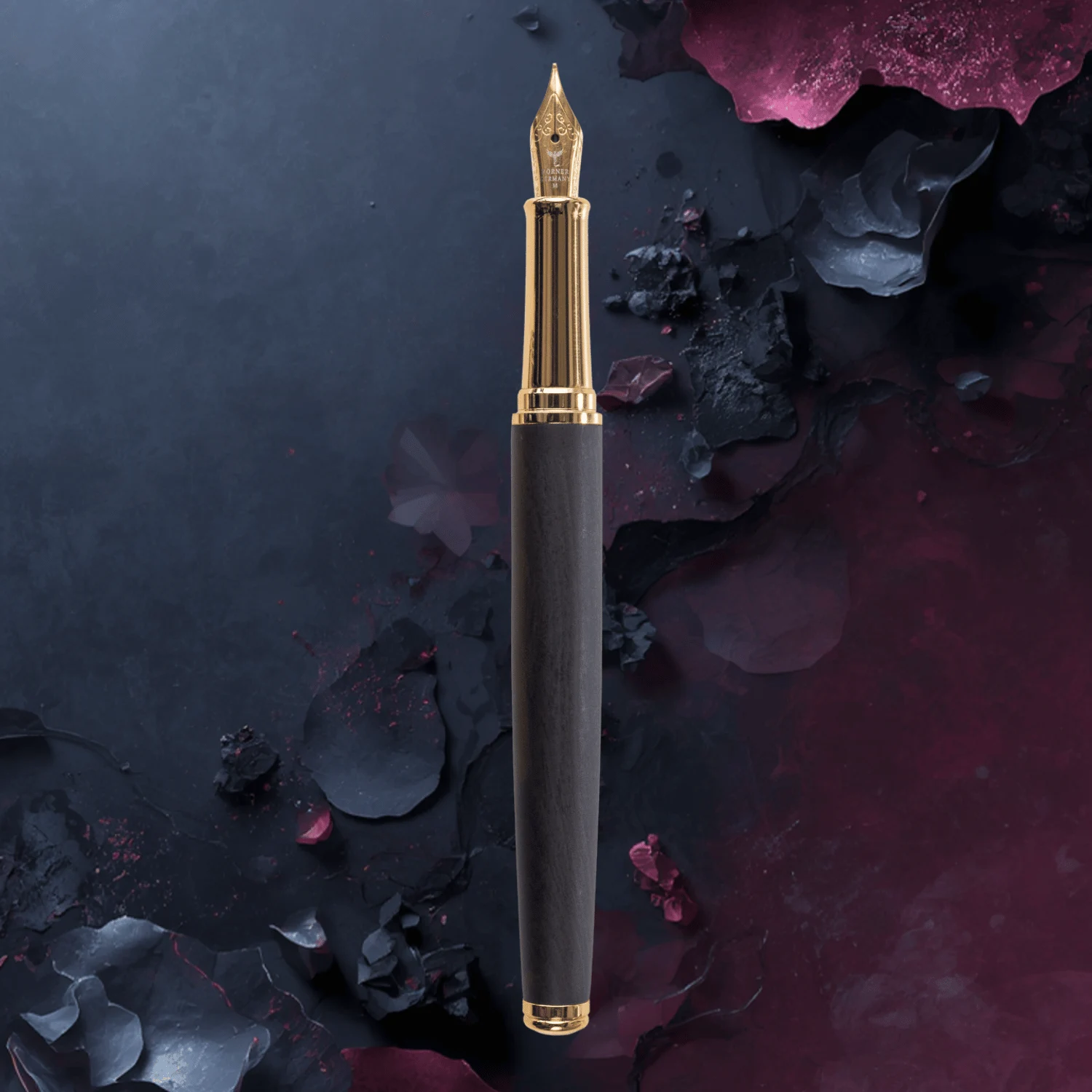
Wood deserves a word of its own. A wooden pen is more individual, and the material itself adds weight and character: a dense hardwood like ebony is roughly twice as dense as oak, which is part of why a wood pen sits so pleasingly in the hand and only looks better with use. Design then layers on top, the cap, the clip, the finish, turning a writing instrument into something with a bit of presence on a desk. The Hörner Legno and Scriptum are turned from real wood over a brass core for exactly this reason.
| Aspect | Plastic body | Metal or wood body |
|---|---|---|
| Durability | Lower, threads can crack | High, metal threads last |
| Weight in hand | Light | Heavier, steadier |
| Feel and look | Functional | Warmer, more individual |
| Longevity | Limited | Can last a lifetime with care |
The nib and the ink system.
As with people, the inner values count for more than the outside. Two parts define a fountain pen's character: the ink system and the nib.
The ink system decides how you refill. A cartridge pen takes a sealed, replaceable ink capsule, simple and clean but limited to one range of colors. A piston filler draws bottled ink into a mechanism built into the barrel, which frees you to use any ink, but only bottled ink. A converter sits between the two: it is a small refillable unit, a piston in cartridge form, that fits a cartridge pen and fills from any bottle. It is the affordable way to get a piston pen's freedom without buying one, which is why a pen that takes cartridges and a converter is the practical choice for most people. If you want the full picture of those trade-offs, see our guide to filling systems.
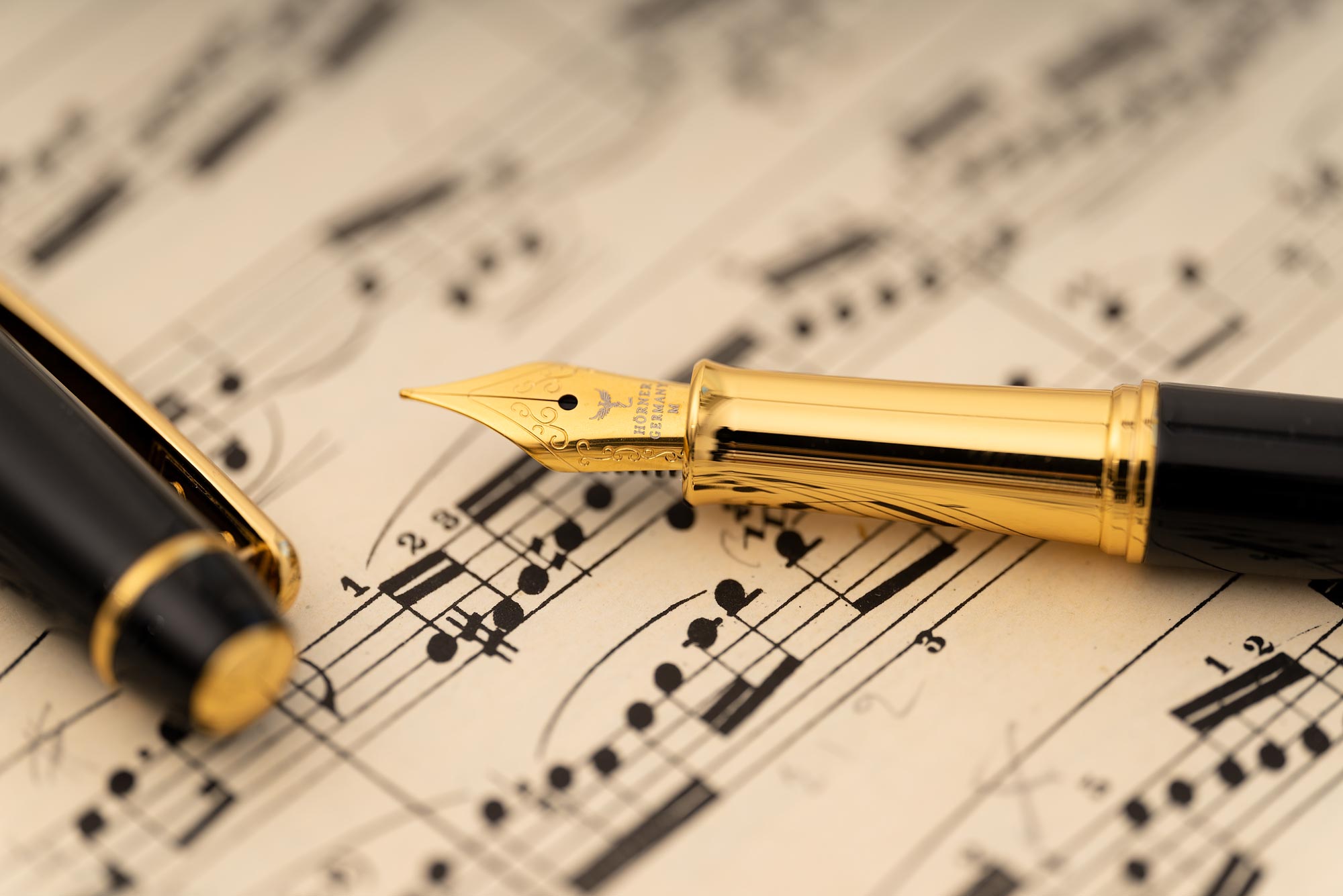
The nib is the heart of the pen. It lays the ink on the paper, and with the right nib you get a smooth, scratch-free line that shows your handwriting at its best. This is the one part where you should never economize. Nibs are usually stainless steel, sometimes gold, and the material is largely a matter of taste, because the tip that actually meets the paper is a hard alloy on both. What matters more is the width: most makers offer F (fine), M (medium) and B (broad), plus in-between grades, an A nib for beginners and angled LH nibs for left-handers. Our nib sizes guide walks through how to choose. Every Hörner fountain pen uses a German JoWo nib, with an M grade as standard.
| Feature | Cartridge | Converter | Piston filler |
|---|---|---|---|
| Ink choice | Brand cartridges | Any bottled ink | Any bottled ink |
| Changing colors | Awkward | Easy | Easy |
| Capacity | Small | Small to medium | Large |
| Price level | Affordable | Mid-range | Premium |
| Best for | Beginners, travel | Flexibility | Heavy daily writers |
Good to know: whatever the nib material, the tip is iridium or a similar platinum-bearing alloy. That is why a modern steel nib writes almost as well as a gold one. The real difference is flexibility: gold flexes a touch more and feels softer, steel is firmer and more direct.
Spend on the nib and the build before the price tag. That is where a good fountain pen is actually made.From experience · Hörner
How it writes: weight, balance and width.
A pen is judged by how it feels over a page, not a single line. Two things shape that: the nib width, and the weight and balance of the body.
Start with the nib. If you write long texts often, a fine (F) or extra-fine (EF) nib gives a lighter, more controlled line that suits pages of writing. Signature and business pens, by contrast, often carry a broad nib for a bolder mark. Left-handers should choose an LH nib: it is an M-width all-rounder, but angled for the left hand.
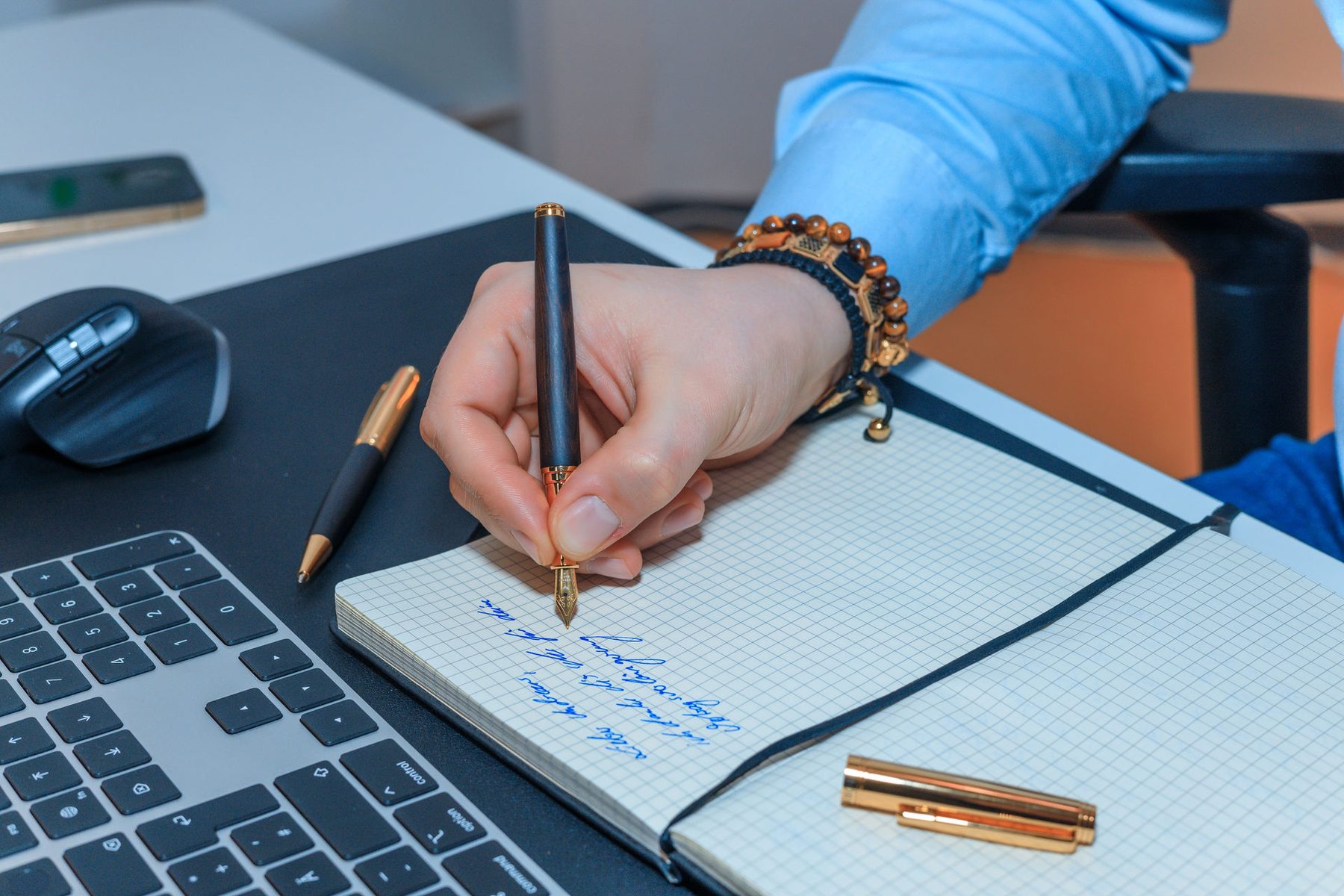
Then the body. Metal pens are heavier than plastic ones, and for that reason they feel steadier and more comfortable, not more tiring, because the weight does some of the work for you. A pen that is too slim can be hard to grip, especially for larger hands, whereas a thicker, more rounded section gives a secure hold and better balance. Writing by hand is worth getting right: it engages the brain more fully than typing, which is reason enough to choose a pen that feels good to use.
For pages of writing, pair a finer nib with a balanced, slightly heavier pen and a rounded grip. A fine or extra-fine line tires the hand less than a wet broad one, and a pen that is well balanced front to back means your fingers are steadying it, not fighting it. If in doubt, an M nib on a metal or wood body is a safe all-rounder.
Putting it together: how to choose.
Choosing a fountain pen is more involved than it first seems, but it comes down to three short rules.
Choose a real material. Metal, carbon or a dense wood over a solid core, with metal threads. It looks better and clearly outlasts plastic.
Use a converter. An affordable converter turns a cartridge pen into one that drinks any bottled ink, so you get the freedom of a piston filler without the cost or the cleaning. A pen that takes both is the most practical choice.
Match the nib to the task. A fine nib for long writing, a broad nib for signatures, an LH nib for left-handers. If you are unsure, an M nib is the safe all-rounder, which is what we fit as standard.
Get those three right and the rest is taste. Below are three good places to start, across wood and metal, each pairing a German JoWo nib with the cartridge and converter system.