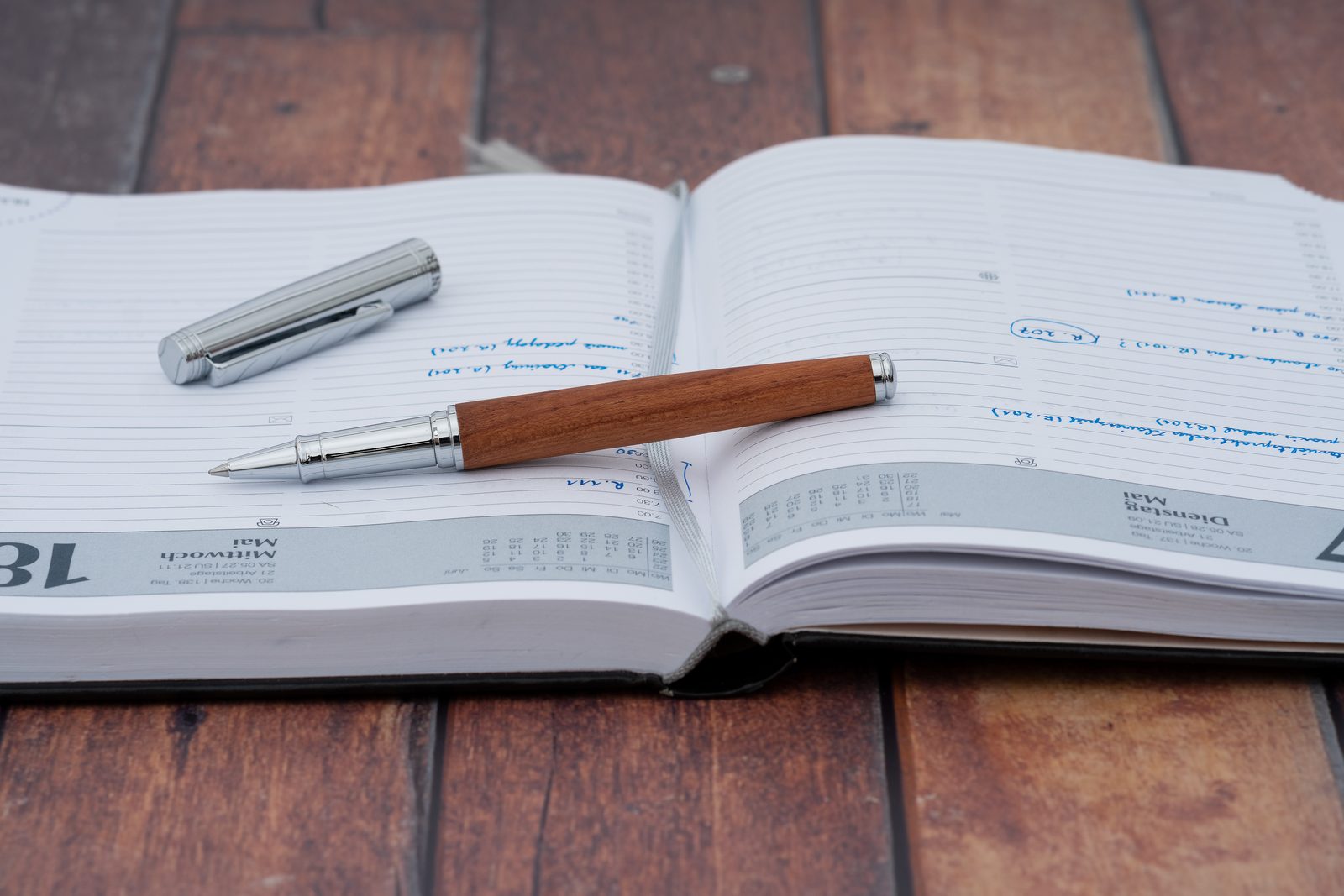
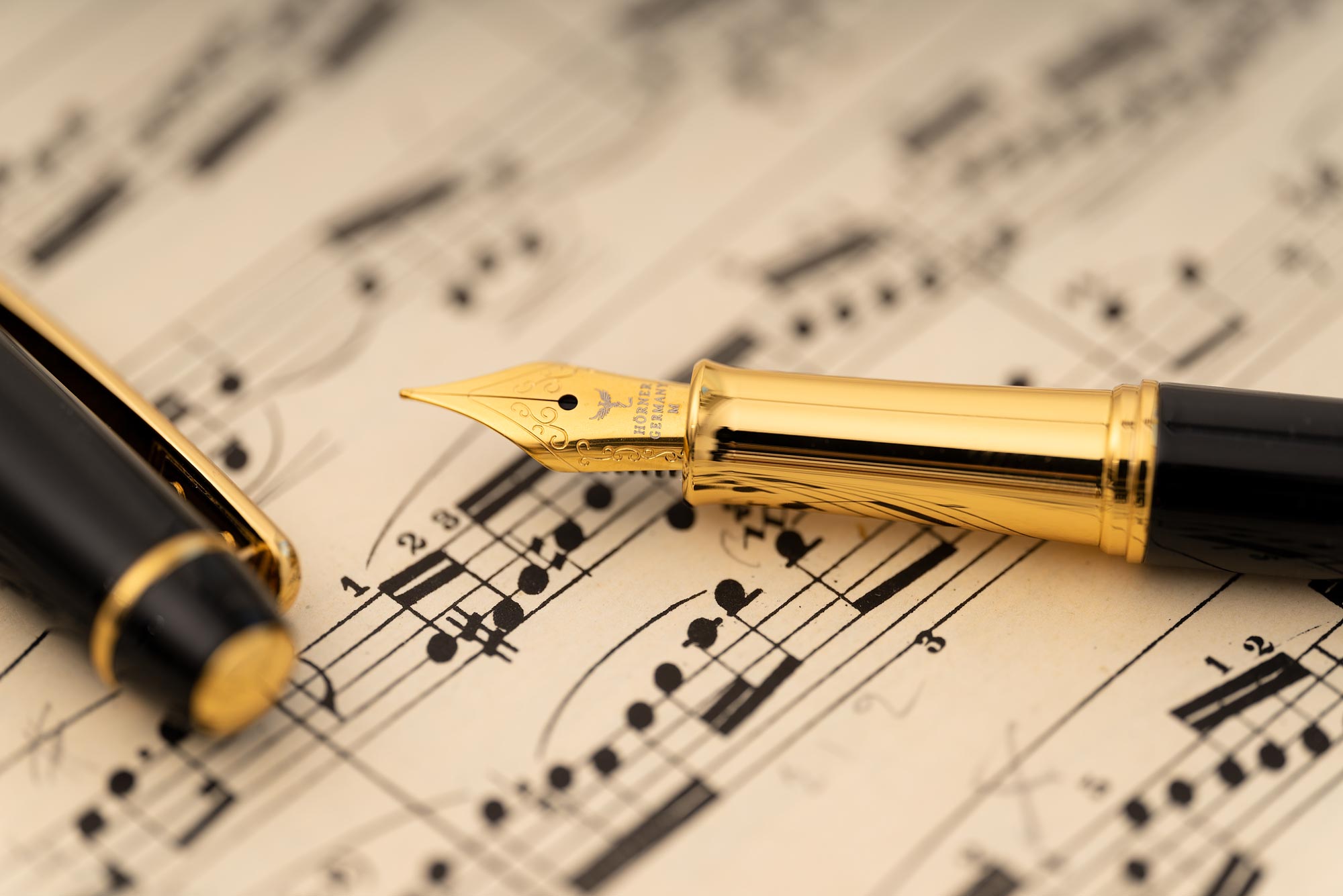
Rollerball or fountain pen: which one fits the way you write.
Two of the most loved writing instruments, and a lot of opinions about which is better. Here is the plain difference between a rollerball and a fountain pen, what each does well, and how to choose the one that fits your hand and your day, without declaring a winner that does not exist.

A rollerball uses water-based ink in a sealed refill and a rolling ball, so it writes smoothly with light pressure, needs no cleaning, and is easy to live with day to day. A fountain pen writes through a metal nib, giving a richer, variable line and lower long-term ink cost, in exchange for a little regular care. Choose a rollerball for everyday reliability and travel, a fountain pen for expressive writing and signatures. Hörner offers several lines in both.
Which to pick, and when.
Both pens were built for a pleasant writing experience, they just get there differently. A rollerball is the low-fuss everyday choice; a fountain pen is the expressive one. Neither is universally better, so work back from how and what you write.
Here is the whole comparison at a glance, then the rest of the guide takes each point in turn.
| Feature | Rollerball | Fountain pen |
|---|---|---|
| Ink | Water-based, sealed refill | Liquid, from cartridge or bottle |
| Line | Consistent and smooth | Variable and expressive |
| Drying time | Fast, a few seconds | Slower, longer to set |
| Maintenance | None | Occasional cleaning |
| Travel | Very friendly, no leaks | Some risk at altitude |
| Line width | Fixed by the refill | Chosen by nib grade |
| Best for | Daily notes, travel | Signatures, journaling |
If you mostly want a pen that just works, lean rollerball. If you want writing to feel like a craft, lean fountain pen. The sections below explain why.
Rolling ball vs metal nib.
The core difference is the tip. One rolls ink on; the other lays it down through a nib that touches the page.
The rollerball works like a smoother ballpoint. A small ball in the tip transfers water-based ink evenly onto the paper, with very little resistance. The result is a soft, fluid line and effortless writing, the same consistent stroke from the first word to the last.
The fountain pen releases ink through a metal nib in direct contact with the paper. Because the nib responds to pressure, your line can swell and taper as you write, which is what gives fountain-pen handwriting its individual character. How it feels depends a lot on the nib: its width and its flexibility. If you want to go deeper there, our guide to what a rollerball pen is covers the rolling-ball side in detail.
So the fountain pen offers more control over line variation, while the rollerball offers a more effortless, predictable feel. Writers who want smooth consistency tend to prefer the rollerball; admirers of classic handwriting tend to prefer the nib.
Easy flow or expressive line.
Comfort is not just about how the writing looks, it is about how your hand feels after a page or ten.
The rollerball shines for people who write a great deal. Its free-flowing ink needs only minimal pressure, so the hand tires more slowly. For long texts, frequent notes or back-to-back meetings, a good rollerball is genuinely easier on the hand.
The fountain pen glides once you find its angle, though it usually asks for a short break-in period and a more deliberate hand position to lay ink evenly. The feel is soft and satisfying, but not everyone adapts to a nib straight away.
In short: a rollerball is exceptionally well suited to fast everyday use, while a fountain pen rewards a style-conscious writer who values a classic, expressive experience. If you write at length, often, the rollerball is worth a serious look.
Everyday flow vs archival ink.
The ink itself is where the two pens really part ways, and it decides which one belongs on an important document.
The rollerball uses water-based ink that the paper absorbs quickly. That means a clean result and fast drying, which is especially handy for left-handed writers, since there is little smudging. The catch: water-based ink is not document-proof and can run if it gets wet, so it is less suited to contracts or long-term archiving.
The fountain pen uses dedicated fountain-pen ink, which can dry a touch more slowly depending on the formula. Some inks are water-soluble and may fade over time, but others are pigmented and document-proof. That range is part of the appeal: you can pick an ink for permanence, or for creative color, and even change it whenever you like.
For contracts and records meant to last, a fountain pen with a document-proof ink, or a certified water-resistant pen, is the safer choice. For everyday writing where archival permanence is not the point, the rollerball's quick-drying ink is a real advantage.
Grab and go, or a little care.
This is where the rollerball makes its strongest case, and where the fountain pen asks something of you in return.
The rollerball needs almost nothing. The ink stays sealed in the refill, so there is no cleaning and no ink stains, and when a refill runs dry you simply swap it. Even with only occasional use, a rollerball rarely dries out, so it is ready whenever you reach for it.
The fountain pen wants a little upkeep. With a cartridge pen especially, ink can dry if the pen sits unused, so flushing the nib from time to time keeps the flow clean. If you switch between ink colors, rinse the nib carefully so the colors do not mix. None of it is hard, but it is a habit a rollerball never asks for. Our guide on cartridge, converter and piston filling systems walks through how fountain pens hold and refill their ink.
A rollerball asks nothing of you. A fountain pen asks for a little care, and gives some character back.From experience · Hörner
If you want a pen that is always ready and never messy, the rollerball is the simpler companion. If you enjoy the ritual of writing, the small extra care of a fountain pen is part of the pleasure.
Which one should you choose?
Choose by how you write, not by which pen sounds more impressive. Both have a place; the right one is the one that matches your habits.
For fast, comfortable everyday use, a rollerball: ideal for meetings, quick notes and long sessions, because it glides over the page and needs almost no maintenance. For frequent writers, the rollerball again, with its consistent feel and less fatigue.
For elegant signatures and a traditional style, a fountain pen, with a line you can shape to your own hand. For anyone who loves classic handwriting and wants to play with different ink colors, the fountain pen opens up a whole world the rollerball cannot.
Think about your last week of writing. If most of it was quick, on the move, or pages at a time, a rollerball will serve you better. If you found yourself wanting your writing to look and feel more personal, or you sign your name often, start with a fountain pen. Many people end up keeping one of each.
What we offer in each.
You do not have to choose between the look you like and the system you want. Several Hörner lines come as both a fountain pen and a rollerball, in the same body.
Every Hörner fountain pen pairs a German JoWo nib with the cartridge and converter system, so you can use a cartridge for convenience or a converter for bottled ink. The rollerballs take a standard liquid-ink refill, so they write smoothly out of the box with nothing to clean. The wood Legno is a good example: the same turned-ebony body, offered as a fountain pen or a rollerball, so the decision is purely about how you like to write.
A few good places to start, across both systems and wood and metal: