What is a rollerball pen, and how does it work.
A rollerball sits between a ballpoint and a fountain pen: the easy handling of one, the smooth, flowing line of the other. Here is what a rollerball pen actually is, how the rolling ball and fluid ink work, and how it compares to gel and ballpoint pens.
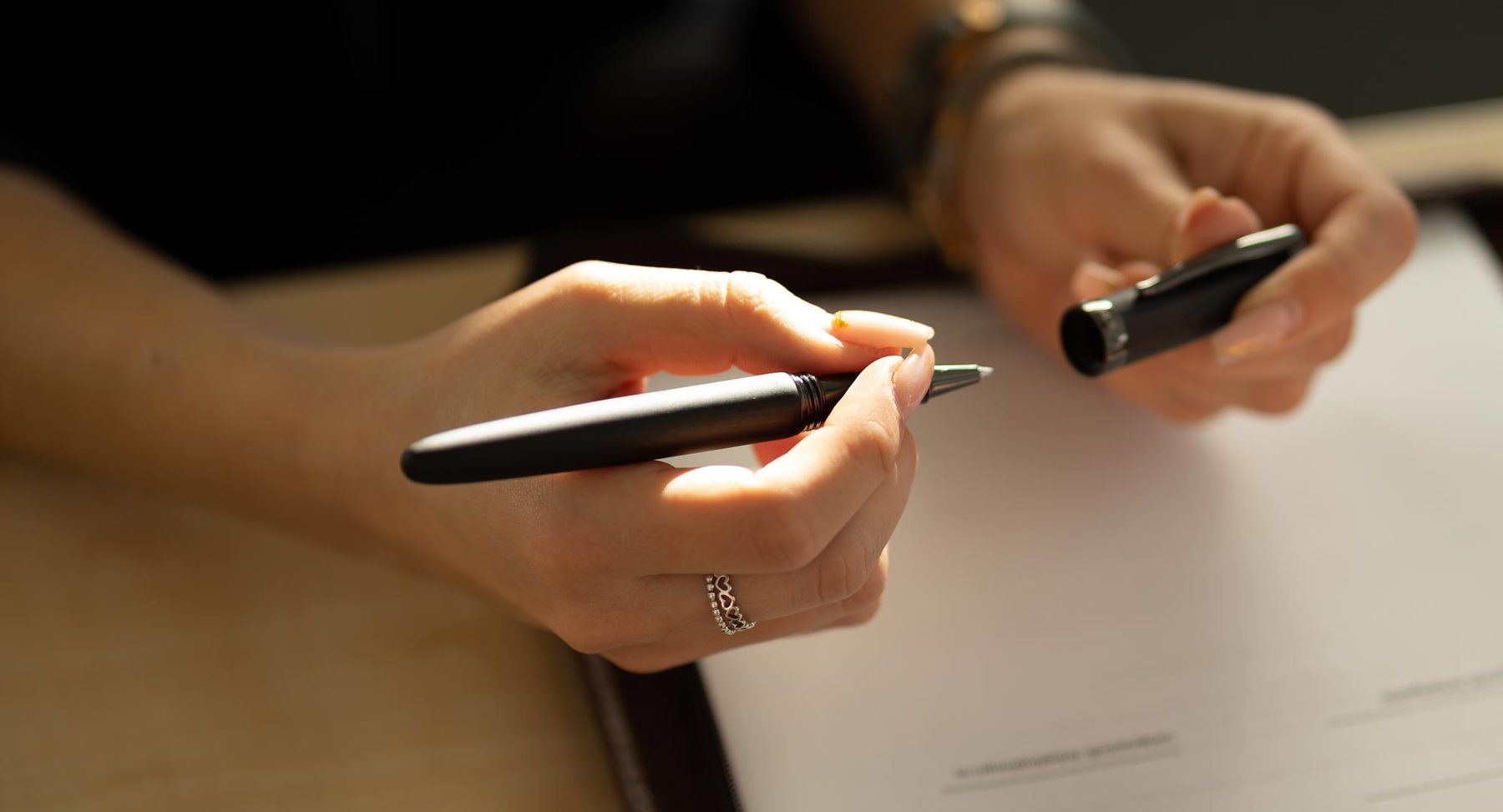
A rollerball pen writes through a small rolling ball, like a ballpoint, but uses fluid water-based ink instead of thick oil paste. That gives a smoother line with less pressure, closer to a fountain pen, while staying easy to hold from any hand position. A gel pen is a rollerball with thicker, faster-drying ink. With document-proof ink a rollerball is fine for signatures, and it refills with common standard refills.
What it is, and how it works.
A rollerball pen, also called a roller pen or ink pen, puts ink on the page through a small ball at the tip of the refill, much like a ballpoint. What sets it apart is the ink.
Instead of the thick oil-based paste a ballpoint uses, a rollerball carries fluid, water-based ink that behaves more like fountain pen ink. As the ball rolls against the paper it draws that thin ink down from the refill, so the line flows on with very little pressure. The result is a clean, fine stroke and a smooth feel that does not scratch.
That is why a rollerball is often described as a blend of two pens: the straightforward, cap-and-go handling of a ballpoint, with a writing feel much closer to a fountain pen. If you are weighing the two ends of that spectrum, our rollerball vs fountain pen guide takes the comparison further.
The benefits: glide, drying, any hand.
The appeal of a rollerball comes down to a few things you notice the moment you write with one.
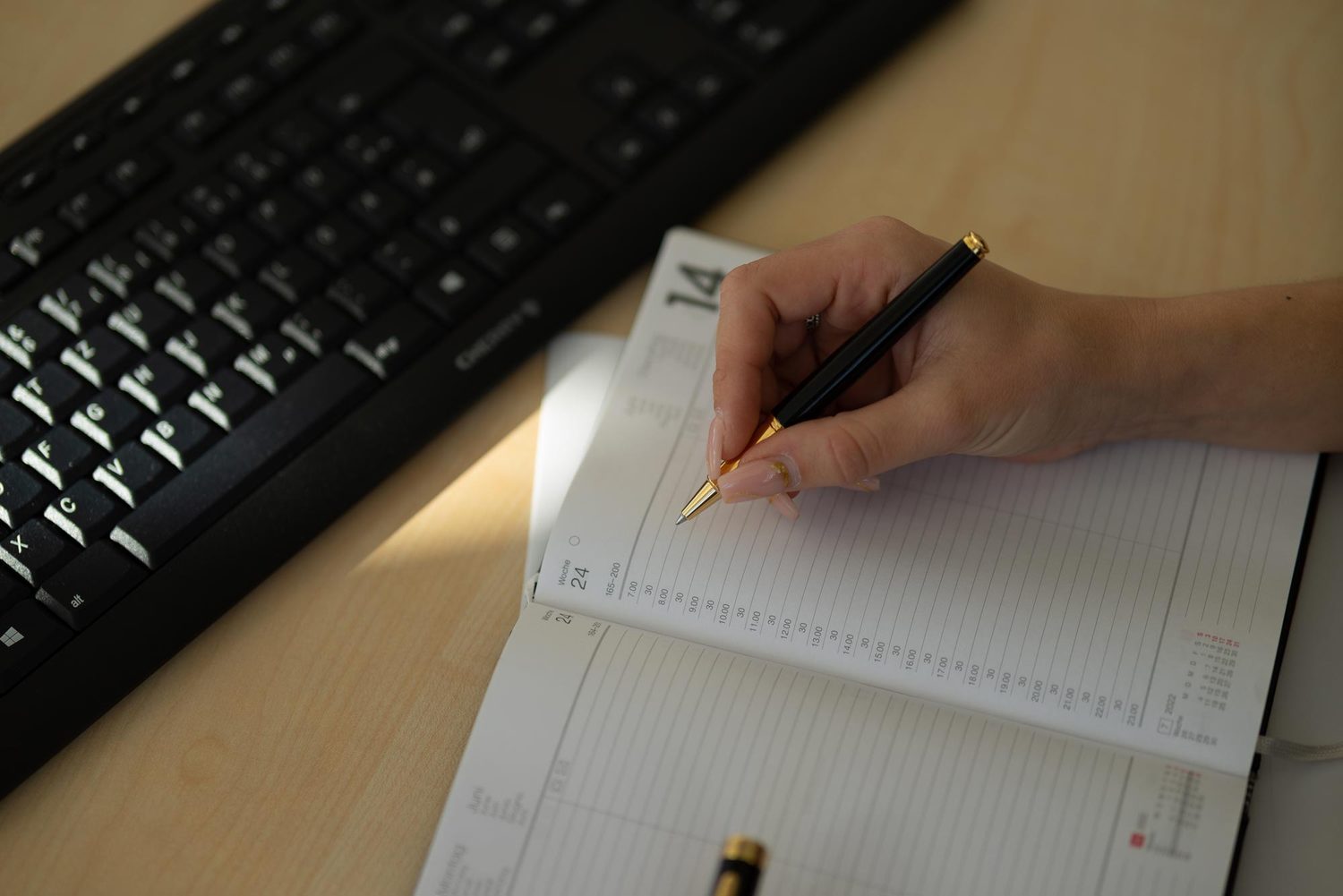
It glides. The fluid ink flows freely, so you write quickly and without bearing down. For longer texts that means less hand fatigue, which is why frequent writers tend to reach for a rollerball.
It dries cleanly. The ball meters the ink well and it sets on the page in a few seconds, so a quick-drying rollerball leaves a clean, smudge-free line.
It works from any hand position. A rollerball does not depend on a particular grip angle the way a fountain pen nib does. That makes it equally comfortable for right-handed and left-handed writers, with no scratching and, with quick-drying ink, far less smearing.
Built from solid metal or real wood, a good rollerball is also sturdy and easy to refill, so it holds up to daily use rather than ending in a drawer.
Rollerball vs gel pen: are they the same?
People often ask whether a rollerball is a gel pen. The honest answer: a gel pen is a kind of rollerball, but not every rollerball is a gel pen.
Both use the same rolling-ball mechanism. The difference is the ink. A classic rollerball uses thin, water-based ink that flows evenly for a smooth, gliding line. A gel pen uses a thicker water-gel ink that dries faster and lays down richer, more opaque color.
In practice you see the difference most in the line itself. Gel ink gives a bolder, more saturated stroke and comes in a wider range of colors, which suits signatures and correspondence where you want the writing to stand out. Water-based rollerball ink feels exceptionally smooth over long stretches of text.
A simple rule of thumb: if you want fast drying and intense color, choose a gel pen. If you want the smoothest gliding feel for longer writing, choose a water-based rollerball. Both come in fine finishes like metal and wood, and both refill with standard refills.
Rollerball vs ballpoint vs fountain pen.
All three are everyday writing instruments, and each suits a different job. Here is the whole comparison at a glance.
| Feature | Rollerball | Ballpoint | Fountain pen |
|---|---|---|---|
| Writing feel | Smooth, gliding, little pressure | Firm, controlled, more pressure | Smooth, depends on nib and grip |
| Ink | Water-based or gel, fluid | Oil-based paste, thick | Water-based, cartridge or converter |
| Drying time | Medium, a few seconds | Very fast, near instant | Slower, depends on paper |
| Left-handers | Very suitable, no scratching | Suitable, quick-drying | Limited, special nibs help |
| Refillable | Yes, standard rollerball refills | Yes, ballpoint refills | Yes, cartridge or converter |
| Best for | Long writing, office, signatures | Quick notes, forms, anywhere | Letters, formal occasions |
Against a ballpoint, the rollerball wins on feel: it glides far more fluidly, so beginners and frequent writers find it easier on the hand. Against a fountain pen, it wins on ease: it asks nothing of your grip and dries faster, while still giving you a far nicer line than a ballpoint.
A rollerball gives you a fountain pen's line with a ballpoint's manners. For a lot of writing, that is the sweet spot.From experience · Hörner
Materials: metal, carbon and real wood.
Like ballpoints and fountain pens, rollerballs are built from a wide range of materials, and the material shapes how the pen feels and how long it lasts.
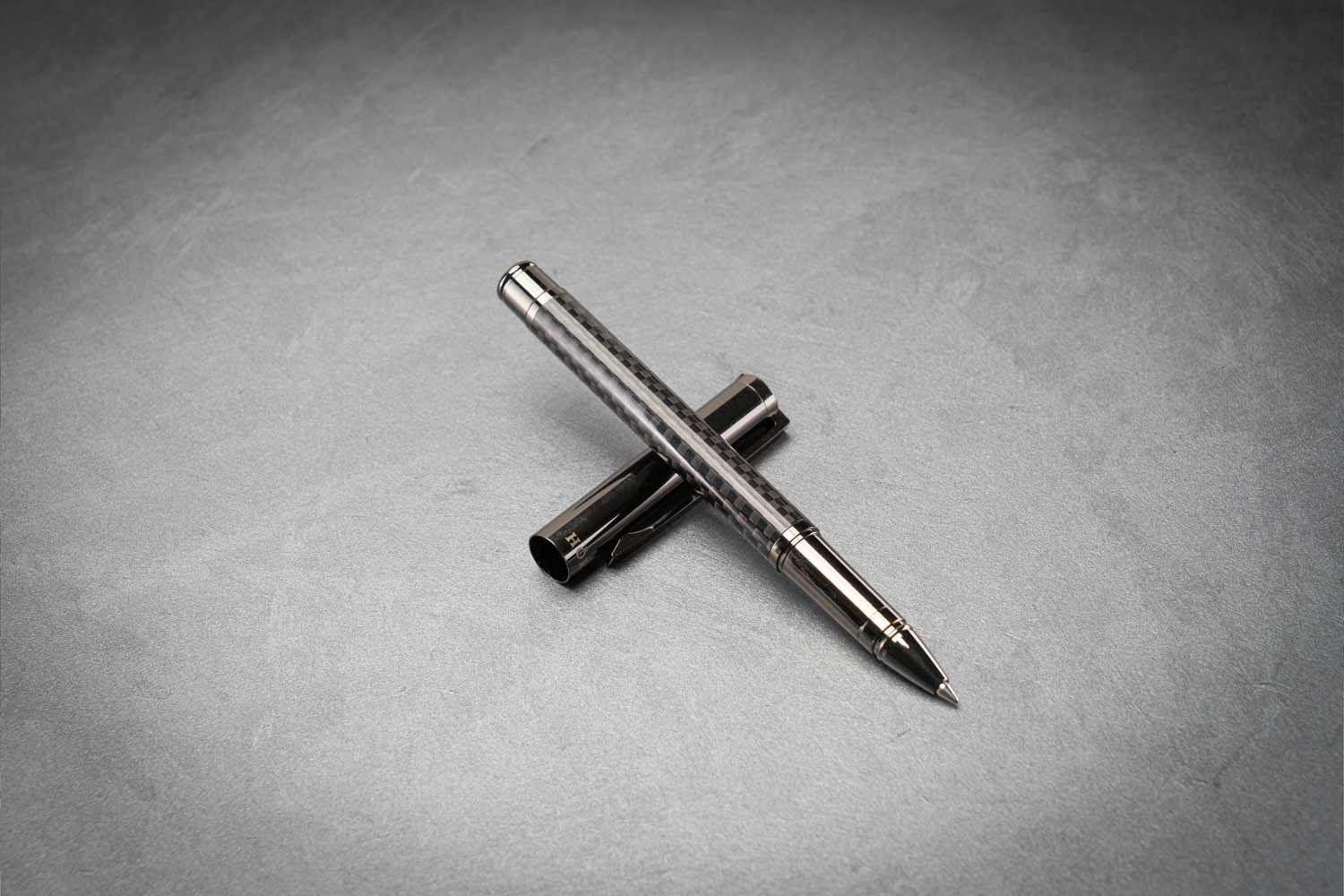
Plastic bodies are cheap but wear quickly. Metal, in steel, aluminum or carbon, gives durability, a balanced weight and an elegant look that fits everyday business use. The threads matter too: on a good rollerball they are metal, so the pen does not crack at the joint, which is exactly where plastic-threaded pens tend to fail.
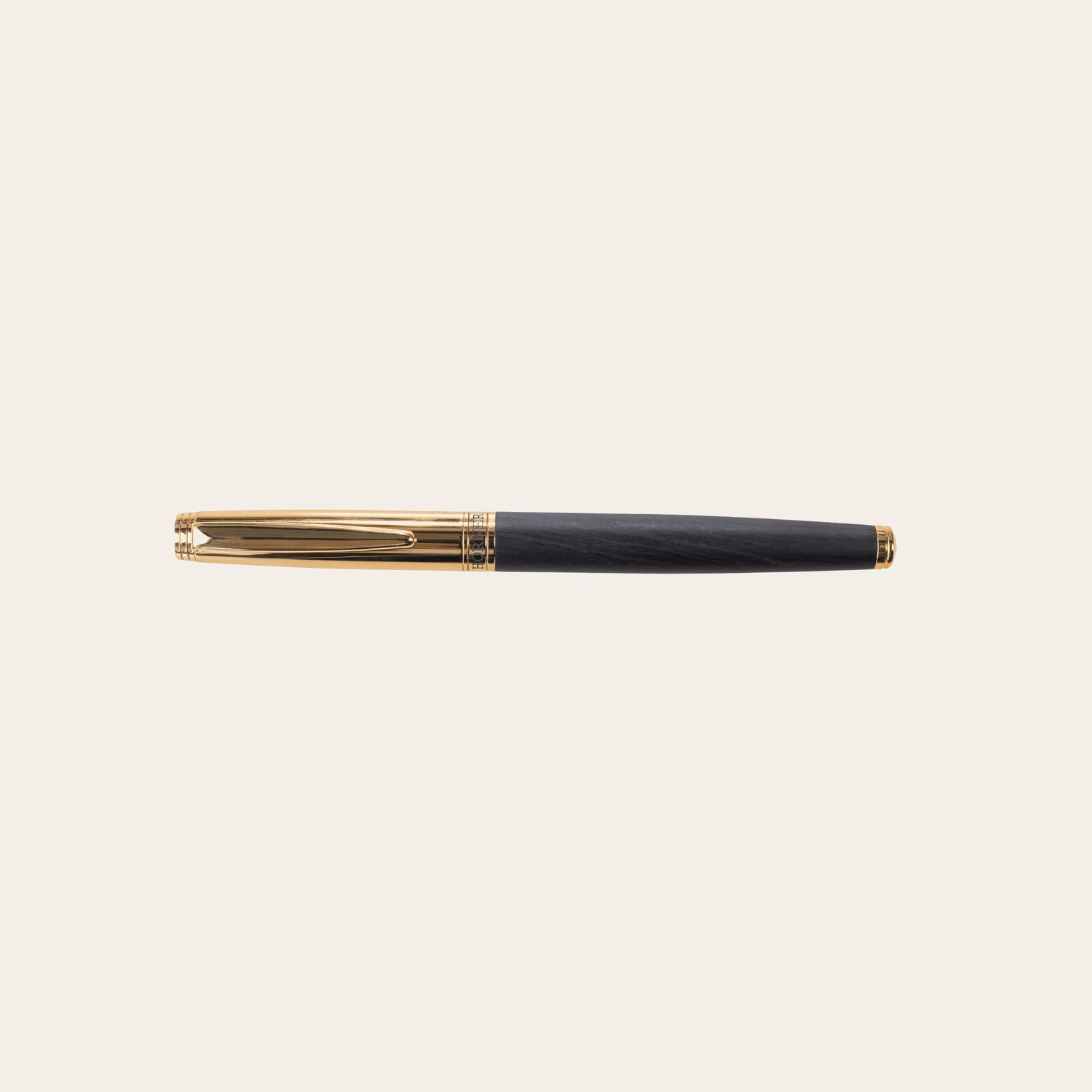
Wood is the third route, popular for its solid feel, distinctive grain and sustainability. At Hörner the Legno rollerball is turned from real ebony over a brass core, so it carries the warmth of wood with the stability of metal underneath.
If you want a pen that disappears in the hand for long sessions, go light, like a carbon-bodied rollerball. If you like a planted, weighty feel, choose solid metal. And if you want character and a warm grip, real wood over a brass core gives you both. None changes how the ball writes, only how the pen feels to hold.
Refills, line width and document-proof ink.
The refill is the heart of a rollerball: it decides the ink flow, the line width and how long the pen serves you.
The ball at the tip is usually 0.5 to 1.0 mm across, giving a line close to a fountain pen's, and finer refills exist below 0.2 mm for a thinner stroke. Hörner rollerballs ship with a versatile 0.7 mm refill, neither too fine nor too broad. Bear in mind that fluid ink can bleed a little on very absorbent paper.
Changing a refill is quick. Unscrew the barrel at the joint between the grip and the casing, pull the empty refill out, slot the new one in the same orientation, and screw it back together, usually in under thirty seconds. Hörner rollerballs use common standard rollerball refills you can find at stationery shops or order from the accessories range, which is what keeps a well-made pen out of the bin.
On permanence: a rollerball can be document-proof. With the right ink it dries quickly, stays legible and resists water, so it is fine for signing official documents. Erasable rollerball inks also exist, using a heat-sensitive formula you can rub away, though those are deliberately not permanent.
How to spot a good rollerball.
There is a world of difference between a giveaway pen with a roller tip and a real rollerball. A few signs tell you which you are holding.
Weight and balance: a quality rollerball has a noticeable but not tiring weight, with the balance shifted slightly toward the tip so it glides under control. Solid metal and real wood bodies tend to get this right.
Finish: look at the transitions between the barrel parts. They should fit precisely, with no sharp edges or uneven gaps, and the cap or clip should sit firmly.
Ink flow: on paper the ink should start at once and run evenly, with no skipping or blotting.
Service and refills: check that replacement refills, and ideally spare parts, are easy to get. A brand that supplies refills over the long term stands behind its pens. Hörner keeps all refills available and handles customer service in person, since 2016.
Across wood, metal and carbon, here are three good places to start.