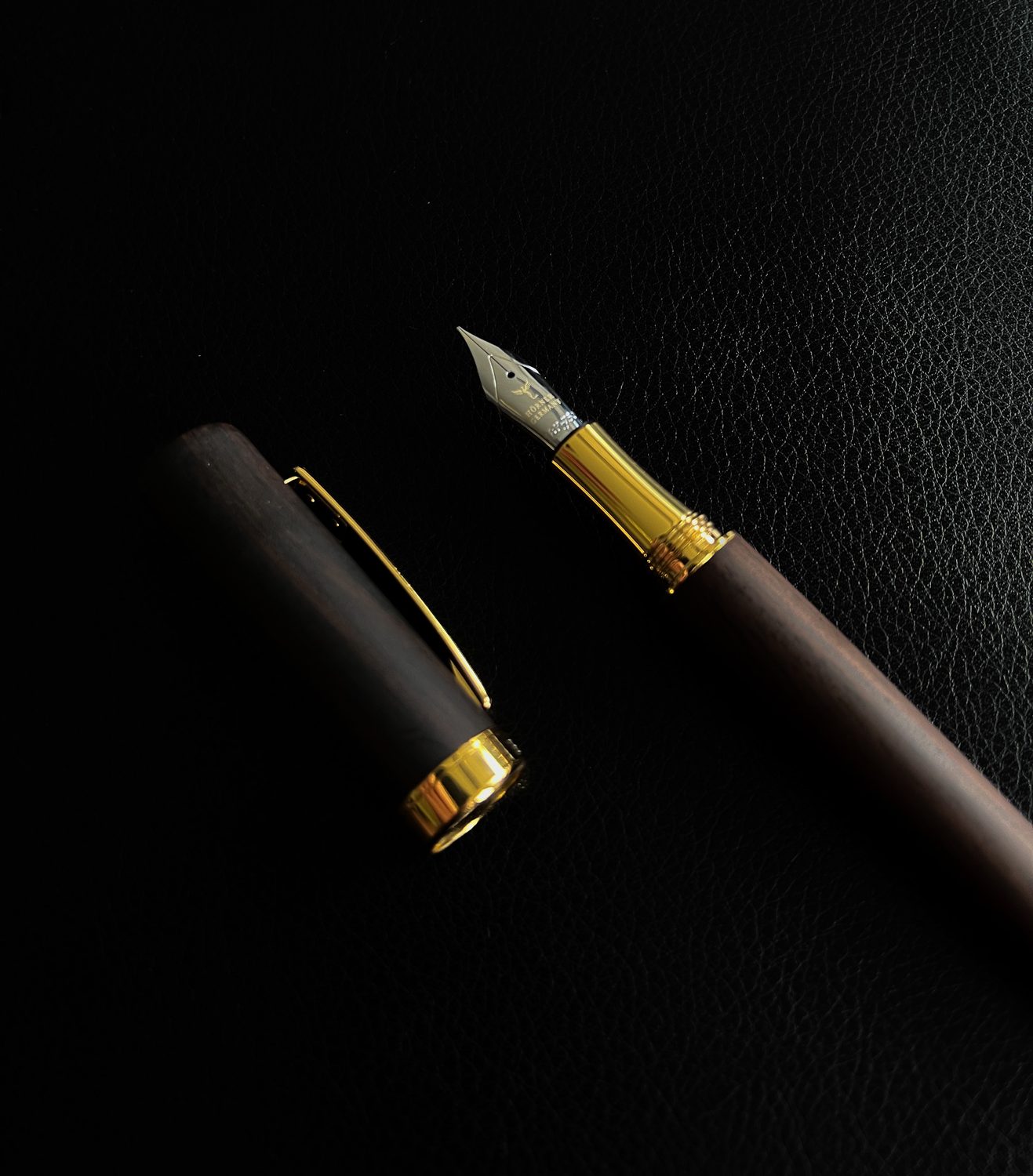
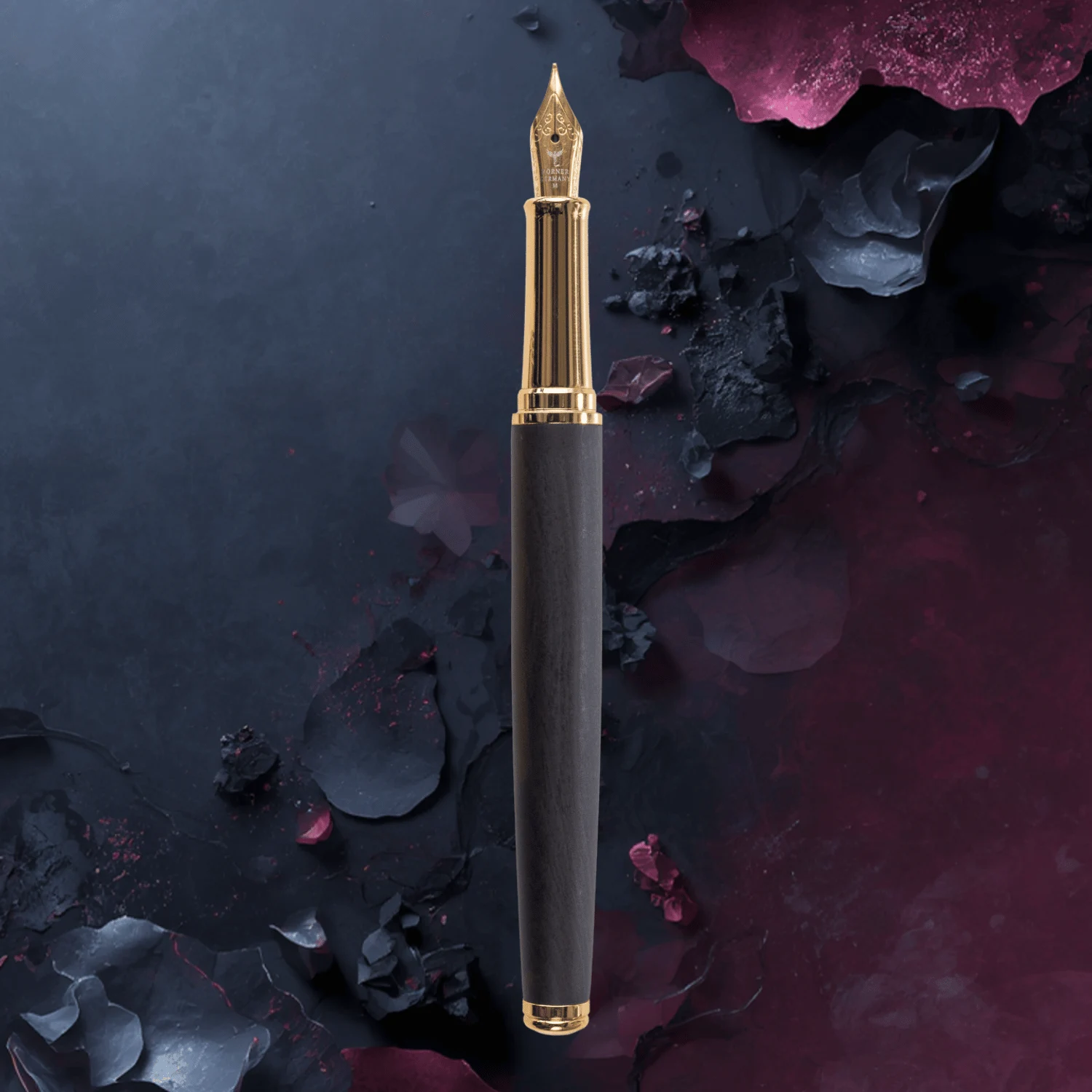
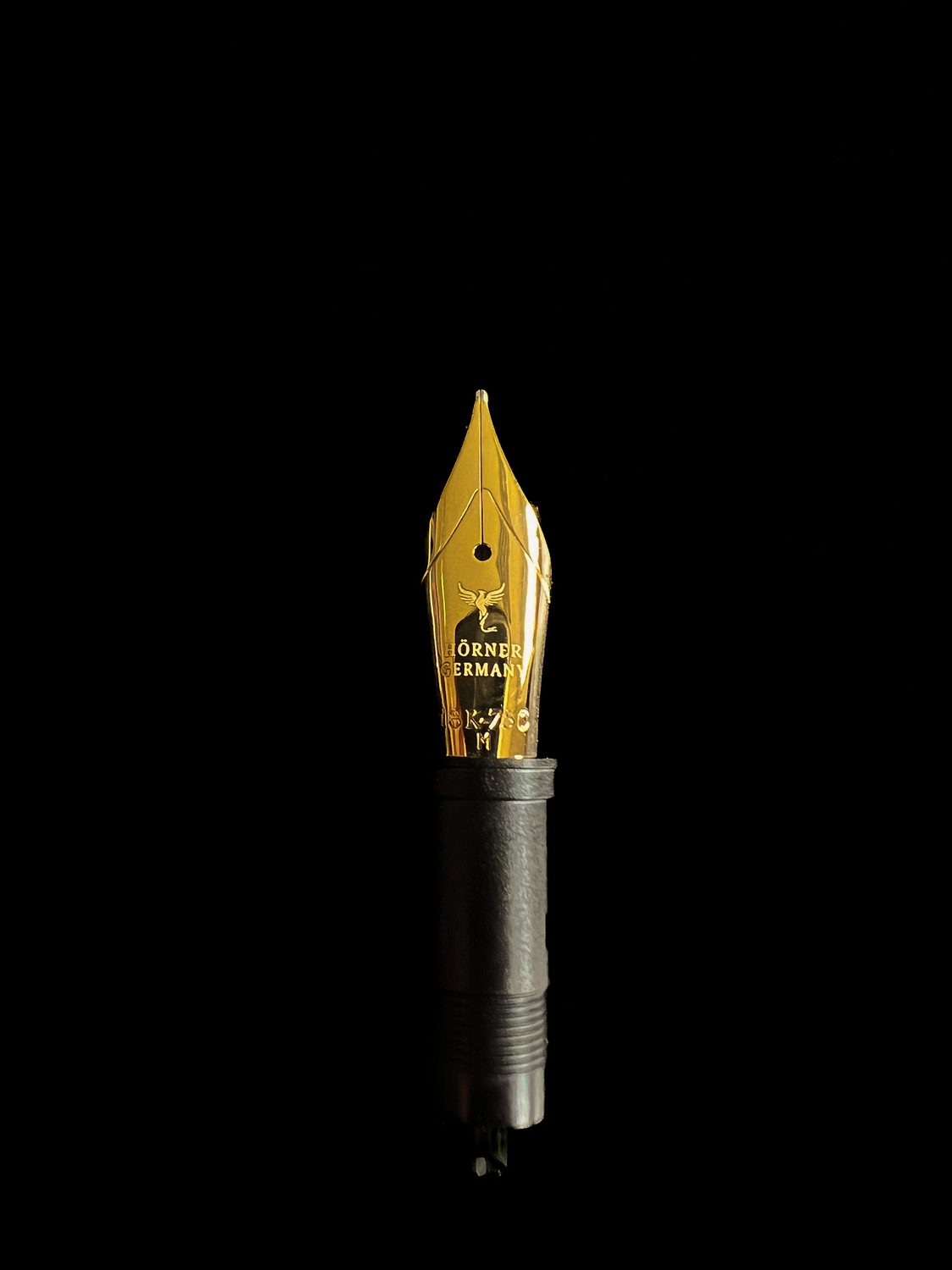
Fountain pen nib sizes: EF, F, M, B and how to choose.
The nib is the heart of a fountain pen, and its grade decides how thick your line is, how it feels, and how much ink it lays down. Here is what EF, F, M, B, BB and stub actually mean, why the same letter writes differently by brand, and how to pick the one that fits your hand.
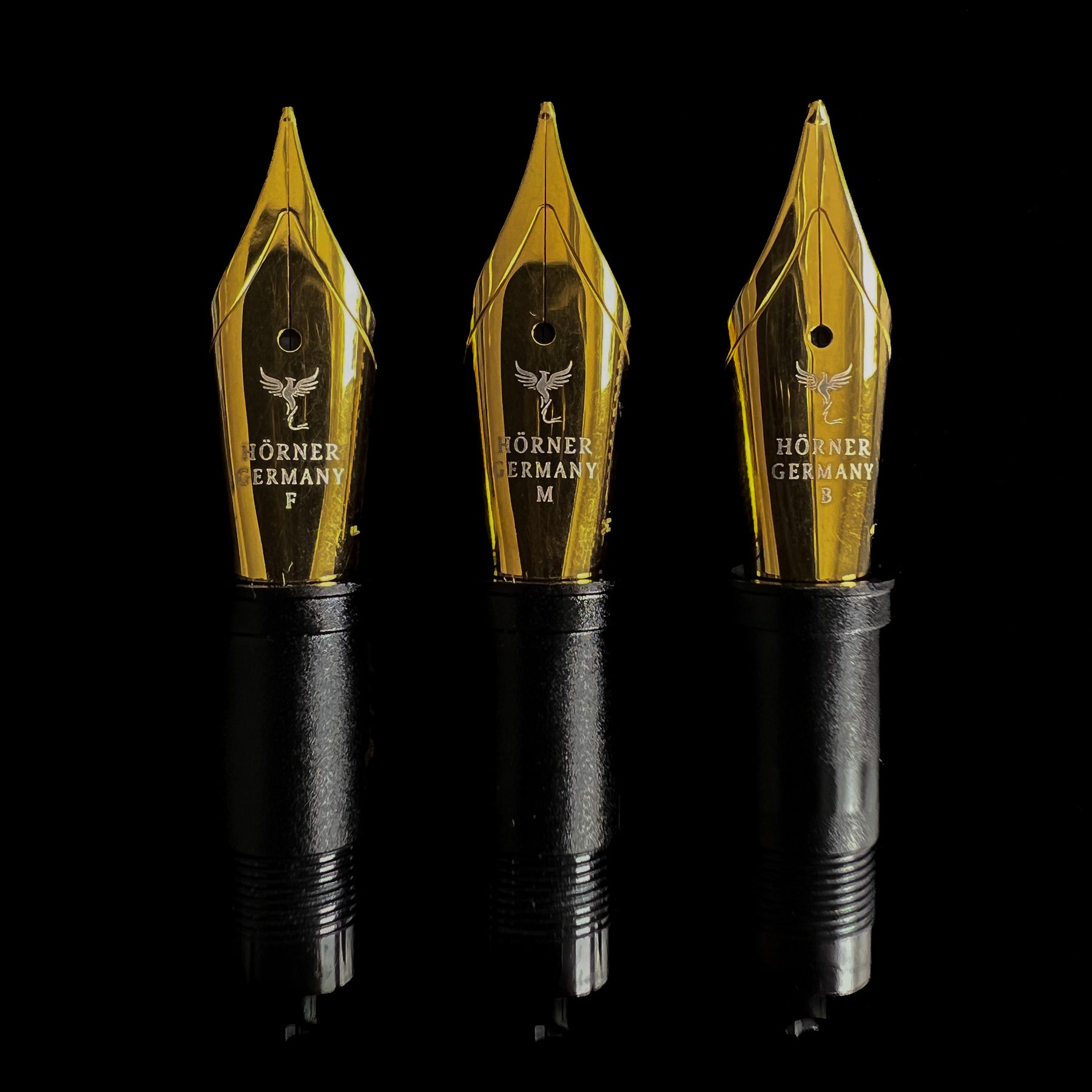
Fountain pen nibs are graded by line width. EF (extra fine) writes the thinnest line, BB (double broad) the thickest. Most writers start with M (medium) for everyday use, F (fine) suits small handwriting, and B, BB or a stub add character to signatures. The letter codes are universal, but actual widths vary by brand, so always check the line width in the product description. Every Hörner fountain pen comes with a German JoWo nib in the M grade.
The nib chart, every grade in one place.
Nibs differ less in what they are made of than in their grade, the width of the line they lay down. The market offers a dozen or more types, but you only need a handful to choose well.
Here is the whole range at a glance, then the rest of the guide takes the codes, the brand differences and the choosing in turn.
| Nib | Line width | Ink flow | Best for |
|---|---|---|---|
| EF (Extra Fine) | ~0.3 mm | Low | Small handwriting, annotations |
| F (Fine) | ~0.4–0.5 mm | Medium-low | Detailed notes, cheaper paper |
| M (Medium) | ~0.6–0.7 mm | Medium | Everyday use, the most popular |
| B (Broad) | ~0.8–1.0 mm | High | Signatures, showing ink shading |
| BB (Double Broad) | ~1.0–1.2 mm | Very high | Bold writing, ink lovers |
| Stub | Flat tip, ~1.1 mm | High | Line variation, lettering |
| Italic | Angled flat tip | High | Script, formal correspondence |
Treat the widths as guidance, not gospel. The letters are universal, but the millimeters behind them shift from one brand to the next, which is the next thing worth knowing.
Reading the grades, from A to XF.
Manufacturers fit pens with different grades, and most buyers give it little thought. They should, because the nib is the heart of the pen and the part you feel on every line.
The two grades you meet most often in stationers are A and M. A nibs are made for beginners: stainless steel, particularly hard-wearing, easy for an inexperienced hand, which is why they are usually recommended for primary-school writers. M nibs are the medium, standard width that lets you write comfortably for long stretches. They are the all-rounder for everyone.
From there, the range opens up by need:
- F (fine): a thinner line, chosen by experienced writers with a delicate hand.
- B (broad): a little wider than the standard M, better suited to larger handwriting.
- EF or XF (extra fine): finer still than F, good for fine embellishment, but it can feel scratchy for ordinary writing, so it is one for experienced hands.
- BB (double broad): wider than B again. Few people write everyday text with it; it lives mostly on signature pens.
- LH (left-handed): an M nib with a special slant for left-handed writers. Like the A nib, it is stainless steel and hard-wearing, which makes it forgiving for those still learning.
There are more besides. You may meet OM, OB and OBB nibs, which are medium, broad and extra-broad nibs with a left slant that can compensate for a slightly angled hand position. Not every brand offers every type, so the grade you can actually buy depends on the pen.
Why the same letter varies by brand.
There is one difficulty worth understanding before you buy: neither the grade names nor the line widths are standardized. Each brand sets its own values.
In practice, that means an F nib from one maker can already write like an M from another. As a rough rule, Japanese nibs run about one size finer than European ones, so a Japanese M can feel like a European F. The codes tell you the intent; the millimeters tell you the truth.
So check the line width stated by the maker rather than the letter alone. Hörner lists it in the product description for every fountain pen. Where no exact width is given, and especially then, do a quick writing test before you commit, so you can judge the line for yourself. Nib feel is also tied to the metal, which is the longer story in our gold nib vs steel nib guide.
The letter on the box tells you the intent. The line on the page tells you the truth.From experience · Hörner
Choosing a nib for how you write.
Work back from your handwriting and what the pen is for, not from which grade sounds most refined.
For an all-round nib, M is the best choice, and it is what comes as standard on Hörner fountain pens. For very fine, smooth writing, reach for F or EF/XF. For a signature pen, B or BB lay down the bold, ink-rich line that suits it. For left-handed writers, an LH nib is built for the job.
If you write for very different purposes, you need not settle on one grade. Many fountain pens let you change the nib as required, though not all do. Specialist nibs fit here too: flat-tipped calligraphy nibs in place of the usual rounded iridium tip, gold nibs for a softer, more distinctive feel, even music nibs with two slits. The point is to match the nib to the task, then leave it alone.
If you are buying your first fountain pen, or choosing one as a gift, pick M. It is the comfortable middle: thin enough for notes, full enough for a signature, and forgiving while you find your hand. You can always try a finer or broader grade once you know how you like to write.
What our pens ship with.
Every Hörner fountain pen comes with a German JoWo nib in the M grade, the standard all-rounder, paired with the cartridge and converter system.
M is the default for a reason: it writes a clean, comfortable line straight from the box and suits almost everyone, which matters most when a pen is a first fountain pen or a gift. Other grades are available, and for writers who want a softer feel with a touch more give, there is an 18ct gold nib upgrade. Whatever the grade, the line width for each pen is stated in its product description, so you know exactly what you are getting before you order.
A few good places to start, in wood and in gold: