Fountain pen scratchy? Here is how to fix it.
A scratchy fountain pen is almost never a defect. Most of the time it is the grip, the paper, or a new nib that still has to break in. This guide walks through scratching, drying out, skipping and leaking one cause at a time, and shows you when a pen belongs in expert hands.
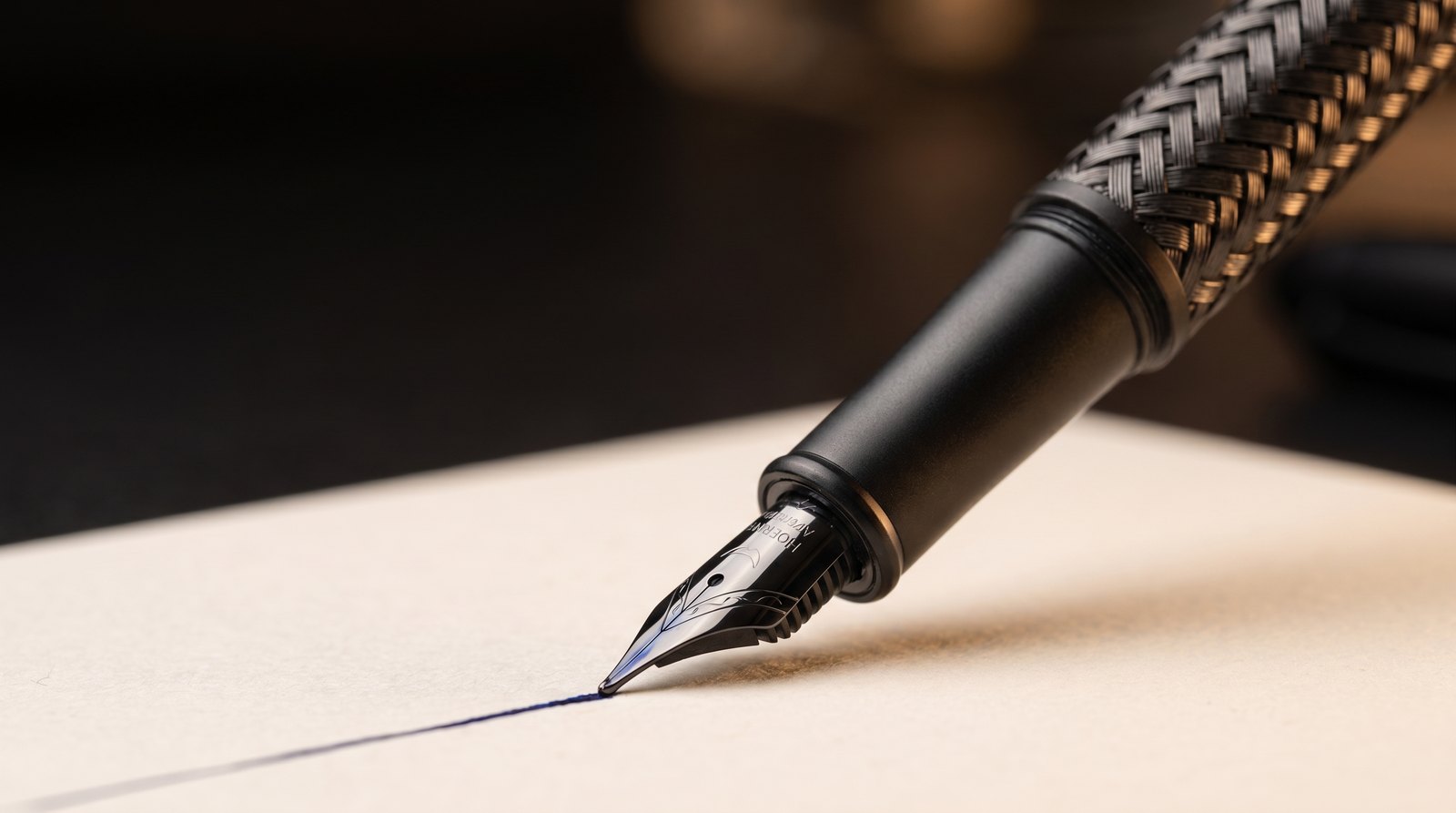
A scratchy fountain pen is rarely a defect. Most often it is the grip, the paper, or a new nib that has not been broken in, sometimes the ink or a nib that is too narrow. Six of the seven common causes you can fix yourself in minutes. Only an unevenly ground nib belongs in expert hands. Every Hörner fountain pen carries a German JoWo nib, shipped in the balanced M width.
Why a fountain pen scratches: the 7 causes.
When a fountain pen scratches, most people assume a fault. In reality the reason almost always lies not with the nib, but with the grip, the paper, or the fact that the nib is still new. Seven causes explain nearly every scratch, and six of them you can fix without any tools.
| Cause | Typical symptom | Who fixes it? |
|---|---|---|
| Grip | Scratches only in a certain hold, nib too steep or pressed | You, right away |
| Paper too rough | Smooth in the store, scratchy at home | You, smoother paper |
| Ink consistency | Scratches only with one particular ink | You, a different ink |
| New nib | Brand new pen, scratchy at first then better | You, by breaking it in |
| Narrow nib width | Pen writes scratchy in general (F, EF) | You, choose an M nib |
| Dried out, dirty | Smooth before, now scratchy or skipping | You, clean it |
| Ground unevenly | Writes "on edge", visible under a loupe | Maker, grind or replace |
We go through these in order, from the most common and simplest to the one where self-help ends. If your pen does not scratch but will not write at all, or it leaks, skip ahead to dried out or leaking.
Angle and pressure: the most common mistake.
By far the most common cause of a scratchy feel is the grip. A fountain pen is not a ballpoint. It wants to be guided, not pushed, and it asks for a flatter angle.
The angle. Set the nib at roughly 45 degrees to the paper, engraved side up. Hold the pen too steeply and the tip digs into the paper and scratches. Twist it and only one tine runs, which feels rough. Rotate the pen slowly until both tines sit evenly and the line turns soft. Your hand learns that point quickly.
The pressure. The ink flows on its own, you do not need to help it along. Press out of habit and you spread the tines, provoking the very scratch you wanted to avoid. The drill behind it is simple: write half a page deliberately light, almost only balancing the pen. Nearly always, the scratch disappears at once.
Write a line and rotate the pen very gently left and right as you go. At one point the line turns audibly and noticeably softer. That is your personal sweet spot. If it scratches equally in every rotation, the cause is more likely the paper, the nib, or the ink flow, and the next chapters are for you.
Paper and ink: the quiet causes.
Before you suspect the nib, check two things that are to blame far more often than people think: the paper and the ink. Both cost nothing but a quick test.
The paper. The classic: the pen felt smooth in the store, and at home it suddenly scratches. The explanation is usually simple. Shops lay out smooth test pads where every nib runs well. Ordinary printer paper or cheap pads are often much rougher, and the same nib scratches. Try smooth paper around 80 to 100 gsm. If the feel changes noticeably, it was never the nib.
The ink. Inks differ more than their uniform look suggests. One runs wet and lubricated, another rather dry. A dry ink lets the nib run more scratchy across the paper. If your pen only scratches with one particular ink, try another brand before you keep doubting the nib.
Two of the most common reasons for a scratchy nib are not nib problems at all: the paper and the ink. Both you can test in two minutes.From experience · Hörner
A new nib and the right nib width.
A brand new pen that scratches a little at first is not a warranty case, it is normal. Every nib leaves the factory with tiny machining marks at the tip that wear in to your hand as you write. This process is called breaking in. It takes from a few pages to a couple of weeks, and the only thing you have to do is use the pen regularly. No tricks, no sandpaper, just write.
A new nib does not scratch because it is bad, but because it does not know you yet. After a few pages, it knows your hand.Aus der Praxis · Andre Hörner
If breaking in does not help, look at the nib width. Narrow nibs write more scratchy than wide ones by nature, and the reason is simple: on a fine nib the whole pressure of the hand rests on a tiny point, while on a wide one it spreads over a larger contact area. If you tend to scratch or press firmly, you will be more comfortable with M or B than with F or EF.
That is exactly why we fit our Hörner fountain pens with an M nib by default, the all-rounder that tires most hands the least. Wide B nibs make handsome signature nibs but suit long text less well because of the broad line. Fine F nibs are ideal for small writing and tight forms, but ask for a steadier hand. Which width fits you is covered in detail in our guide to fountain pen nib sizes.
Fountain pen not writing: dried out and clogged.
A pen that will not write at all, or only skips, almost always has the same problem: dried ink in the nib slit and the feed. It happens quickly when a pen sits unused for a few weeks. The fix is easy and needs only water and a little patience.
| Step | What to do |
|---|---|
| 1. Take it apart | Remove the converter or cartridge, unscrew the nib section from the barrel |
| 2. Rinse | Rinse the nib under cool, clear water, never hot |
| 3. Flush | Draw water through with the converter several times until it runs clear |
| 4. Soak | Leave stubborn cases standing in cool water for a few hours, even overnight |
| 5. Dry, refill | Let the parts dry, then refill with fresh ink |
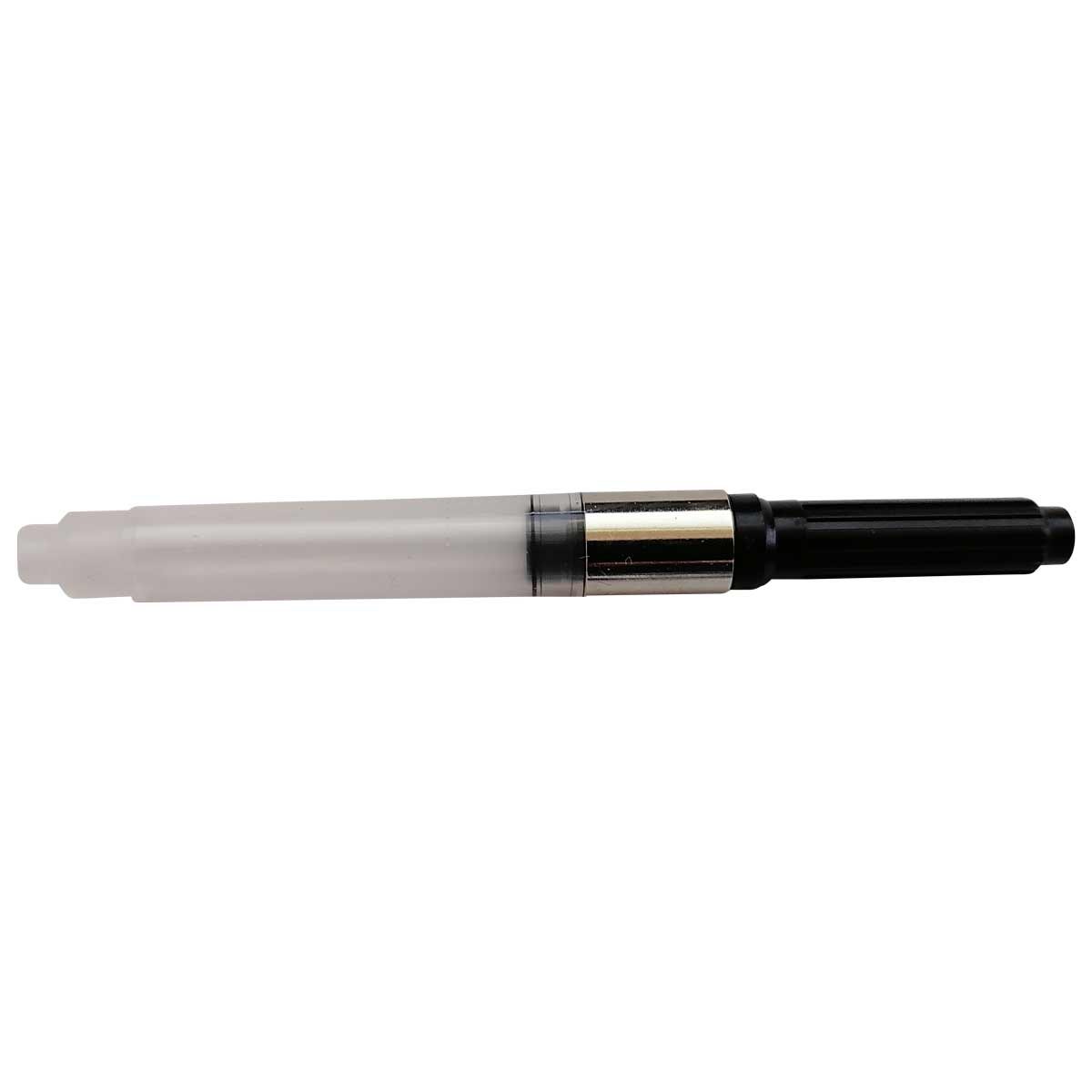
Use only cool or lukewarm water, no hot water and no solvents or dish soap, which can attack seals and the nib. A converter makes flushing far easier, and you can add one to any Hörner fountain pen. For the full routine, including what to keep away from a pen, see our guide on how to clean a fountain pen.
If the pen still will not write after a thorough clean and fresh ink, the tank is rarely the culprit, it is the feed under the nib. That too usually clears with a longer soak. We suggest a thorough clean at least once a year, and the problem rarely appears.
Fountain pen leaking or blotting.
The opposite of the skipping pen is the one that releases too much ink: it blots, leaves stains in the cap, or makes the writing bleed. This too has clear, harmless reasons.
Pressure and temperature. Ink expands when the air in the converter warms or the pressure drops, the classic being a plane. Keep the pen upright in transit with the nib pointing up, and carry it either full or empty, not half filled. The fill level. A converter filled to the brim is more prone to blotting. Leave a little air on purpose.
The dirty feed. If a pen constantly gives off too much ink, the feed is usually dirty and no longer regulates the flow cleanly. The same clean as in the chapter before, a thorough flush, normally restores an even flow. If the problem appears right after a drop, the nib may be bent, and that is the point where self-help ends.
Grinding or nib tuning: the nib itself.
If you have ruled out grip, paper, ink and the break-in period and the pen still scratches, one cause remains: the nib is not ground evenly. That does not automatically mean poor quality. Often it takes a loupe to see that the two tines are minutely different in length, so you write "on edge".
The safe route. As a rule it is enough to take the pen to the retailer or maker and have the nib ground. If that does not help, any good supplier will replace the nib. With us the rule is simple: if a nib arrives scratchy or damaged from the factory, we replace it without fuss. A short message through our contact page is all it takes.
The route for the experienced: nib tuning. Those with experience grind the nib themselves with very fine sandpaper or micromesh. Here is how it works in principle:
| Step | What to do |
|---|---|
| 1. Prepare | Ink the pen, ready fine sandpaper from 1000 grit up, or micromesh |
| 2. Figure eight | Draw a figure eight on the sandpaper with normal writing pressure |
| 3. Check | After every three to five passes, test on normal paper to see if the nib runs softer |
We advise beginners against grinding a nib themselves. The risk of ruining an intact nib is real, and then it is gone. When in doubt, follow the honest rule of this guide: clean and correct your grip, yes, but grinding or bending the nib is better left to experience, otherwise have it ground or replaced. Every Hörner fountain pen carries a JoWo nib, the same German nib unit far pricier brands fit.
So it never scratches or skips in the first place.
Most fountain pen problems never arise if you keep three simple habits. They cost no time and save you the troubleshooting.
| Habit | Why it helps |
|---|---|
| Write regularly | Fresh ink does not dry out, the most common cause of skipping is gone |
| Always cap it | Stops the nib drying between two notes |
| Store it right | Flat or nib up, never nib down for long stretches |
If you will not use a pen for a while, flush it empty and keep it clean. Then nothing can dry out, and it writes at once the next time you fill it. And if you are still weighing the nib question itself, our comparison of a gold nib versus a steel nib and our take on what makes a good fountain pen both help.
The bottom line: a scratchy or skipping fountain pen is almost always a small, solvable thing. Grip, paper, break-in, a clean. In the vast majority of cases one of those is enough, and the pen writes as softly as it should again.