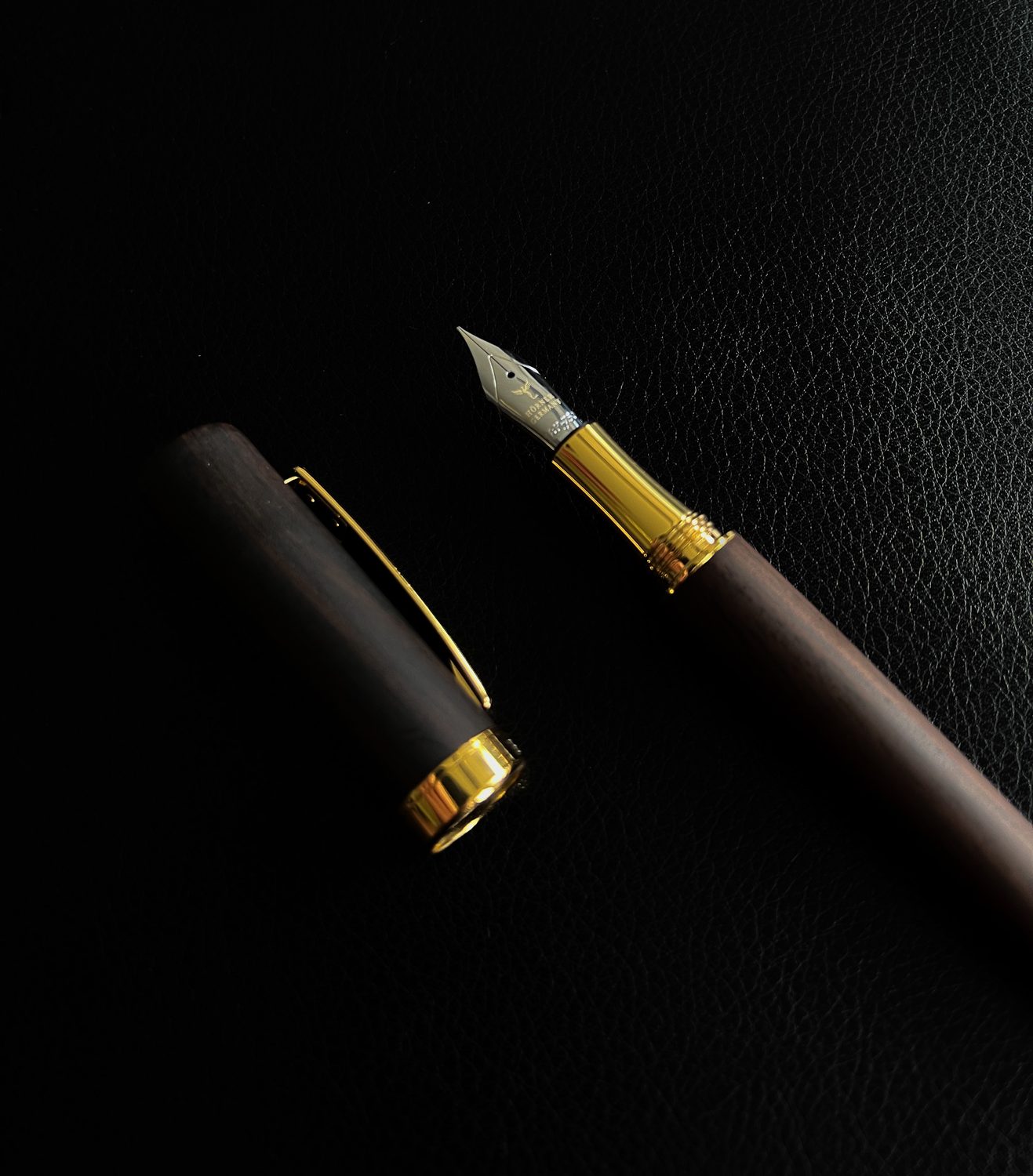
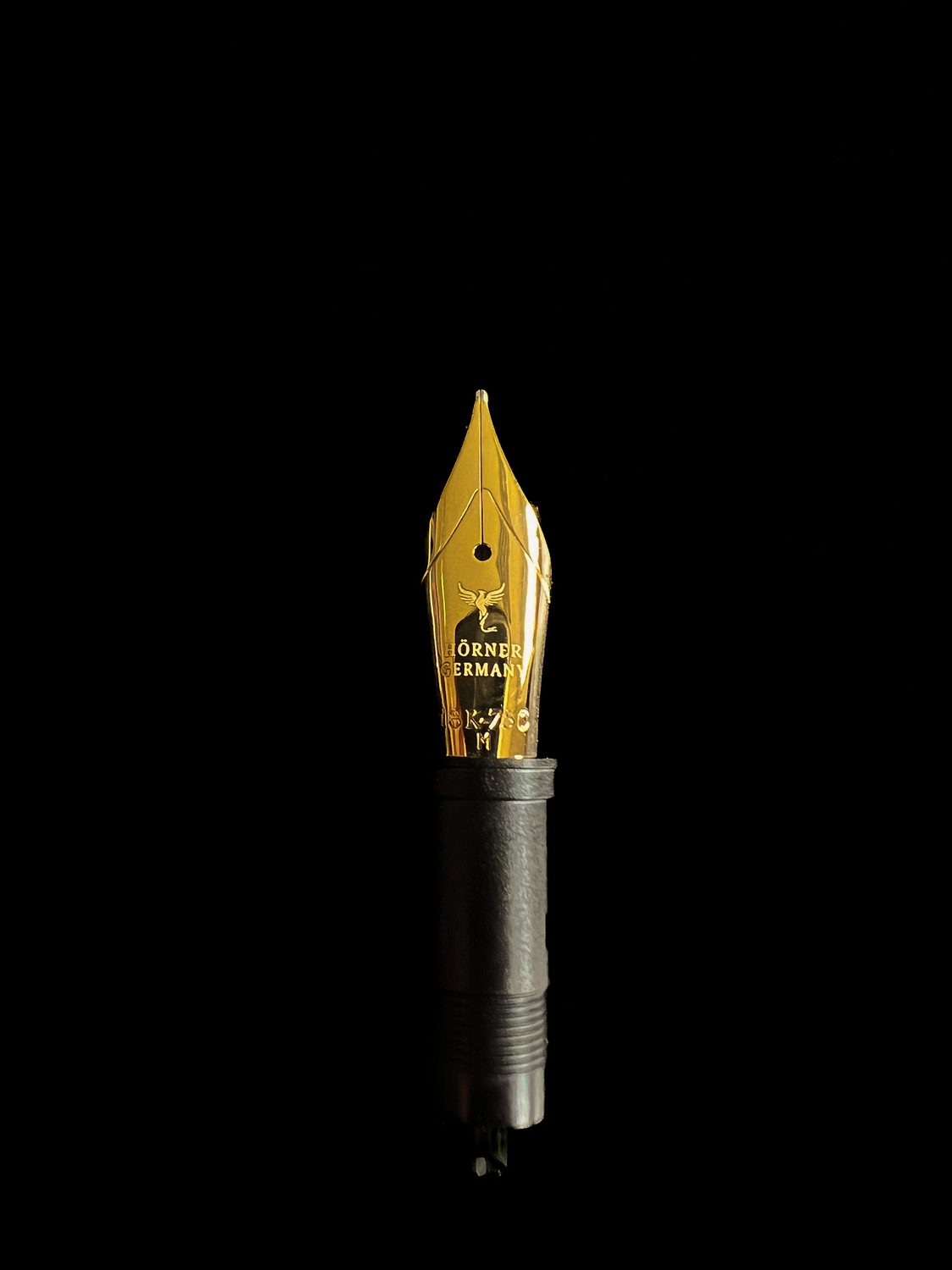
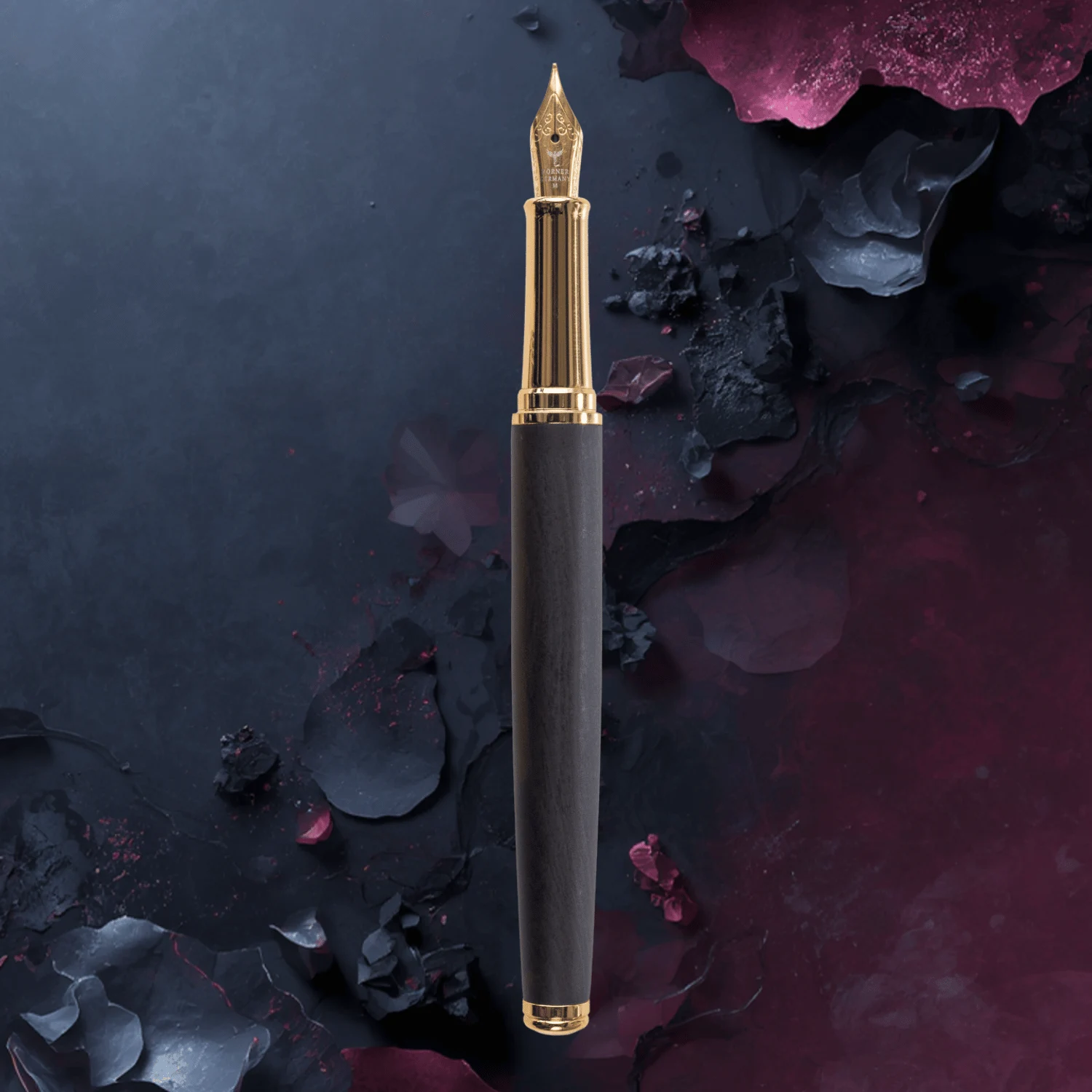
Gold nib vs steel nib: what is the real difference.
Gold or steel is the question almost everyone asks when buying a fountain pen. Here is the plain difference in flex, feel, durability and price, why the writing point is the same on both, and why gold is not automatically the better choice.
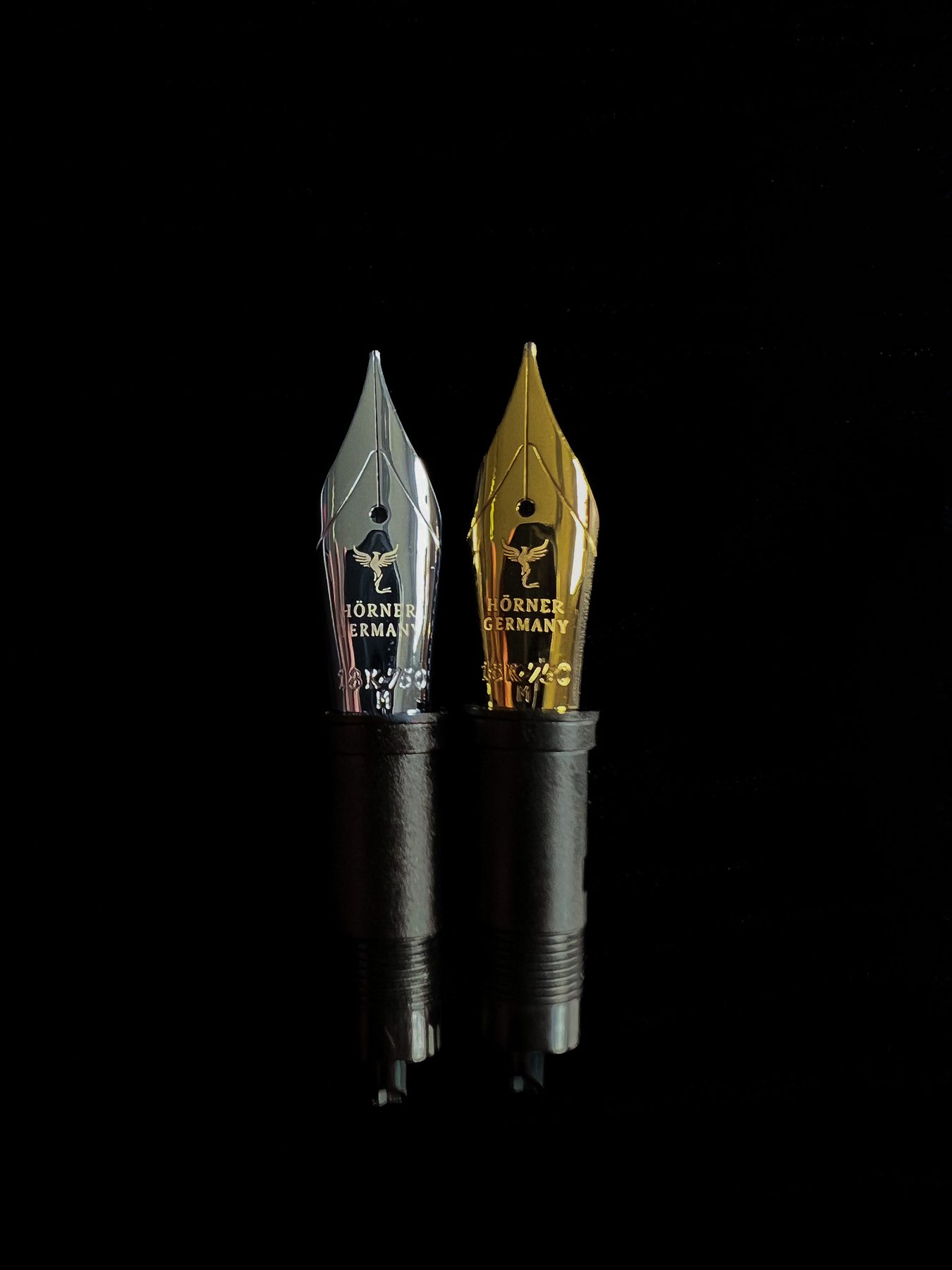
A gold nib is softer and a little springy, so it feels cushioned and, with real flex, gives some line variation. Steel is stiffer, tougher and far cheaper. The catch is that the actual writing point, the hard tipping, is the same on both, so a modern firm gold nib and a well-tuned steel nib write more alike than you would think. Choose gold for feel and flex, steel for everyday reliability and value, which is what every Hörner fountain pen fits as standard.
The difference, in one place.
Nibs are made of one material, but you write with another. The gold or steel body sets the feel and the price; the tiny hard point at the very tip lays the line. That single fact explains most of the confusion.
Here is the whole comparison at a glance, then the rest of the guide takes each point in turn.
| Feature | Gold nib | Steel nib |
|---|---|---|
| Flex | Softer, gives under pressure | Stiff, consistent line |
| Feel | Cushioned, silk on paper | Crisp, slight feedback |
| Tipping (the writing point) | Hard alloy | Same hard alloy |
| Durability | Softer body, lighter grip helps | More forgiving |
| Aggressive inks | Very resistant | Good, modern steel resists rust |
| Price band | High | Affordable |
| Best for | Heirloom pens, flex, feel | Daily use, first pens, value |
Read that and the rest follows: gold is mostly about feel and prestige, steel is about reliable value, and the line on the page is closer than the price gap suggests.
Why gold led for so long.
Purists still name gold first, and for a long time they were right. Gold earned its reputation on durability, not feel.
The reason is in the metal. Gold is exceptionally inert, so even acidic liquids barely touch it. In the era when iron gall ink was everywhere, a nib needed exactly that kind of resistance. A steel nib of the time would slowly rust, even develop tiny pits, and no one wanted that in a pen they meant to keep. Gold simply outlasted the alternatives.
So gold became the standard by default. It was the material that survived the inks of the day, and that head start shaped the idea, still around today, that a serious fountain pen needs a gold nib.
How modern steel closed the gap.
Inks got gentler and metallurgy moved on. Today, stainless steel matches gold in most of the ways that decided the old argument.
Modern inks are far less aggressive than iron gall, and stainless steel alloys have long been available that do not rust and keep writing reliably after years of heavy use. The durability gap that once made gold the only safe choice has largely closed.
A large share of high-end nibs are still gold, partly by tradition and partly for feel. But the plain answer to does it still matter today is: for durability, far less than it used to. Which moves the real question onto how the two feel in the hand.
Where gold still differs.
Yes and no is the honest answer to whether material still matters. Gold keeps the qualities that always set it apart, and feel is the one you notice.
Gold is a less rigid metal, so a gold nib gives a touch under writing pressure and feels cushioned, the silk-on-paper sensation people describe. Anyone who owns several pens with comparable nibs will tell you a gold nib usually feels softer than a steel one of similar quality. On a premium pen it also simply looks the part.
The trade is cost. Gold nibs sit in a much higher price band, so a tight budget points you straight to steel, and that is no consolation prize. A well-finished steel nib, the kind Hörner fits as standard, writes a genuinely impressive line. The gold difference is real, but it is feel and flex, not better writing.
Gold buys you feel and flex, not a better line. The writing point is the same on both.From experience · Hörner
What you actually write with.
Whether you choose gold, steel or titanium, you do not write with that metal at all. You write with the tiny point welded to the very tip of the nib.
That point, the tipping, is a separate, much harder material, usually an iridium or platinum-group alloy. It is there for one reason: to be as hard and wear-resistant as possible. Even steel would not survive long against paper on its own, and gold, being softer still, would wear faster. So the tip is built from something tougher than either.
This is the fact that reframes the whole debate. Since the same hard tipping does the writing on both gold and steel nibs, the line they lay down is closer than the price difference suggests. The body metal shapes the feel; the tipping shapes the line.
Why nib width matters more.
For all the agonizing over gold or steel, one thing changes your writing far more than material: the nib width.
There is a world of difference between a fine F nib and an extra-broad BB. An F suits a delicate hand and longer texts, letters and pages of notes. Broad and extra-broad nibs are really signature nibs, less at home on a paragraph. A medium M nib is the dependable middle ground, a clean, balanced script for most uses.
If you are weighing material, settle the width first. Our companion guide to fountain pen nib sizes walks through the grades from fine to broad and what each is best at, which is the more useful decision for most writers.
A nib writes cleanly because it is well ground, not because of its metal. A poorly finished nib, or one whose two halves are not exactly even, scratches whatever it is made of. Keep any nib clean as well: rinse the pen regularly so ink residue does not build up and dull the feel.
Which nib should you choose?
Work back from how you write, and how much you write, rather than from which metal sounds finer.
If you want everyday reliability and value, steel is the easy answer: stiff, forgiving and ready out of the box. If you write a lot and want a softer feel, gold rewards the hours, which is why frequent writers tend to lean that way. If you like to experiment with harsh or iron gall inks, gold is the more resistant choice. If you want an heirloom pen and the budget allows, gold adds the presence and the flex.
For most people, and for almost anyone buying a first proper fountain pen, a good steel nib is more than enough. Gold is the upgrade you reach for when feel, flex or a keepsake matters more than price.
Our nibs, and the gold option.
Every Hörner fountain pen ships with a German JoWo nib, in steel as standard and some gold-plated for looks. We fit steel because, for everyday writing, it is the practical, dependable choice, and a well-tuned JoWo writes a clean line straight from the box.
If you want the softer gold feel, it is there. The Scriptum can be ordered with an 18ct gold nib, and there is a separate 18k gold size 6 nib option for the pens that take it. Either way the same hard tipping does the writing, so the difference you are buying is feel and flex, not a longer life. Whichever you pick, the nib, not the badge on it, is where the quality sits.
Three good places to start, from steel to solid gold: