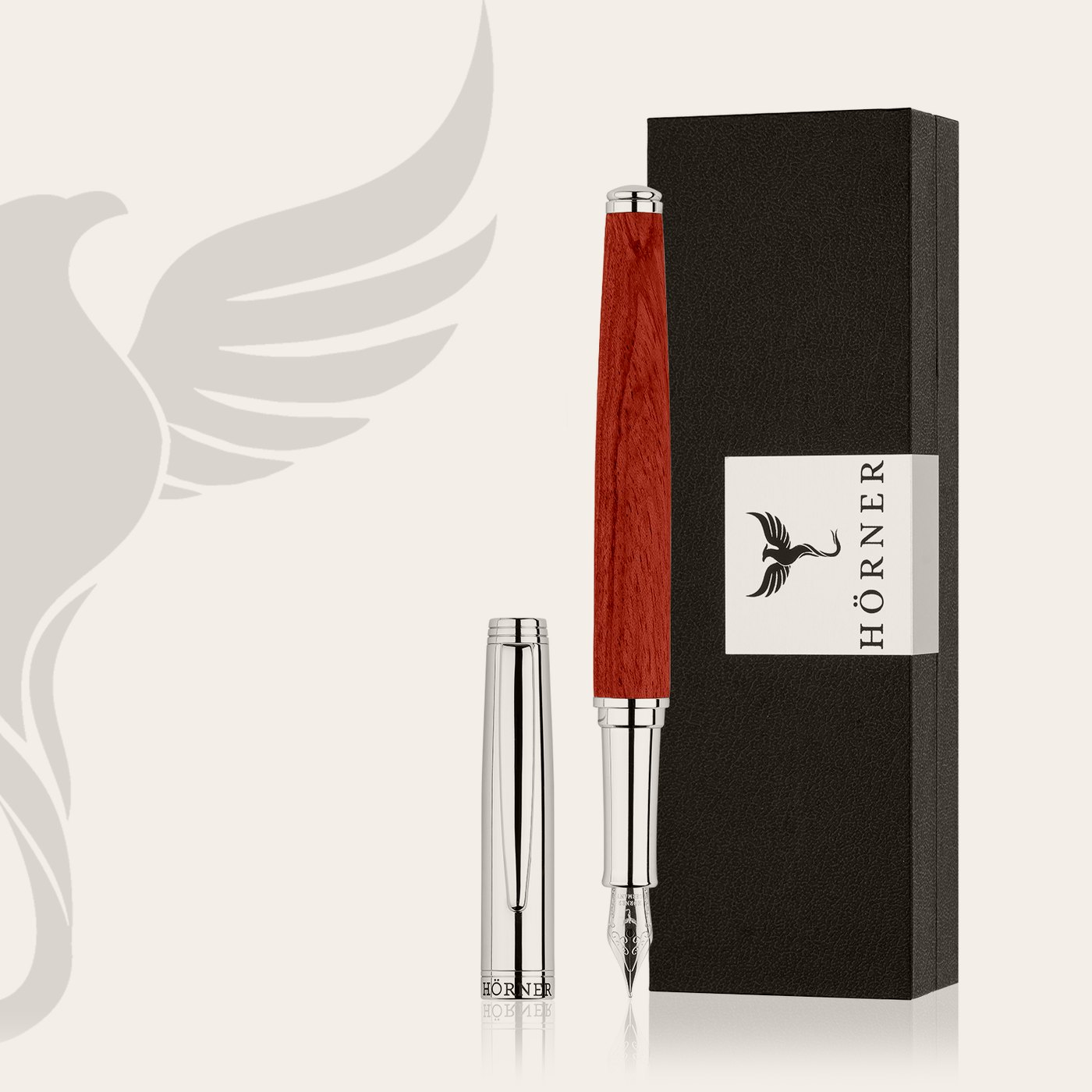
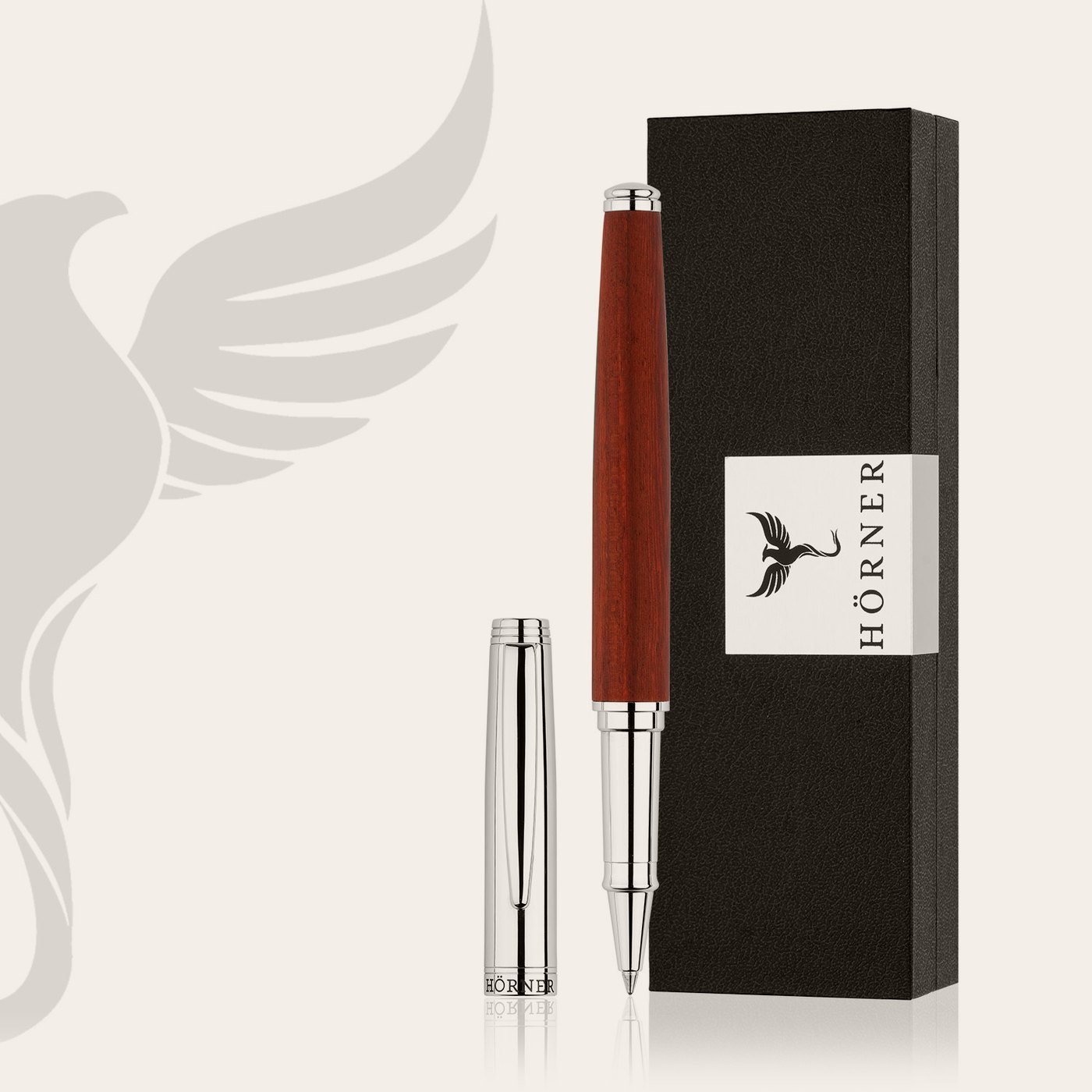
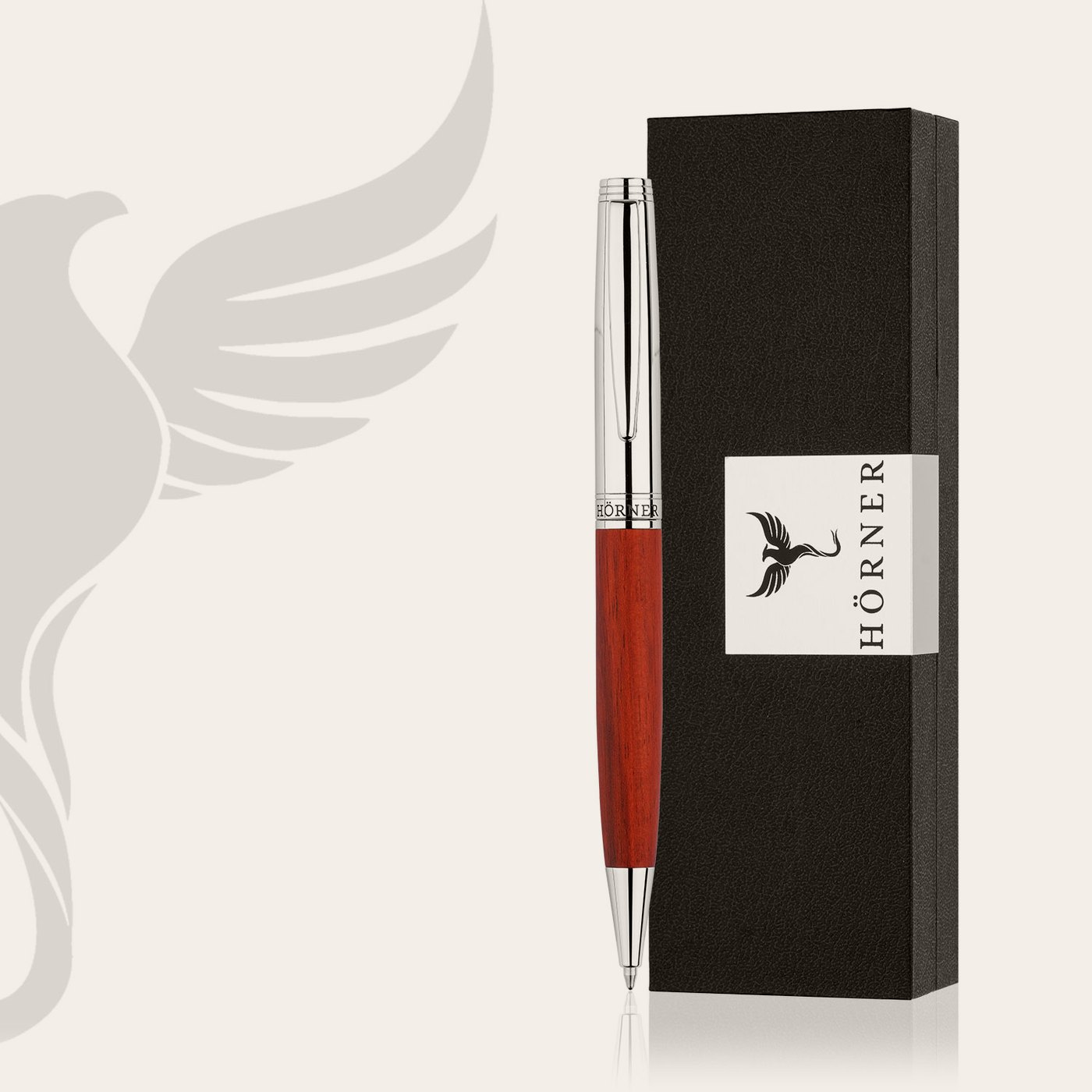
Sandalwood pens, and the warm red wood behind them.
Sandalwood is one of the classic luxury woods, prized for centuries for fine carving and objects worth keeping. In a pen it brings something ebony cannot: a warm, reddish-brown grain that feels relaxed rather than formal, light and quick to warm in the hand. Here is what sandalwood is, what it brings to a pen, and an honest word on the one thing people always ask about it.

Sandalwood is a warm, reddish-brown hardwood, long prized for fine carving and luxury goods. In a Hörner pen it is turned from a solid block over a brass core, so the barrel has real weight, warms quickly in the hand, and shows a fine, unique grain. It is lighter and warmer in tone than near-black ebony. One honest note: this is a wood chosen for its color and grain, not a scented novelty, so do not expect it to perfume your desk. Buy it for how it looks and feels, and it will age beautifully for years.
What a sandalwood pen is, in short.
A sandalwood pen is simply a pen whose barrel is turned from sandalwood, a warm reddish-brown hardwood that has carried an air of luxury for a very long time. It is the softer, warmer counterpart to a deep-black ebony pen.
What you notice first is the color: a rich, red-brown grain that feels relaxed and characterful rather than strict and formal. What you notice next is how it sits in the hand, light and quick to warm, because wood carries body heat far better than metal.
At Hörner the wood is turned from a solid block over a brass core, so the pen has real weight and balance, and because it is a natural material, no two barrels share the same grain. The rest of this guide walks through the look, the feel, the honest truth about scent, and how to look after one.
Warm red, and finely grained.
Sandalwood's whole appeal is its color and grain, so this is where a sandalwood pen either wins you over or does not.
The tone is a warm reddish-brown, closer to a deep terracotta than the pale tan some people picture. The grain is fine and fairly even, and once turned and polished the surface takes a soft, natural luster rather than a hard shine. Set against chrome or gold trim, that warm red reads as understated and expensive at the same time.
Because it is real wood, every barrel is a little different, and like most natural woods it deepens with age and handling, so the color grows richer over the years rather than fading. That is the quiet argument for solid wood over anything printed or coated: it improves with use.
Ebony is the formal black; sandalwood is the warm red. Same idea, a completely different mood in the hand.On wood pens · Hörner
Light, warm, and alive.
A pen is an object you hold for minutes at a time, so how the material feels matters as much as how it looks.
Sandalwood is lighter and a touch softer in feel than dense ebony, which makes it relaxed and easy in the hand over a long letter. The brass core underneath restores the weight and balance, so the pen still feels solid and intentional rather than hollow. And like all wood, it warms to the hand within moments, where a metal barrel can stay cool.
The result is a pen that feels personal and unfussy, the kind you reach for without thinking. If you want the material at its most expressive, the fountain pen makes the most of it; our guide on what makes a good fountain pen explains why the nib and the body work together.
Does a sandalwood pen smell?
This is the question everyone asks about sandalwood, so here is the straight answer rather than a marketing one.
No. Sandalwood earned its fragrant reputation from the aromatic species used in perfume and incense, but Hörner's sandalwood is a warm reddish wood chosen for its color and its fine grain, and the finished, sealed barrel is not a scented object. It will not perfume your desk or your pocket, and it is not meant to.
We would rather tell you that plainly than sell you on a smell that is not there. Buy a sandalwood pen for the warm red grain, the way it feels in the hand and the way it ages, all of which are real. Expect a beautiful wooden pen, not a stick of incense.
It would be easy to lean on the word sandalwood and let you imagine the scent. We would rather you know exactly what you are getting, so the pen delights you when it arrives instead of surprising you. Honest is the only way we want to sell a pen you keep for years.
True sandalwood vs red sandalwood.
There is a real reason a reddish sandalwood pen is not fragrant, and it is worth knowing, because two very different woods share the name.
True sandalwood is the genus Santalum, above all Indian Santalum album. Its wood is pale and yellow, and it is the one famous for scent: unusually among aromatic woods, true sandalwood is known to hold its fragrance for decades, which is why it is used in perfume and incense. That is the sandalwood people picture when they imagine a smell.
Reddish "sandalwood" is a different thing. Woods sold as red sandalwood, such as red sanders (Pterocarpus santalinus), are not in the true-sandalwood genus at all, they belong to a separate plant family, and they are prized for their warm red color and grain rather than for scent. So a warm reddish sandalwood pen is naturally not a fragrant object; the fragrance belongs to the pale species, not the red one. And even true sandalwood loses much of its scent once a barrel is turned and sealed with a protective finish.
That is the honest, useful version: buy a reddish sandalwood pen for its warm color, its fine grain and the way it feels, exactly the qualities the red woods are valued for, and leave the perfume associations with the pale Santalum they actually belong to.
Sandalwood or ebony: which wood?
If you are drawn to a wood pen, sandalwood and ebony are the two ends of the range, and the choice is really about mood.
Ebony is near-black, extremely hard and dense, and feels heavy, cool and formal, the classic serious wood. Sandalwood is a warm reddish-brown, lighter in tone and a little softer in feel, so it reads as relaxed and warm rather than strict. Both are turned over a brass core for weight, both age well, and both can be engraved.
Choose ebony for a deep, formal black and maximum density; choose sandalwood for warmth and a red-brown grain with real character. If black is what you are after, our guide on ebony wood pens covers that material in full.
Caring for a sandalwood pen.
A sandalwood pen asks very little of you. A few simple habits keep the warm red finish looking its best for years.
Wipe the barrel now and then with a soft cloth, dry or barely damp. Keep the pen away from prolonged direct sun, extreme heat and very dry air, which are hard on any natural wood over time. An occasional, sparing touch of a wood-safe care oil keeps the finish deep and rich, though it rarely needs much.
If it is a fountain pen, the nib and feed are cleaned the usual way, separately from the wood; our guide on how to clean a fountain pen covers that routine. Treated this simply, a sandalwood pen is the kind of object you keep and hand on rather than replace.
Hörner's sandalwood pens.
Sandalwood is one of the warmest woods in our Legno line, the choice for anyone who wants a wood pen with color and character rather than a formal black.
The Legno line comes in sandalwood as a fountain pen with a German JoWo nib, a rollerball with a liquid-ink refill, and a twist ballpoint with a German refill, all turned from a solid block over a brass core. The warm red grain is the same across all three, so the only real choice is the writing system you prefer. Every one can be engraved with a name or date, which is what turns a fine wooden pen into a personal gift.
Whichever you choose, it is a traceable pen from a named retailer with duties prepaid, turned from a warm, characterful wood, and built to be kept.