Nappa leather, explained.
Nappa is the soft, smooth leather on most good wallets and bags, and one of the most loosely used words in leather. It is not a grade and not a guarantee. Here is what actually makes a leather nappa, why it feels soft without being thin, how the finish changes everything, and how to tell the real thing from an imitation.
Nappa is a soft, full-grain smooth leather. Two things make it nappa: the natural grain is left intact, and the color is dyed all the way through. Its softness comes from how the hide is finished, not from being thin. A second, separate question is the surface finish, aniline, semi-aniline or pigmented, which decides how natural it looks and how much care it needs. The word nappa is not protected, so verify the material rather than trust the name. Look for a real, fine grain and a through-dye, and keep it away from heat and prolonged moisture.
What nappa leather is.
Nappa is a soft, full-grain smooth leather: a hide worked with its grain side facing out, with the natural grain kept intact and the color dyed all the way through.
Those last two points are the whole definition. A preserved grain means nothing is sanded off the surface, so you see the real hide. Through-dyeing means the color runs through the leather rather than sitting on top, so a small scuff does not reveal a pale core. Get both, plus a soft finish, and you have nappa.
What nappa is not is a quality seal. The word is a collective term, not a protected one, and on its own it tells you neither which hide the leather came from nor whether the grain is genuinely intact. So the useful habit is to treat nappa as a description to check, and look at the actual grain and feel. The rest of this guide is how to do that.
Smooth leather, and where the softness comes from.
Nappa sits inside a bigger family called smooth leather: any leather worked with the grain side out, as opposed to the napped, suede-like leathers. Nappa is the especially soft member of that family.
The simplest way to hold the relationship in your head: every nappa is a smooth leather, but not every smooth leather is nappa. What earns the nappa name is the combination of a preserved grain, a through-dye, and that supple hand.
And the softness is the interesting part, because it is engineered, not accidental. It comes from how the hide is finished: loose, flexible fiber bonds, careful fatliquoring that works oils deep into the leather, and long milling, where the dried hide is flexed and worked until it softens. The micro-structure stays intact, so the leather ends up supple and breathable at once. None of that involves shaving the hide thin, which matters for the most common misunderstanding about nappa, covered further down.
Aniline, semi-aniline, pigmented: the surface decides.
Here is the point that clears up most confusion: the word nappa says nothing about how open or sealed the surface is. That is a separate property, the finish, and it decides how the leather looks, feels and behaves.
Aniline nappa is dyed through with no covering layer, so the pores stay fully visible. It is the softest, warmest and most breathable, with the best patina, and also the most sensitive to water and stains. Semi-aniline adds a very thin pigment layer for everyday protection while keeping the grain clearly visible, the practical middle ground. Pigmented nappa has a proper covering color layer, so the surface is smoother, firmer and the most stain-resistant, at the cost of some of that open, natural feel.
The word nappa alone is no promise. A preserved grain and a through-dye are.On reading a leather label
There is an honest trade-off behind all of this, and it is worth saying plainly: super-soft and especially easy-care at the same time does not exist. The more open and natural the surface, the better it feels and the more care it asks for. Which finish is right depends entirely on whether you want the most natural hand or the least fuss.
Nappa or imitation: spotting real leather.
Because the word nappa is unprotected, it turns up on synthetic imitations too, so it pays to know the tells. Real nappa and a plastic look-alike behave very differently.
Real nappa has a natural, slightly irregular grain with fine pores, never a perfectly repeating pattern. Its color runs through the leather, so a small nick or the cut edge shows the same tone underneath rather than a pale or foam backing. It warms quickly in the hand, feels alive, and smells of leather. An imitation stays cool, feels uniformly, almost too-perfectly smooth, often shows a woven fabric behind a surface film, and smells faintly of plastic.
The clearest long-term difference is how they age. Real leather ages with character, softening and deepening. An imitation does not age so much as fail: the surface cracks, or the coating peels away from its backing. If a label leans on the word nappa with no hide or grade named, treat it as a prompt to check the material yourself rather than a reassurance. For the full picture on grades and the misleading label genuine leather, see our guide to the types of leather.
Soft does not mean thin.
The most common assumption about nappa is that soft means thin, and therefore cheap. On a wallet especially, supple nappa can read as flimsy. It is the opposite of how the leather is actually made.
As covered above, nappa's softness comes from the finishing, the fatliquoring and milling that flex the hide, not from shaving it down. A good nappa can be perfectly substantial and still feel soft, because suppleness and thickness are two different things. The leather is made flexible on purpose, so the surface stays comfortable and the item folds and closes cleanly.
That is exactly what a wallet or a card holder wants: a leather that folds without cracking and sits slim in a pocket. A stiff, thick hide would make the same wallet bulky and awkward to close. So softness on a nappa wallet is a feature of good finishing, not a sign of a thin or lesser leather.
How to spot good nappa.
Since the name guarantees nothing, the quality is in the leather itself, and it is easy enough to read once you know what to look for.
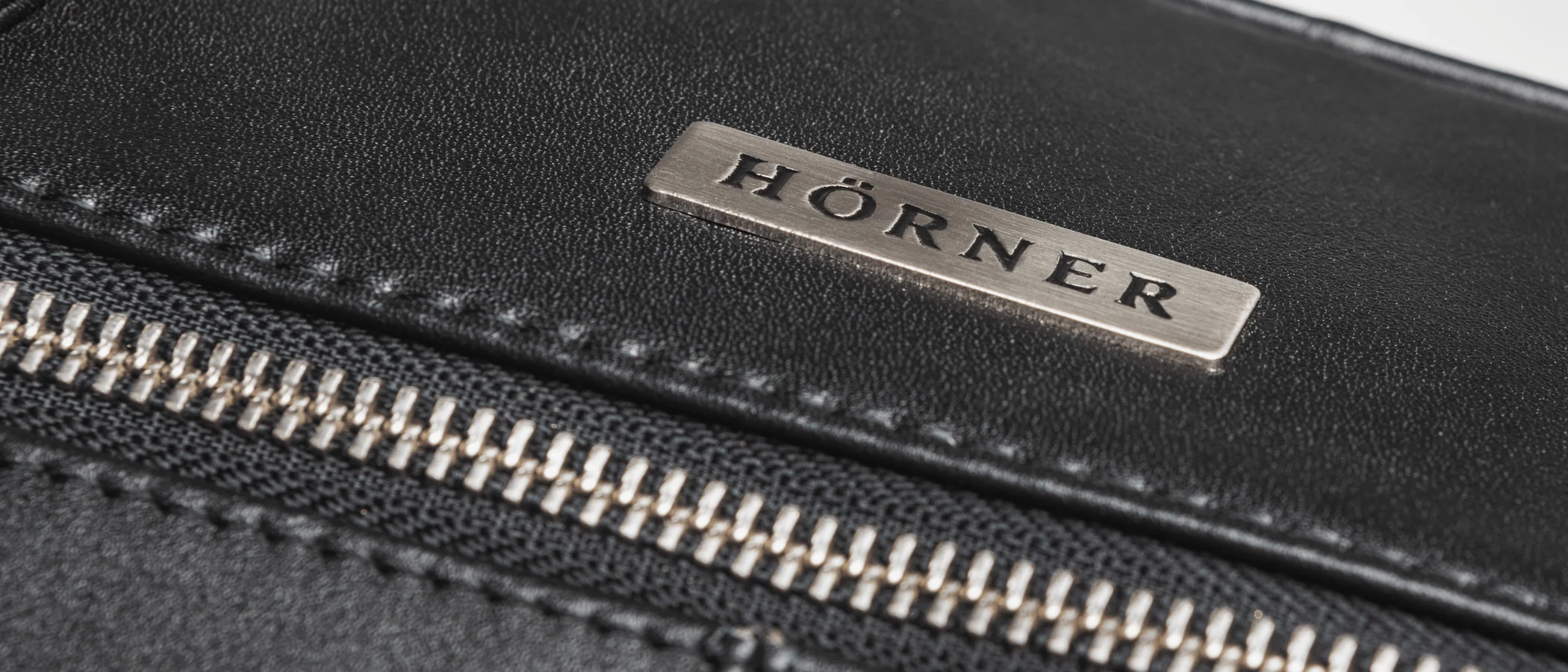
Good nappa shows an even, natural grain with fine, visible pores, the same irregular character across the piece rather than a stamped, repeating texture. The through-dye should be obvious: any small edge, fold or scuff shows the same color underneath. And the hand should be soft but substantial, supple without feeling like a thin film over something else.
Two things to be wary of. Leather sold as sanded nappa, where the grain has been buffed away and an even surface put back, is a lesser material precisely because it no longer has the preserved grain that defines true nappa: it replaces the real grain rather than showing it. And the term embossed nappa is close to a contradiction: a leather is either full-grain or it has been corrected and stamped with an artificial grain, not both. A genuinely fine nappa does not need a printed pattern to look good.
Caring for nappa leather.
Nappa asks for a little care, especially in its open-pored forms, but the routine is simple and mostly about what to avoid.
For everyday upkeep, dust it with a soft brush or a dry microfiber cloth, and keep it supple with a leather balm or conditioner. On open-pored aniline nappa, use any product sparingly and test it on a hidden spot first, since the leather takes it in readily. If a piece gets wet, do not rub it: blot it gently and let it air-dry at room temperature. Our full guide on how to care for leather covers the routine, and patina, in depth.
Two things do the real damage: prolonged moisture and direct heat. Keep nappa away from radiators, hairdryers, direct sun and hot cars, all of which dry the leather out and leave it stiff and prone to cracking. Air-dry only, never force-dry, and store it somewhere cool and ventilated rather than sealed in plastic.
Nappa at Hörner.
Nappa runs right through our leather range, because it is the material that best suits things you handle every day, and we are specific about what ours is.
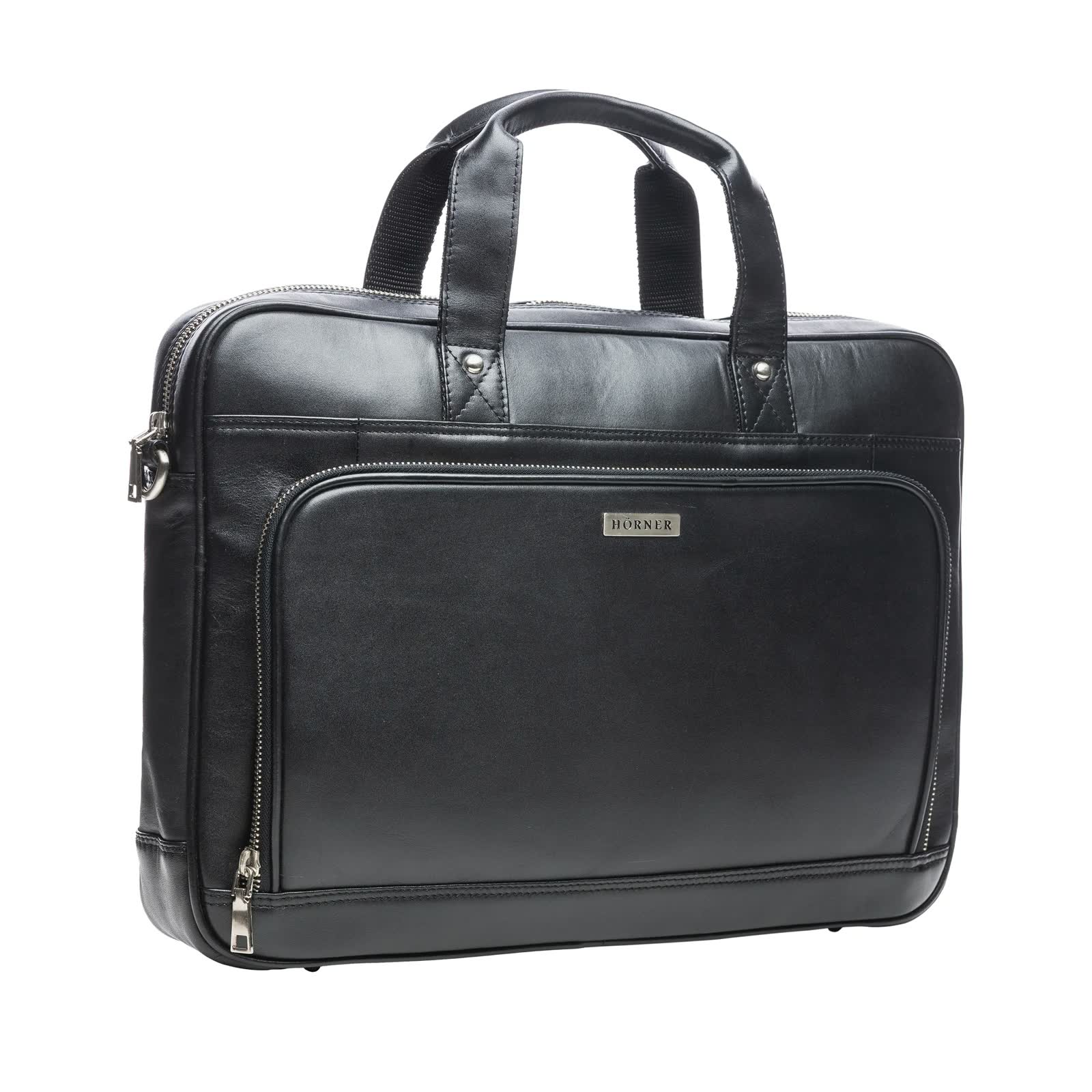
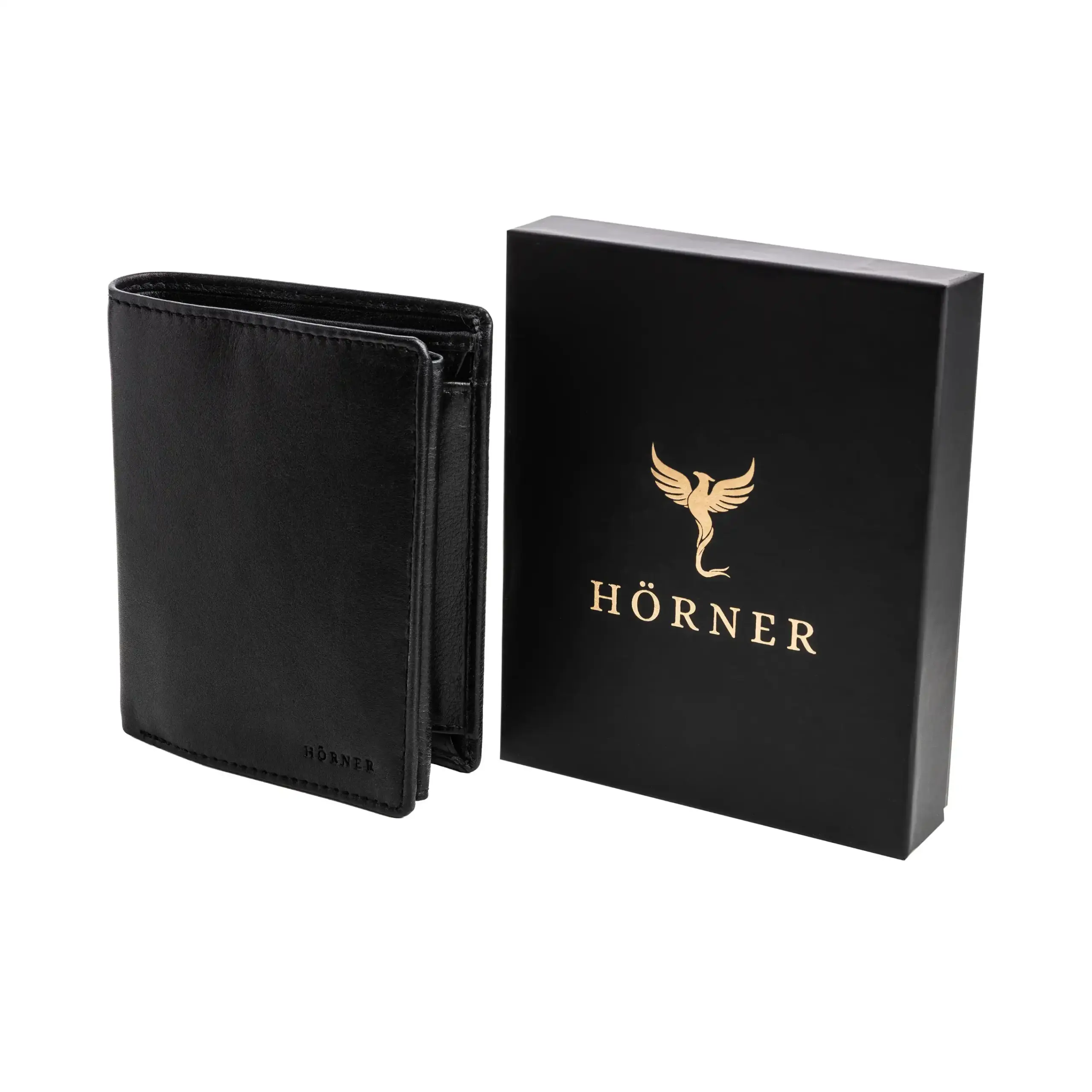
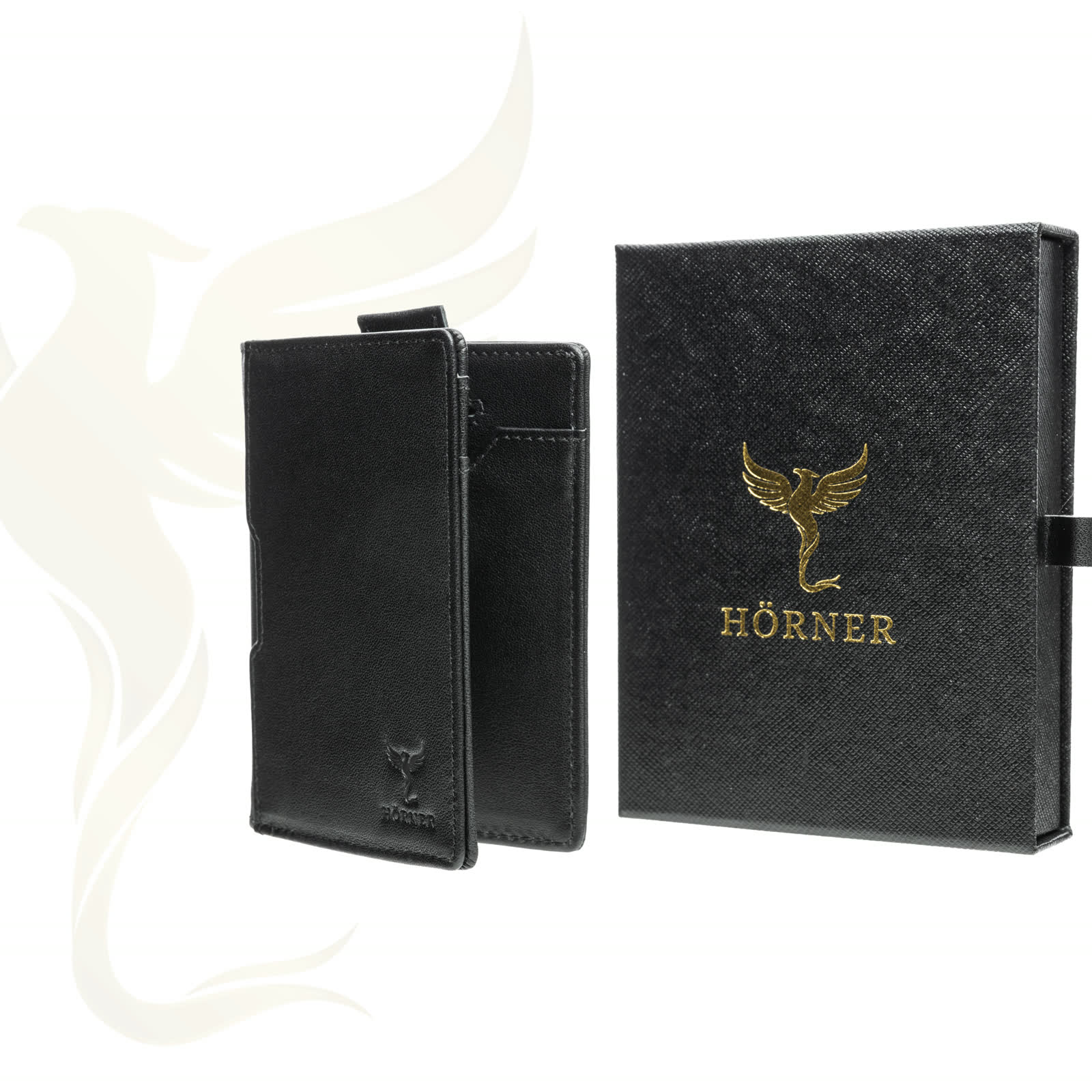
The nappa we use is smooth cowhide, dyed through and finished soft. It is the leather on most of our wallets and card holders, and on smooth business bags like the Bremen, where the same supple hand scales up to something you carry to work. Each product page names the leather it is made from, so you are not buying on the word nappa alone.
If you are choosing a wallet specifically, our guide on how to choose a wallet covers the formats, and the full leather collection is the place to see nappa across wallets, card holders and bags. Every piece ships from Germany with duties prepaid, and most can be engraved.