Slim, bifold or cardholder? Choose by how you pay.
A cardholder, a slim pop-up wallet, a classic bifold: the right one is not the slimmest or the biggest, it is the one that matches the cards you carry and whether you still carry cash. Here is how the three formats differ, what slim really means, and how to pick the wallet you will actually want in your pocket.
There are three wallet formats. A cardholder is the flattest, for a handful of cards and the odd note. A slim wallet usually means a pop-up card wallet: a card-sized case that fans your cards out on a press, holding more and giving quick access, though it builds height when full. A classic bifold or trifold is the roomiest, for cards, cash, coins and receipts. Choose with two questions: how many cards do you carry, and do you still carry coins? Everything else, RFID, leather, build quality, comes after that.
Match the wallet to how you pay.
There is no single best wallet, only the right format for how you actually pay and carry. Get that right and the rest is detail.
The whole decision comes down to two questions: how many cards do you carry, and do you still carry coins and cash? If you pay almost entirely by card or phone and keep a small stack of cards, you want a cardholder or a slim wallet. If coins, notes and receipts are part of your day, you want a classic wallet with the room to hold them.
Everything people obsess over after that, RFID, the exact leather, the brand, matters far less than starting from the right format. So the rest of this guide walks the three formats, then gives you a simple way to choose, and only then covers RFID, build quality and leather.
The cardholder: cards, and almost nothing else.
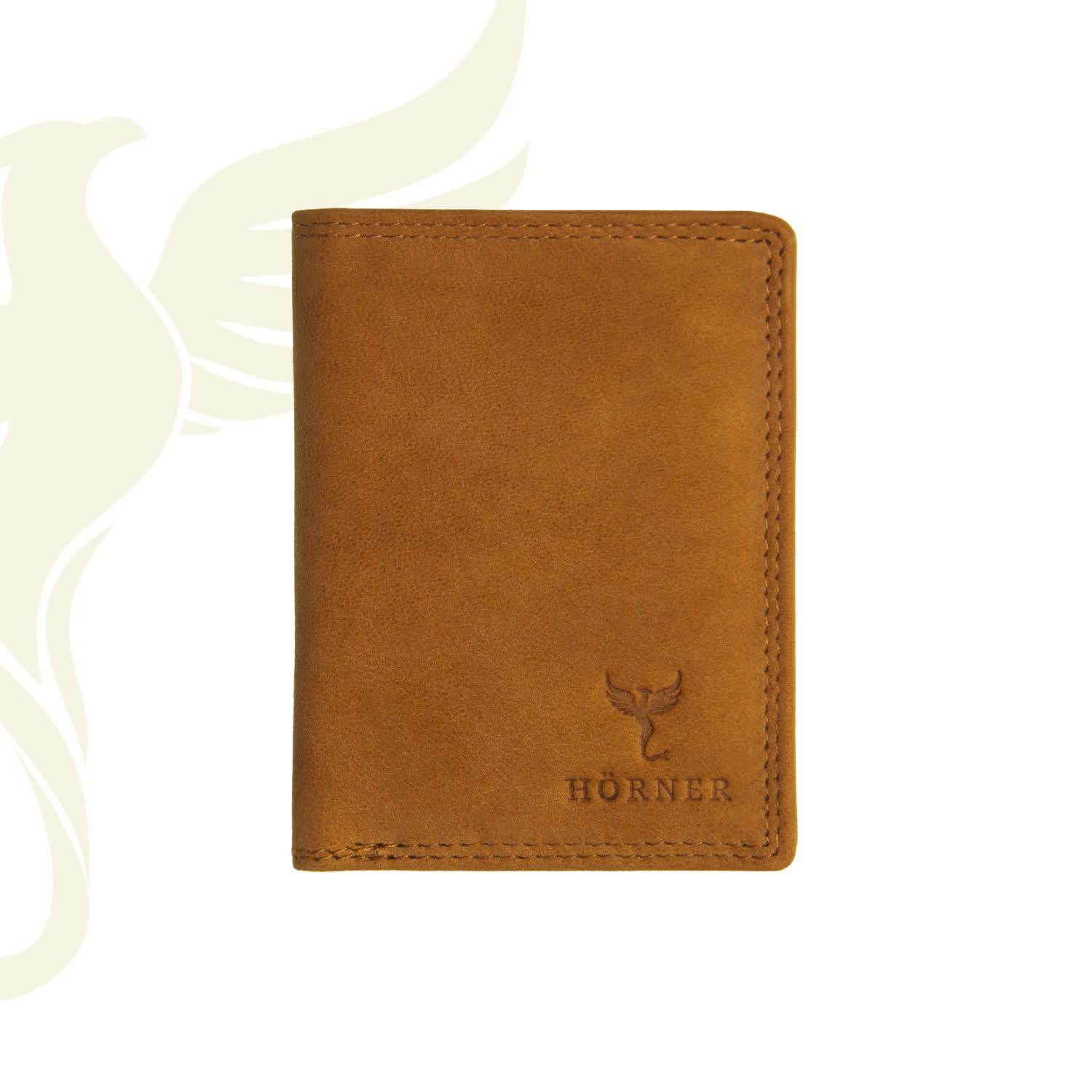
The cardholder is the most reduced wallet there is: built for cards, with at most a slot for a couple of folded notes, and stripped of everything else.
It typically holds around four to eight cards and sits just a few millimeters thick, so it all but disappears in a front pocket or a jacket. There is usually no coin pocket and little room for cash. That is the point. It is the format for someone who pays by card or phone almost all the time and wants the flattest possible thing to carry.
The honest limit is capacity. A cardholder is lovely with six well-chosen cards and starts to bulge and lose its appeal past about eight, especially if you also try to fold notes into it. If you find yourself forcing cards in, that is the cue to move up to a slim wallet rather than fight the format.
The slim wallet: what it really is.
This is the format most often misunderstood. A slim wallet today rarely means a thin leather card sleeve. It usually means a pop-up card wallet, and the word slim is about its footprint, not its thickness.
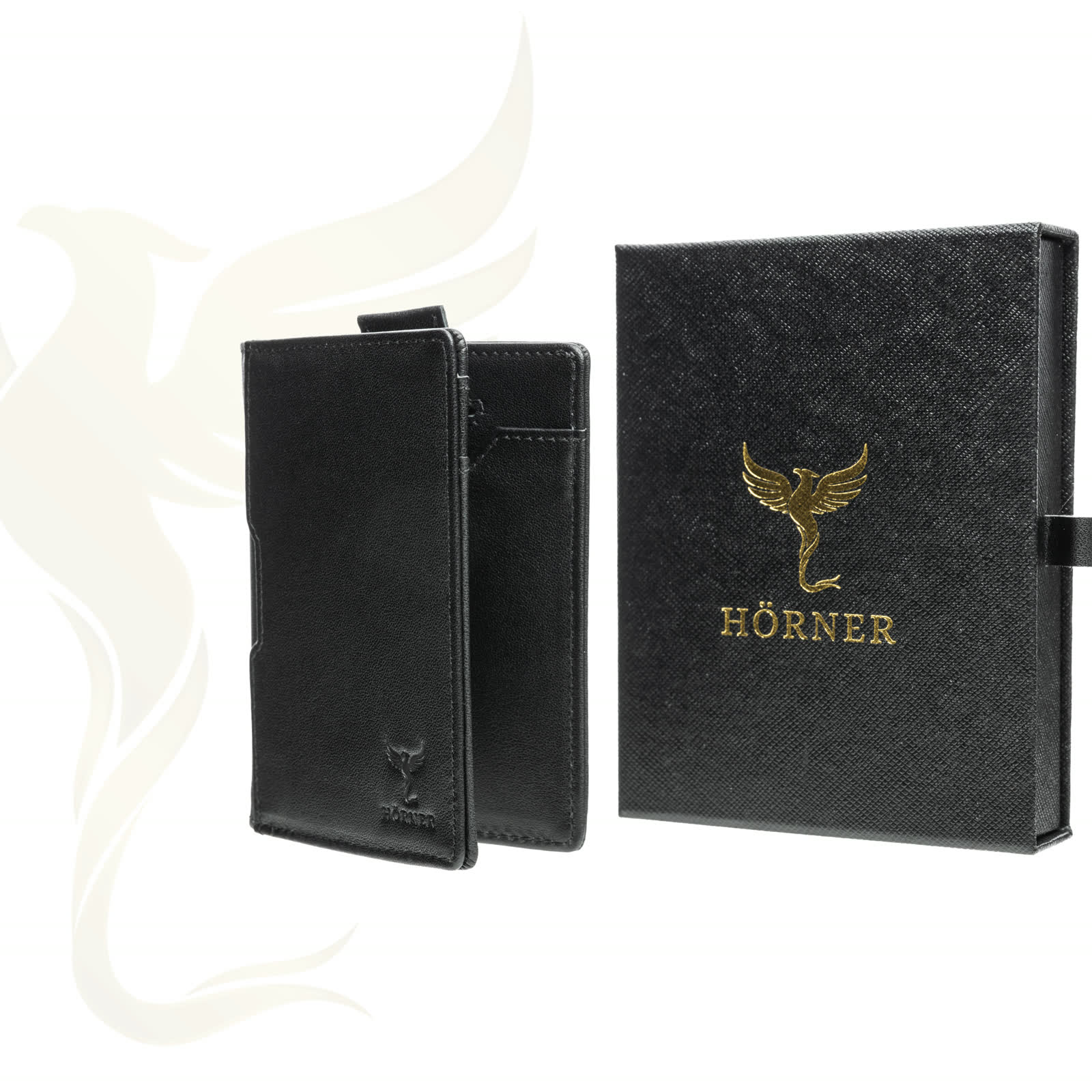
A pop-up wallet is a compact, card-sized case with a spring-loaded compartment. Press a lever or slider and your cards fan out in a staggered row, like a small staircase, for quick one-handed access. A good one holds up to about eight cards in that quick-access slide, plus a few more and some folded notes in inner pockets, around thirteen cards in total. So it carries far more than a cardholder while keeping the same small front profile.
A slim wallet does not trade thick for thin. It trades searching for speed, and volume for footprint.On what slim really means
There is one honest catch, and it is worth knowing before you buy. Because the footprint stays card-sized, a slim wallet gains height as you fill it, and a fully loaded one can reach around three centimeters tall. In a jacket or a bag that is irrelevant. In a tight trouser or back pocket, a stuffed slim wallet can still show a bulge. The fix is simply not to overfill it.
The classic wallet: bifold and trifold.
The classic folding wallet is the roomiest format, and the right answer for anyone who still deals in cash, coins and the occasional receipt. It comes in two main shapes.
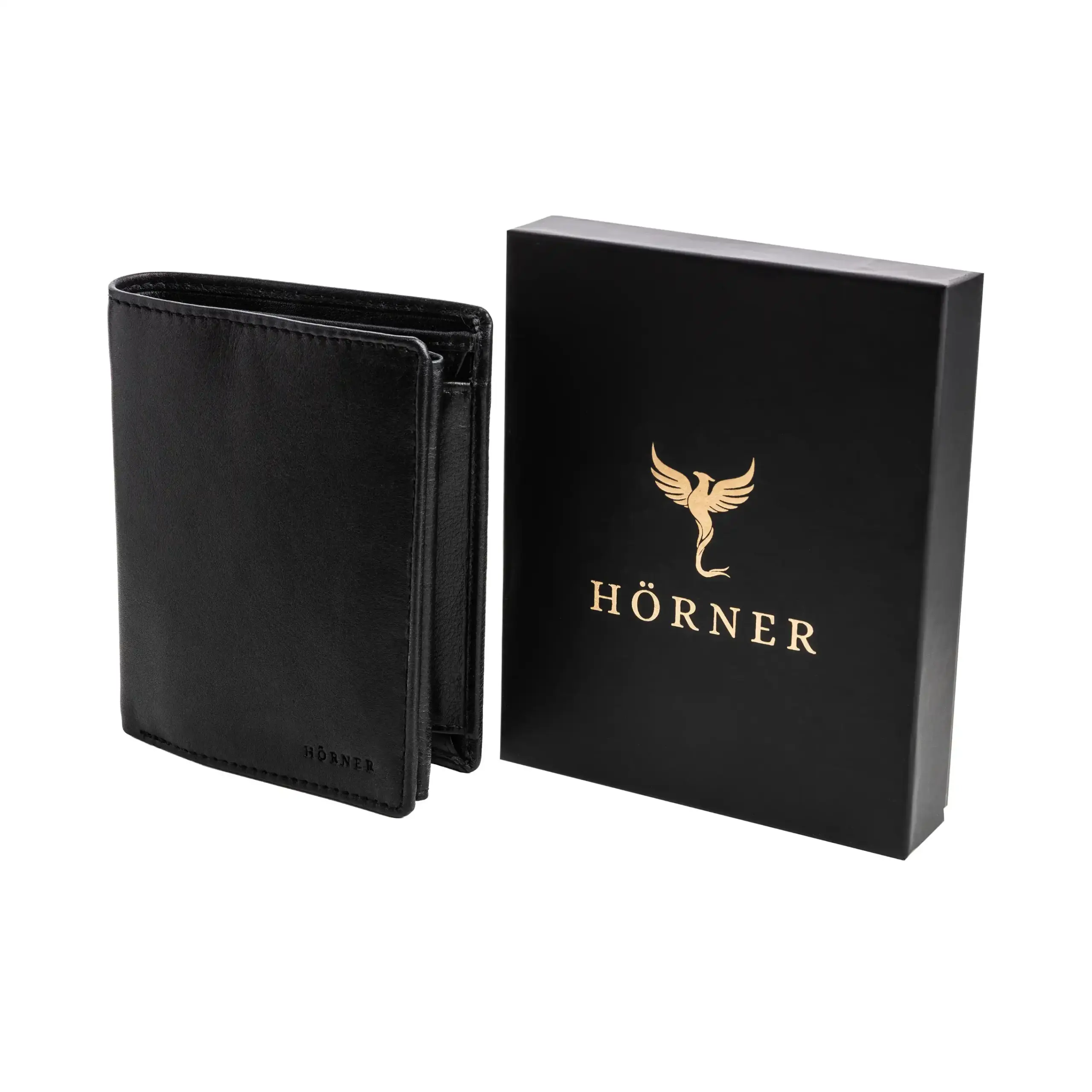
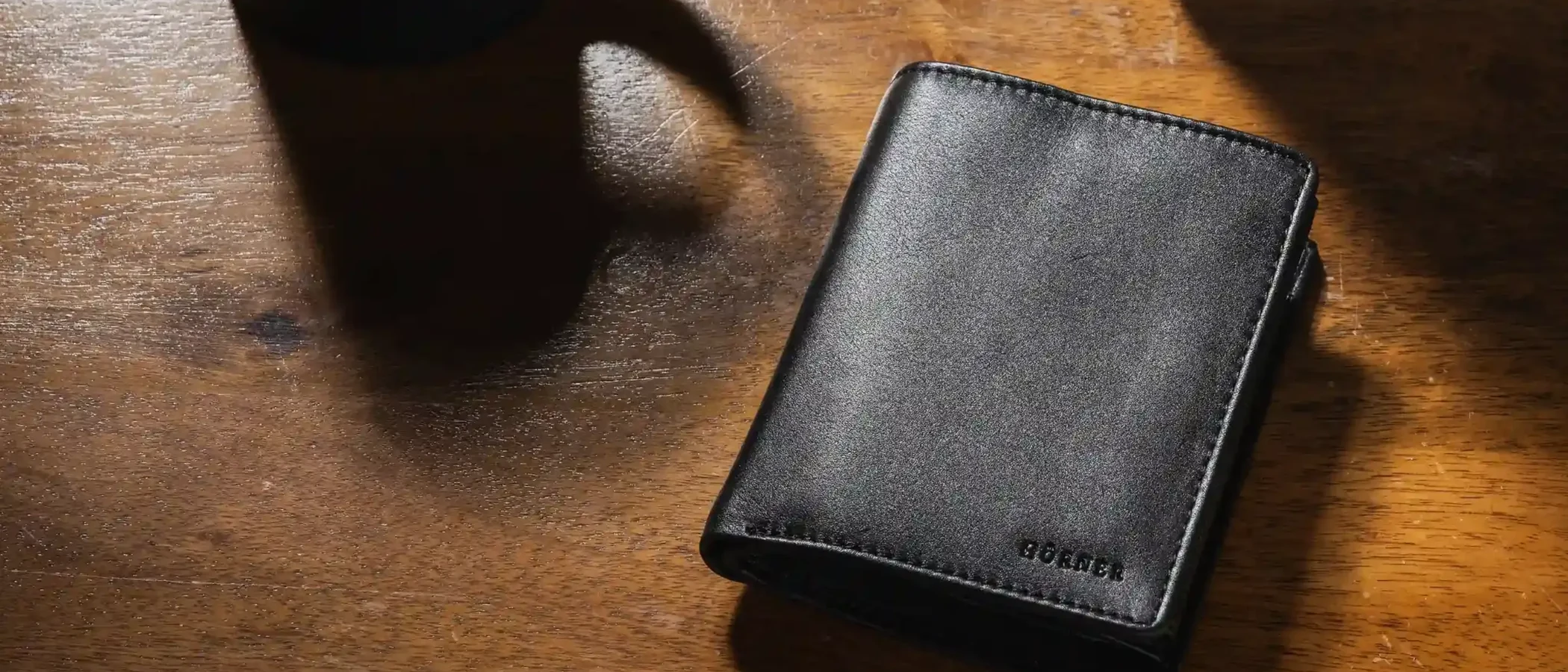
A bifold folds once down the middle and opens to two inner faces, with slots for cards and a long pocket for notes, usually holding around six to nine cards plus a coin pocket. A trifold folds twice into three inner faces, so it carries more, often nine to eleven cards, and looks more compact when closed at the cost of sitting a little thicker. Both are the generous end of the range.
The trade-off is bulk. A classic wallet carries the most but also takes up the most room, so it lives most happily in a jacket pocket or a bag rather than a tight front pocket. If you genuinely use the cash and coin space, that bulk is a fair price. If you do not, you are carrying air, and a slim wallet or cardholder will serve you better.
How to choose: two questions.
You can skip every spec sheet and decide with two honest questions, plus a thought about where the wallet will live.
One: how many cards do you really carry? Empty your current wallet and count. Four to eight cards, and you are a cardholder candidate. Eight to twelve, and a slim wallet is the comfortable fit. More than that and you want a classic wallet that will not strain. Two: do you still carry coins and cash? If coins are a daily thing, you need the coin pocket of a classic wallet. If you almost never handle cash, the cardholder or slim wallet is freed up to stay slim.
Then a final thought on carry position. A cardholder and a slim wallet suit a front trouser pocket; a classic wallet is happier in a jacket or bag. And remember the slim wallet's height: if it lives in a tight pocket, keep the card count modest so it stays comfortable.
Count your cards, then ask if you carry coins. Up to eight cards and no coins, a cardholder. Eight to twelve cards and a little cash, a slim wallet. Coins, receipts and more cards, a classic bifold or trifold. The right wallet is the one that is comfortably full, not straining and not mostly empty.
RFID: do you actually need it?
RFID protection is the feature wallets are marketed on, so it deserves a straight answer rather than a scare. It is a sensible extra, not the reason to buy a wallet.
RFID protection means a thin metal shield built into the wallet that blocks the radio signal your contactless cards use, so they cannot be read while tucked away. The thing the marketing skips is that modern contactless cards transmit a one-time, encrypted token for each payment rather than your actual card number, which makes quietly skimming a usable card in a crowd unlikely. In practice the real-world risk is low, and clear cases of cards being stolen this way are hard to find.
So treat RFID shielding as a low-cost bit of peace of mind that also helps older cards without that token system, not as the headline feature. It costs little to include, so many makers, Hörner among them, simply build it into the whole range. Useful to have, but not what should decide your wallet. Build quality and the right format matter far more. We dig into the real risk in our guide on whether you need an RFID wallet.
How to spot a well-made wallet.
A wallet is handled every single day, so construction matters as much here as on anything you carry. Three things tell you most of what you need to know, in the first ten seconds.
The stitching. It should be even and tight, ideally doubled at the corners and stress points, with no loose or skipped threads. Wandering, uneven stitching is the first sign of a wallet that will come apart at a seam. The edges. A quality wallet has its edges painted or burnished, which seals the leather core against moisture and daily rub. A raw, unfinished cut edge frays and darkens with use. The closure or mechanism. A snap should click and hold without effort. On a slim pop-up wallet, work the slider: it should run smoothly without snagging, because the mechanism is both the heart of the wallet and the part most likely to wear out.
Run your fingers inside, too. Cards should slide in cleanly and pull out without wobble, and there should be no interior wrinkling or tension where the leather has been forced. A wallet that feels tidy and settled in the hand on day one is the one that will still feel right in a few years.
Which leather suits a wallet.
A wallet asks something specific of its leather: thin enough to fold and stay slim, tough enough to take daily handling for years. Not every leather is right for it.
For a folding wallet, a full-grain cowhide is the durable all-rounder, and a soft full-grain nappa is the supple, refined option for the smooth inner and outer faces, explained in our nappa leather guide. For a slim pop-up wallet the rule flips: a thinner, softer leather is actually better, because the rigidity comes from the internal card core, and a stiff, thick hide just fights the slim concept and adds bulk. Suede brings a soft, matte character to a cardholder, with the trade-off that it marks more easily.
Whatever the format, look for a named grade rather than the catch-all label genuine leather, which says nothing about quality. The grade and the tanning decide how a wallet wears and whether it earns a patina. We cover all of it in our guide to the types of leather, which is worth a read before any leather purchase.
Wallets at Hörner.
Our wallet range is built around exactly this ladder, so you can pick by format rather than guess, and every model names the leather it is made from.
At the flat end are the cardholders, like the suede Vivida, for a few cards and almost no bulk. In the middle sit the compact and slim wallets, including our pop-up slim wallet with a press-to-fan mechanism, for more cards and quick access. At the roomy end are the classic nappa and oiled vintage-leather trifolds and bifolds, like the Magnus, with the slots and coin space for someone who still carries cash. RFID protection is built in across the range, so you do not need a separate sleeve.
Every wallet ships from Germany in a firm gift box with duties prepaid, and most can be engraved with initials. If you know your format from the guide above, the full wallet collection is the quickest way to find your model, and each product page names its leather and capacity.