Leather portfolios and padfolios, the professional's folder.
A padfolio is the slim leather folder you carry to an interview or a meeting: a writing pad, your documents and a pen in one composed place. Here is how it differs from a portfolio, how to choose one by size, pad and closure, how to judge the leather, and why it makes such a good gift.
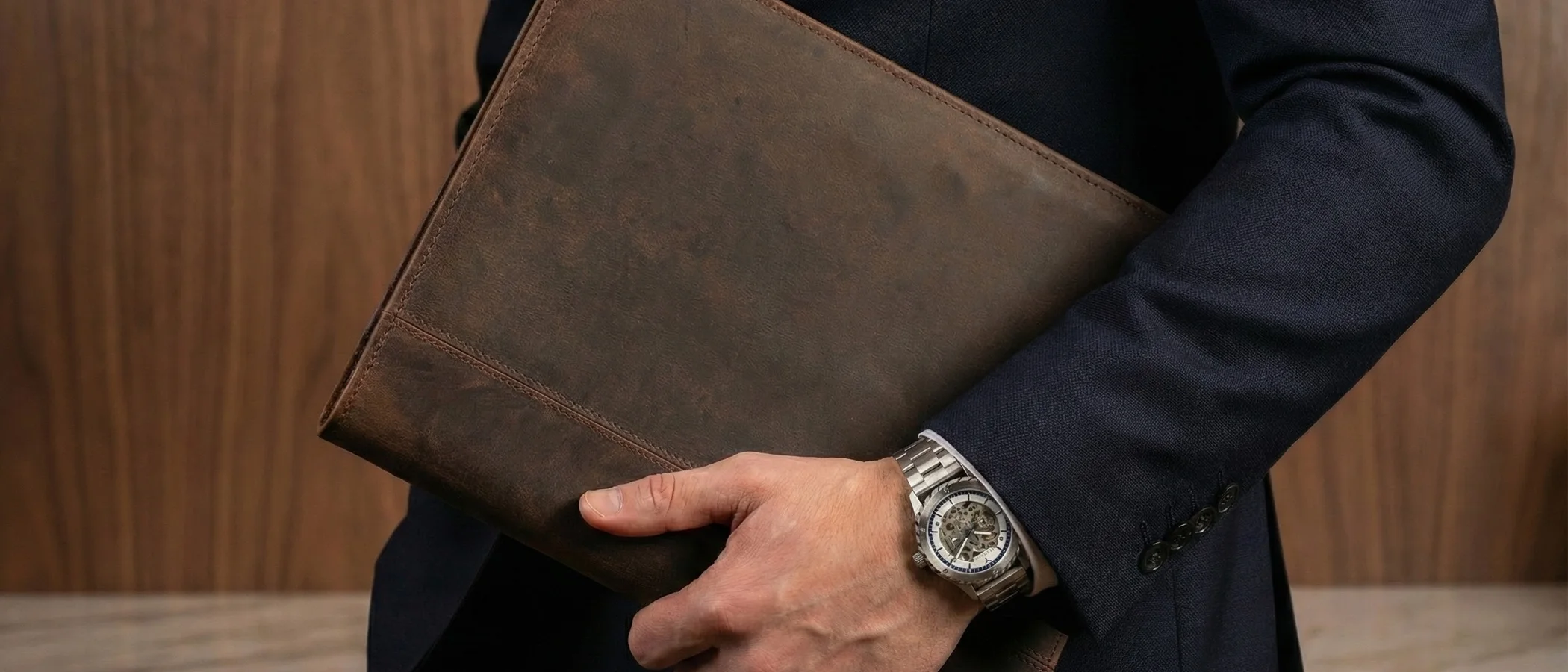
A padfolio is the slim leather folder built around a writing pad, for interviews and meetings; a portfolio is larger, with a handle and a zip, for carrying a tablet or a laptop. Choose by what you carry. Then size it to your paper, letter or legal, check the pad is secure and refillable, and buy a named leather grade, full-grain over bonded or PU, so it lasts and takes a patina. Personalized, it is one of the best professional gifts there is.
Padfolio or portfolio? Start here.
Both are slim leather folders for work, and stores often sell them side by side, but they answer two different needs. One question tells you which you want.
Ask what you mainly carry. If it is paper, a notepad, a few documents, business cards and a pen, you want a padfolio: the slim folder built around a writing pad, carried under the arm, closed with a snap or a strap. If you also need to carry a tablet or a slim laptop from place to place, you want a portfolio: larger, with a handle and usually a zip, closer to a briefcase.
A padfolio is for what you write and sign. A portfolio is for what you carry. Decide which and the rest is detail.On choosing a folder
Our own range is padfolios, the slim meeting-and-interview folder, so most of this guide is about choosing one well. If it turns out you need the bigger, laptop-carrying kind, our guide to leather work bags covers briefcases, messengers and backpacks instead.
Padfolio vs portfolio, side by side.
The two words are used loosely, so here is the honest distinction, on the points that actually differ.
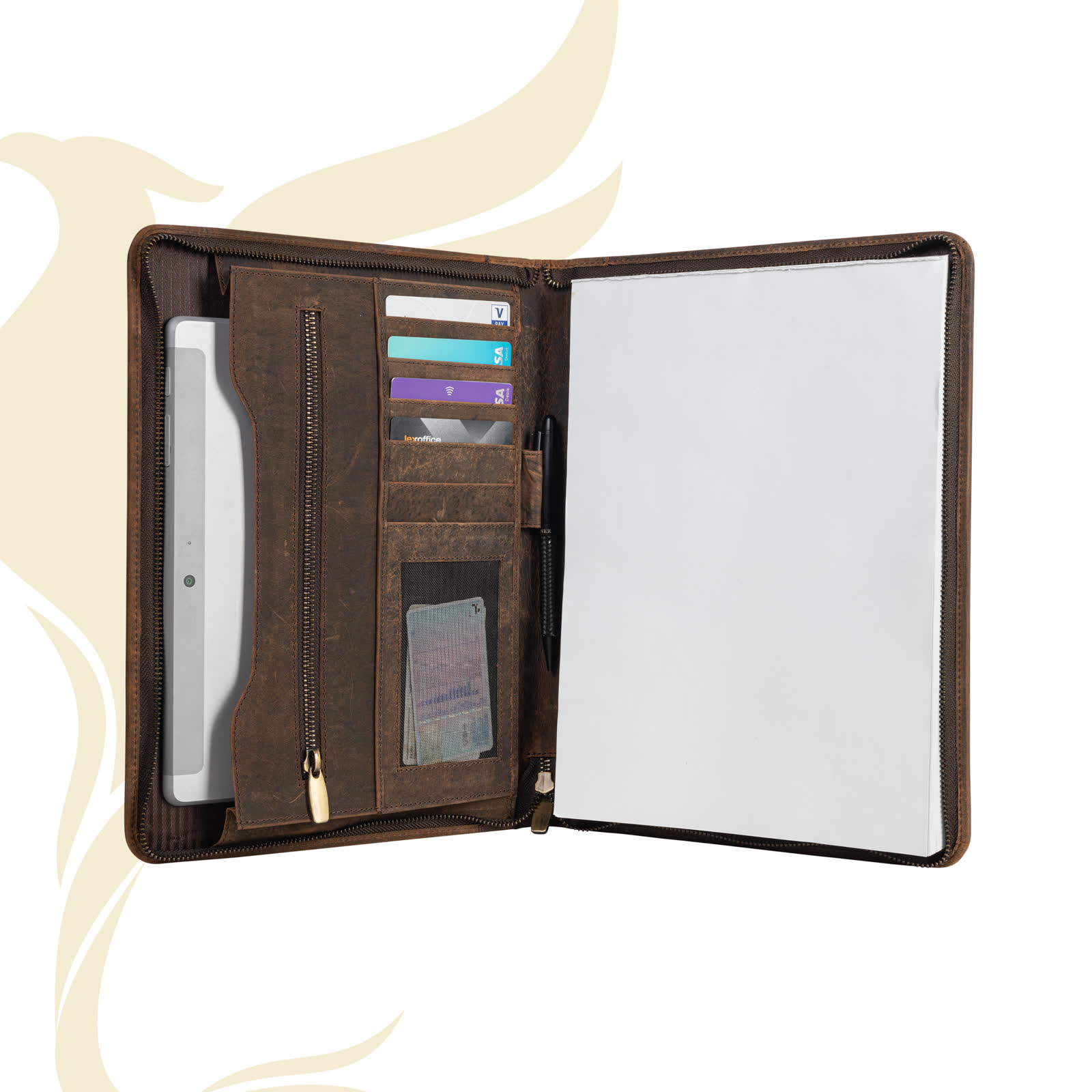
Size and closure. A padfolio is slim by design. It holds a pad and flat documents, closes with a snap, a strap or nothing at all, and is meant to be carried under the arm. A portfolio is bulkier, usually zips shut all the way around for security, and often has a handle or a shoulder strap so it can be carried like a small case.
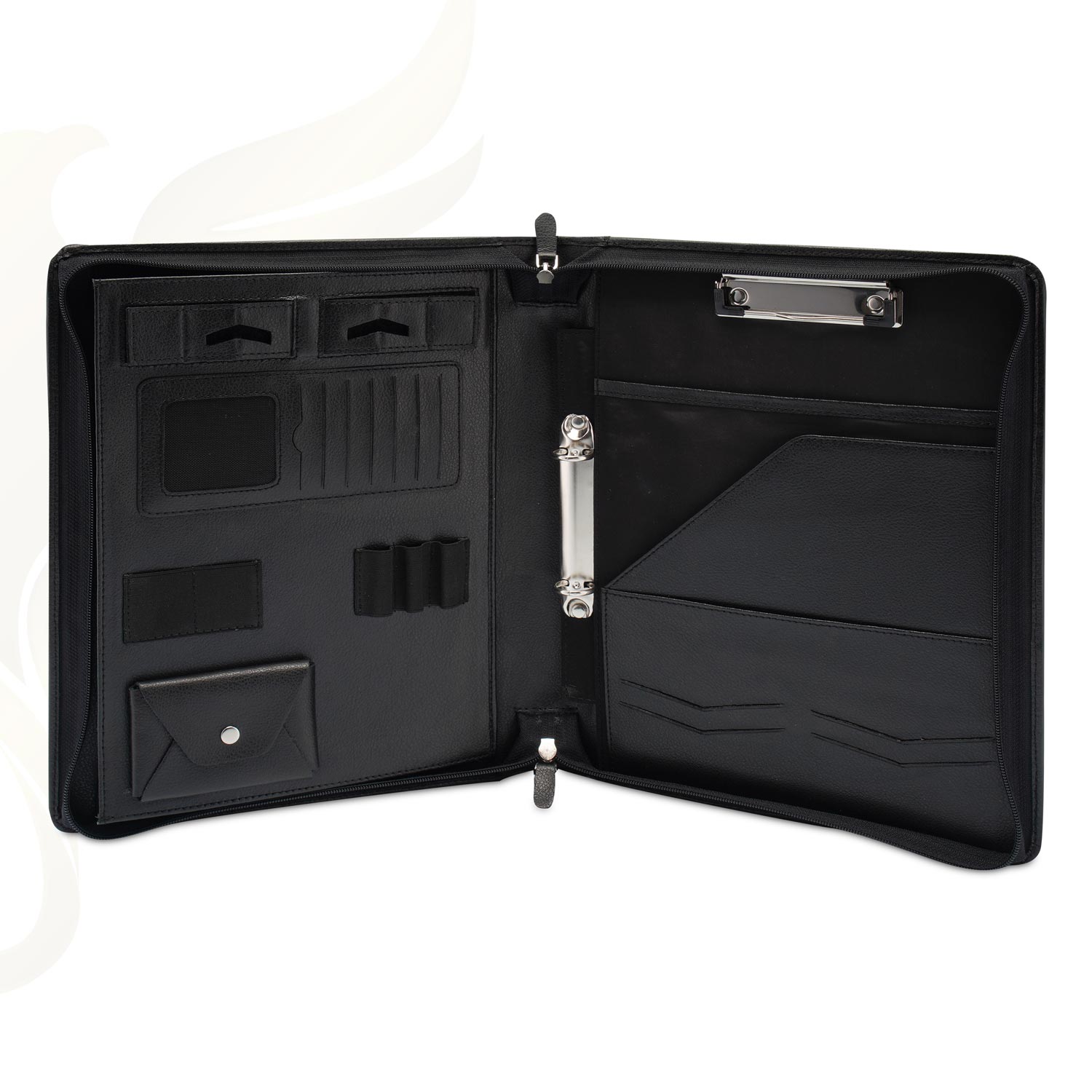
What goes inside. That size difference decides what fits. A padfolio is organized around a notepad, card slots and a pen loop, with a pocket for loose sheets. A portfolio adds real capacity: dividers, a tablet or laptop sleeve, and room for more files.
Folio or ring binder. Within padfolios there is one more choice. A plain folio simply holds a pad and pockets, while a ring-binder padfolio adds a two-ring or three-ring mechanism so you can file punched pages and reorder them. Some, like our Berlin, go a step further and let the ring binder lift out entirely, so the folder doubles as a slim organizer you can refill.
Choose a padfolio if you carry paper, a notepad, documents, cards and a pen, and want something slim and composed for interviews and meetings. Choose a portfolio if you also carry a tablet or a laptop and want a handle and a zip. Padfolios come as a plain folio or with a ring binder for filing pages, and a removable binder gives you both.
Size, pad and closure.
Once you know you want a padfolio, a few practical checks get you to the right one. Start with the size, which people most often get wrong.
Size it to your paper. A letter padfolio holds 8.5 by 11 inch pages and a letter notepad, and is the standard, most compact choice. A legal padfolio, 8.5 by 14, takes a legal pad as well as letter sheets, so it is the more versatile if you are unsure. A5 or junior size, around 5 by 8 inches, is the slim option for quick notes on the move. For most office use, letter or legal is right.
Check the pad and the pockets. The writing pad should sit secure without shifting, held by a clip or a corner retainer, and it helps if it is refillable so you are not tied to one brand. Look for a document pocket sized for full letter sheets, so a resume or a contract stays flat, plus card slots and an expandable pen loop.
Closure and devices. An open or snap-closed padfolio is fast and slim; a full zip adds security and turns it toward a portfolio. If you want to carry a phone or a small tablet, check for a sleeve that actually fits it, but do not expect a slim padfolio to hold a laptop, that is a job for a work bag.
The leather that lasts.
A padfolio is seen across a desk and handled every day, so the leather matters, both for how it wears and for how it reads in the room.
The order is the same as for any leather good. Full-grain keeps the natural surface of the hide and is the most durable, aging into a patina rather than wearing out. Top-grain is lightly sanded and a sensible step down. What to be wary of is bonded leather and coated PU, often sold simply as genuine or vegan leather, which cost less but tend to crack and peel within a year or two of daily use. Look for a named grade, not just the word leather, and see our guide to the types of leather if the labels are unclear.
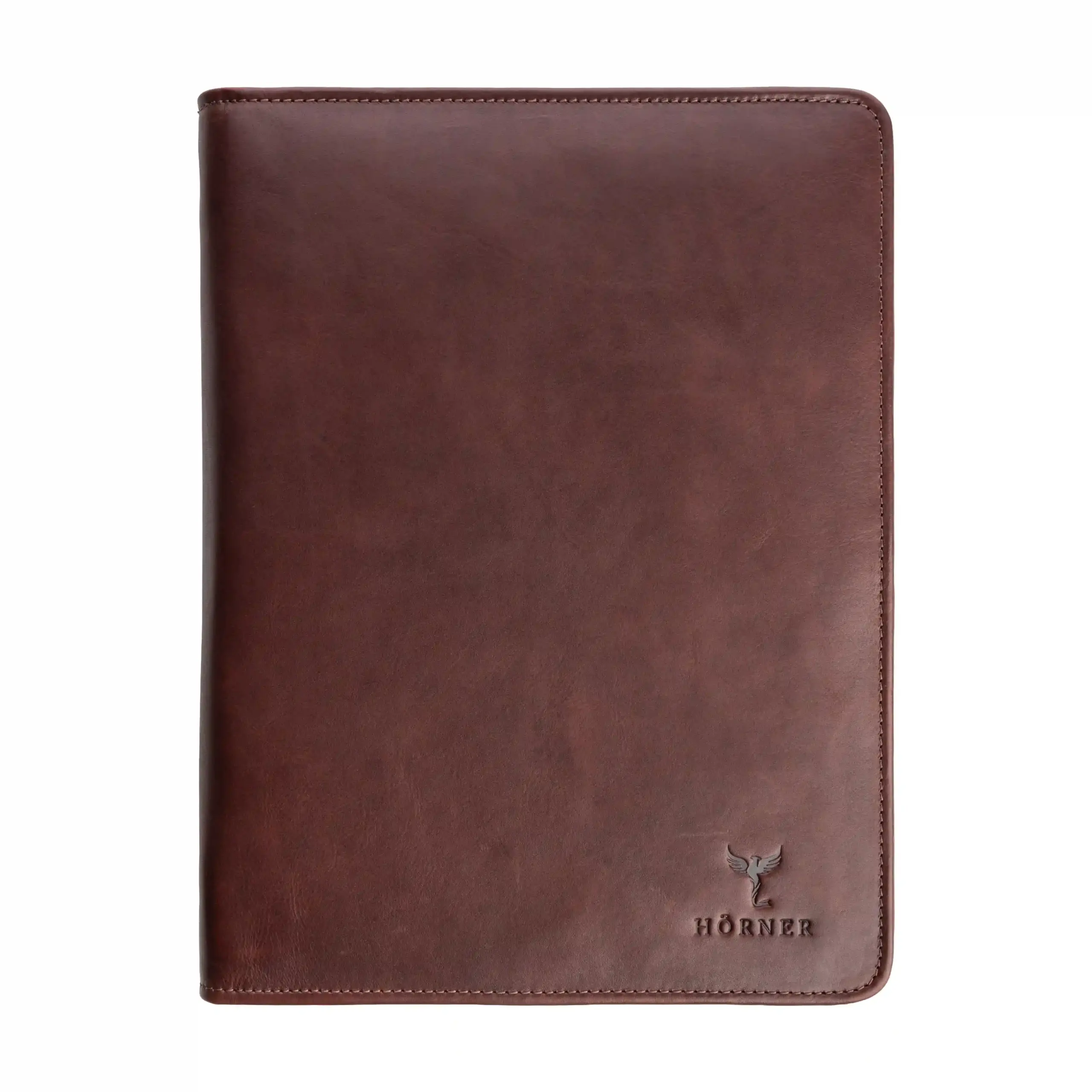
Finish matters too. A waxed, pull-up full-grain, like the cognac on our Paris padfolio, is matte and lightens at the folds as it is used, so it earns a lived-in patina from the first weeks. A pigmented finish stays more even and resists scuffs. Neither is better; it is a question of whether you want visible character or a uniform look.
Press a thumbnail gently into an inconspicuous corner. Full-grain gives slightly and springs back, showing natural marks and pores. A hard, perfectly uniform, plasticky surface that does not move is usually a coated or bonded leather. The label should name the grade; if it only says genuine leather, treat that as the floor, not a badge of quality.
Whatever the grade, the care is light: a soft cloth, a little colorless cream a few times a year, and no direct heat. Our guide on how to care for leather has the full routine.
Interviews, meetings and gifts.
A padfolio shows its worth in a handful of specific moments, and it makes a genuinely good gift for the same reason.
The classic use is the interview. A padfolio holds clean copies of your resume, a page of prepared questions and room to take notes, and it reads as composed and prepared. One honest caveat: a few interviewers prefer you to walk in with empty hands and full attention, so keep it closed and to one side until you need it rather than writing through the whole conversation.
In client meetings and conferences it is the grab-and-go folder: everything for the meeting in one tidy place, with cards to hand out and a pad to take away actions. It is quieter and more considered than a laptop open on the table.
That usefulness is why a padfolio is a strong gift. It suits a new graduate starting interviews, a promotion, a new job or a work anniversary, and personalized with initials or a company logo it feels considered rather than generic. For teams, a batch embossed with the logo is a classic onboarding or appreciation gift, and our guide to corporate gifts covers doing that well.
Padfolios at Hörner.
Our folders are padfolios, the slim meeting-and-interview kind, in cowhide leather and ready to personalize, across a clear range from an everyday choice to a full-grain one.
The Rome is the accessible way in, a cognac padfolio with the pad, card slots and pen loop you need and nothing you do not. The Berlin is the organizer, with a ring binder that lifts out for filing and a gift box included. And the Paris is the quality pick, full-grain cowhide with a waxed cognac finish that earns a patina. Each can be engraved with initials or a logo before it ships.
If you want to understand the leather behind them first, our guides to the types of leather and to caring for it go deeper, and the full range is below. Everything ships from Germany with duties prepaid.