Briefcase, messenger or backpack? Choose by your day.
A leather work bag is a daily decision worn on your shoulder, so it pays to choose it well. The right one is not the most expensive or the best looking, it is the one that matches how formal your day is and how far you carry it. Here is how the three formats differ, how to get the laptop fit right, and how to judge the leather and the build before you buy.
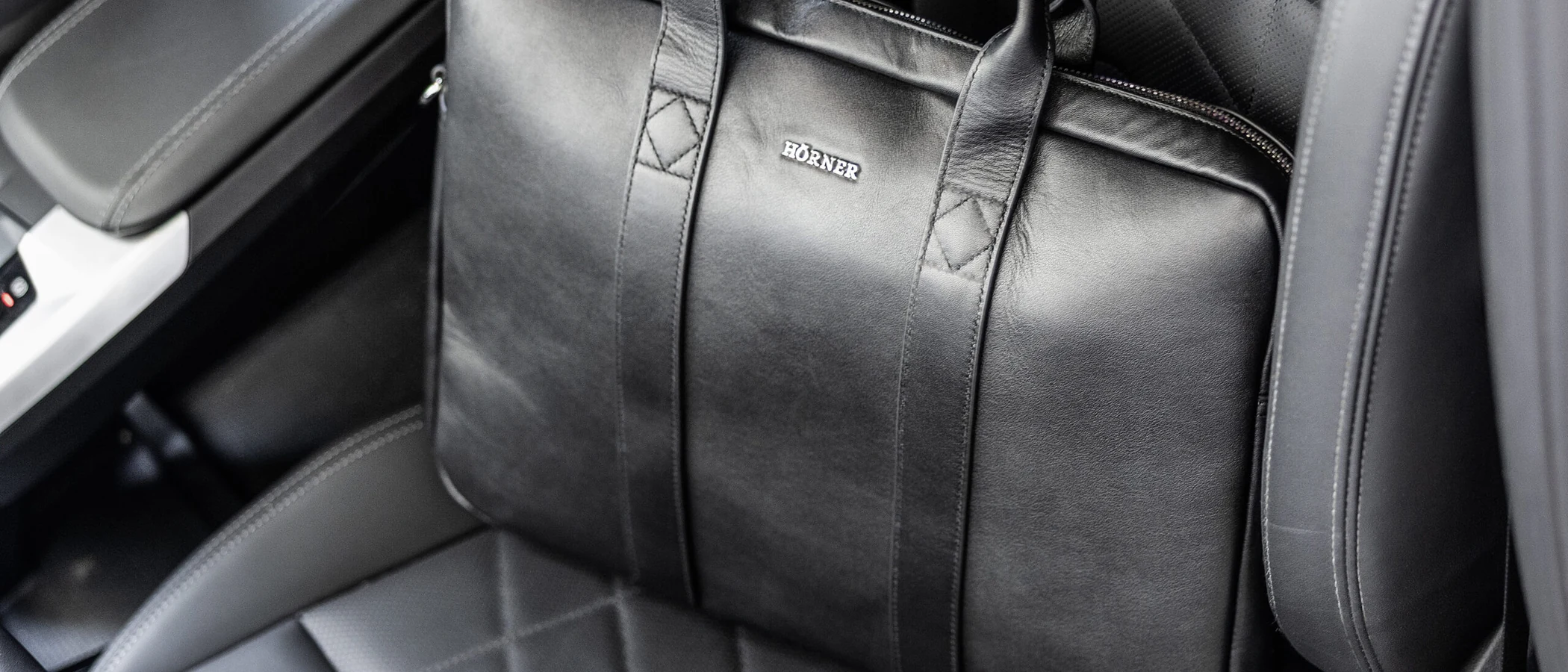
Choose a work bag with two questions, how formal is your day and how far do you carry it. A briefcase or business bag is the most formal, for shorter hauls and a suit. A backpack is the most casual and the kindest to your back over distance and weight. A messenger sits between them: a casual cross-body bag for quick access. Whatever the format, size the laptop compartment a little larger than your device, buy full-grain or corrected-grain leather, not split, and check the straps, stitching and hardware, the points a bag lives and dies on.
Match the bag to your day.
There is no single best work bag, only the right format for how you actually work and commute. Two questions settle most of it.
The first is how formal is your day? A client pitch, a courtroom or a board meeting calls for a briefcase or business bag; a relaxed studio or a campus does not. The second is how far do you carry it? A short walk from the parking lot is one thing; a mile across town with a laptop and a change of clothes is another, and that is where a backpack earns its place by sparing your back.
Two questions settle it: how formal is your day, and how far do you carry it. Formal and short favors a bag; far and heavy favors a backpack.On choosing a work bag
Hold those two answers in mind and the rest of this guide falls into place: the three formats, how to size the bag to your laptop, and how to tell good leather and good construction from the rest.
Briefcase, messenger, backpack.
Work bags come in three broad shapes, and they sit on a clear scale from most formal to most casual.
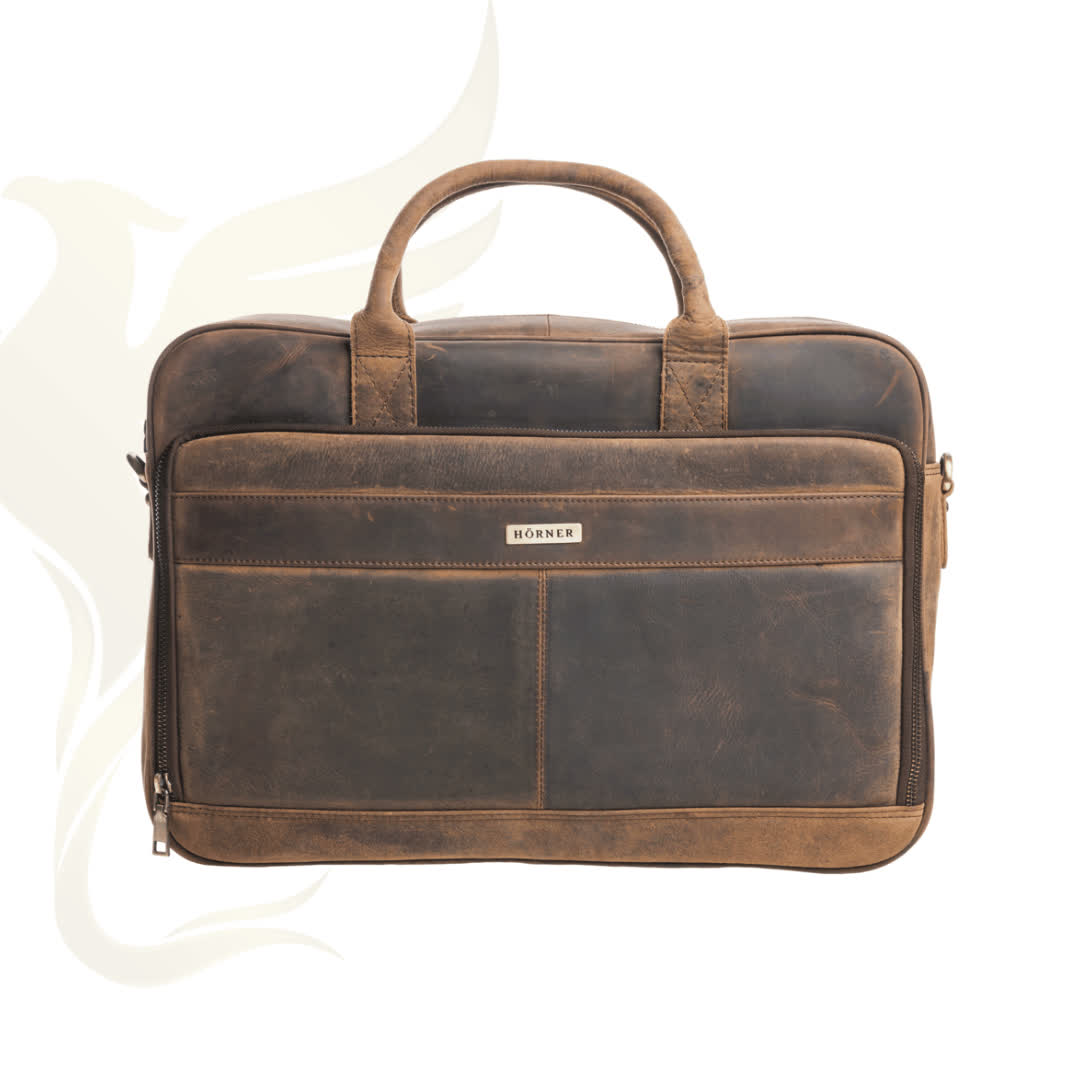
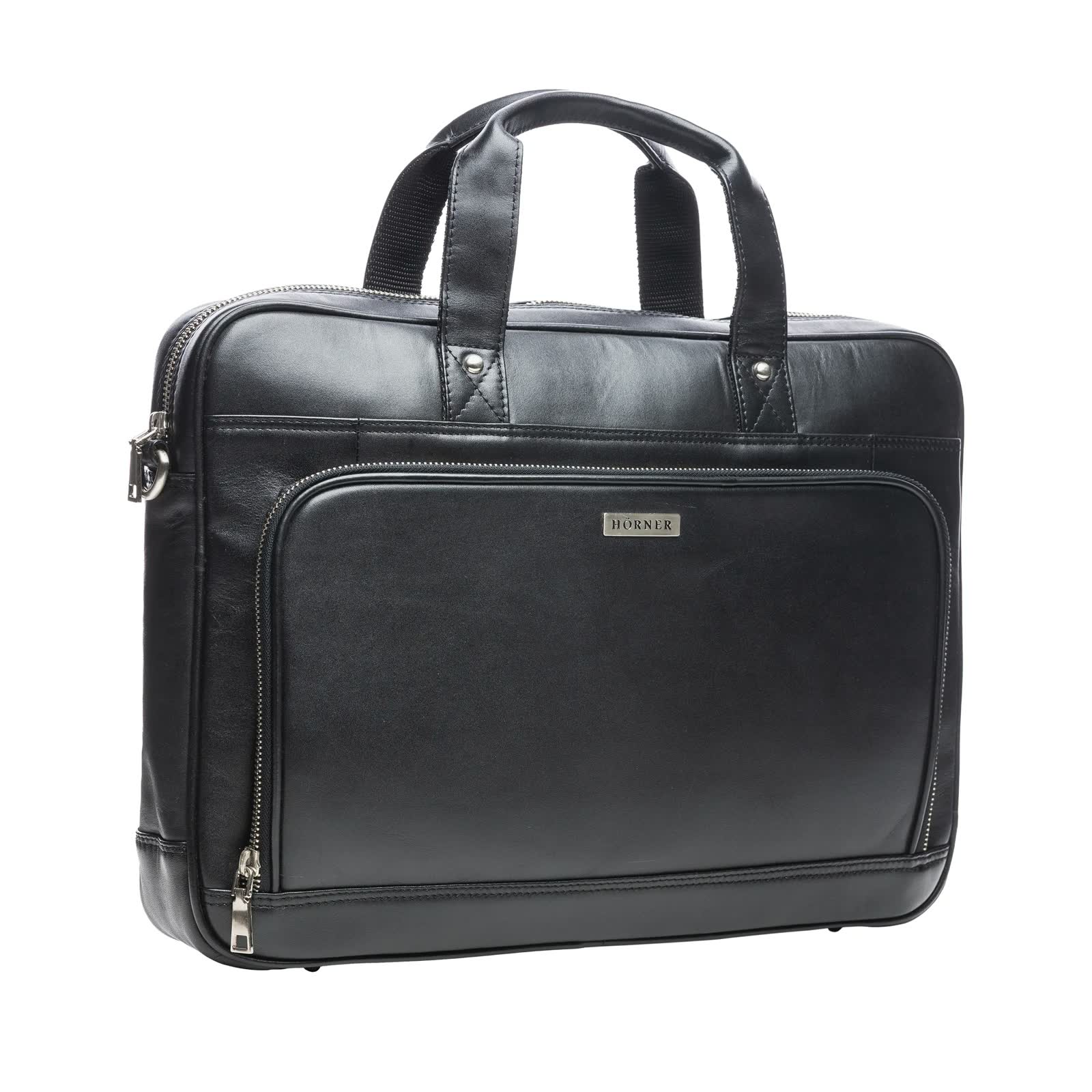
The briefcase, or business bag, is the formal end. It is carried by a top handle, usually with an optional shoulder strap, and built around documents and a padded laptop compartment. A slim one looks poised with a suit and is the right call for representative, formal settings. It suits shorter hauls rather than long treks, and the better travel versions add a trolley strap so the bag rides on a suitcase.
The messenger is the casual middle. It comes from the world of bike couriers: worn cross-body over one shoulder, built for fast access and mobility, traditionally in canvas or nylon though leather versions exist. It is less formal than a briefcase and quicker to get into, but a single shoulder still carries all the weight on one side.
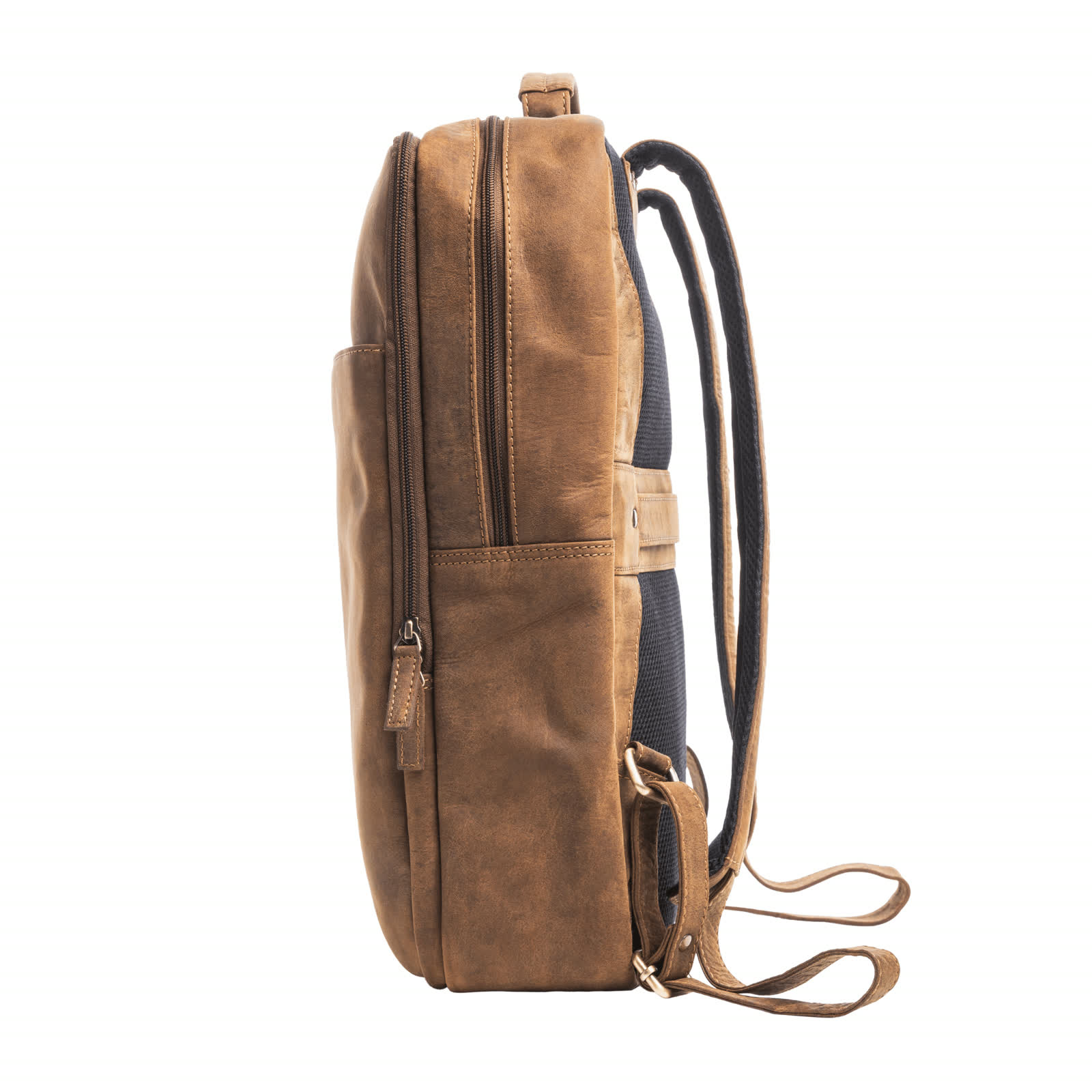
The backpack is the most casual and the most comfortable under load. Carried on both shoulders, it distributes weight and spares your back on longer walks, which is exactly why it is the choice for heavier loads, longer commutes and travel. The trade-off is formality: a backpack is out of place in a formal appointment, however good the leather.
Fit, formality and distance.
Once you know the format, a few practical checks get you to the right bag. Start with the one people skip: the laptop fit.
Laptop fit. The padded compartment should be a little larger than your laptop, about half an inch to an inch bigger all round, so the device slides in without forcing and the screen never rubs the zip. A 15-inch business laptop wants a compartment around 15 by 10 inches; a 16-inch needs a touch more. In a backpack, make sure the sleeve is tall enough for the laptop to sit crosswise against the back panel, and that it is padded and held by a strap.
Capacity. For a backpack, think in liters: roughly 10 to 18 for a daily commute, 15 to 25 for a full office load with charger and lunch, and 25 to 50 if you also pack for an overnight. Go smaller if you carry little daily; size up only if you genuinely travel. Carry and weight. A good leather business bag weighs about two to three and a half pounds empty; lighter means a slimmer leather, heavier means more presence but more to lug once loaded. A padded, reasonably wide shoulder strap makes a real difference on a daily commute.
Organization and color. A single main compartment gives fast access; two compartments give better protection on a long commute. For travel, a trolley strap and a removable shoulder strap matter. On color, black is the conservative, most formal choice that pairs with any suit; cognac is the modern option that warms into a patina and works with brown shoes, at a slight cost in formality.
Leather and build: what lasts.
A work bag takes daily strain at its straps, seams and base, so leather grade and construction matter more here than on almost anything else you carry.
On leather, the order is simple. Full-grain is the most durable and, cared for, can last decades. Corrected or top-grain, especially with an oil or wax finish, is the sensible value middle and still ages well. What to avoid for a bag is split leather, often sold only as genuine leather, which is thinner and cracks at the stress points a bag depends on. Look for a named grade, and read our guide to the types of leather if the labels are unfamiliar. A practical extra tell is the leather's thickness: a bag leather of roughly a millimeter and a bit is stable enough to hold its shape yet soft enough to carry.
Construction is where a bag is made or lost, and it is easy to check.
Straps: wide, padded, and reinforced with a double seam where they meet the body. Stitching: straight and even, doubled at stress points, no loose threads. Zippers: metal, running smoothly. Hardware: set into a leather mount, not just riveted on. Inside: a proper fabric lining and a padded laptop compartment against the back. If those four points are right, the bag will outlast the trends; if the strap is stitched on thinly or the zip is flimsy plastic, that is where it will fail.
Caring for a leather bag.
A leather work bag asks for little, and the most common mistake is doing too much. The routine is light and occasional.
Dust it now and then with a soft cloth, working with the grain, and feed it with a thin layer of colorless leather cream every few months rather than every week. If it gets wet, blot it dry and let it air-dry away from any radiator or direct heat, which dries leather out and cracks it. Store it loosely stuffed to hold its shape, in a breathable bag rather than sealed in plastic.
Open-pored and vegetable-tanned leathers want a gentler touch and dislike heavy rain; some cowhide bags are treated to be more water-resistant from the factory and need even less. For the full method, the do's and the don'ts, see our guide on how to care for leather.
Work bags at Hörner.
Our bags are built around exactly this choice, so you can pick by how you work rather than guess, and each one names its leather and its laptop size.
At the formal end are the business bags, like the black nappa Bremen, poised enough for a meeting and sized for a 15 or 16-inch laptop. The München is the roomier everyday briefcase in a cognac leather that earns a patina. And for the days you walk further or carry more, the Saxum is a vintage cowhide backpack with a padded 16-inch sleeve, a trolley strap and carry-on proportions. Black for the most formal settings, cognac for character: the product pages spell out the size, leather and weight of each.
If you want to understand the leather behind them, our guides to the types of leather and to caring for it go deeper, and the full bag collection is below. Everything ships from Germany with duties prepaid, built to carry your working day for years.