Do you need an RFID wallet?
RFID-blocking wallets are sold on a worrying idea: that someone can lift your card details straight out of your pocket. The honest answer is more reassuring, and more useful. Here is what RFID protection actually does, how real the risk really is, who genuinely benefits, and whether it should decide your wallet at all.
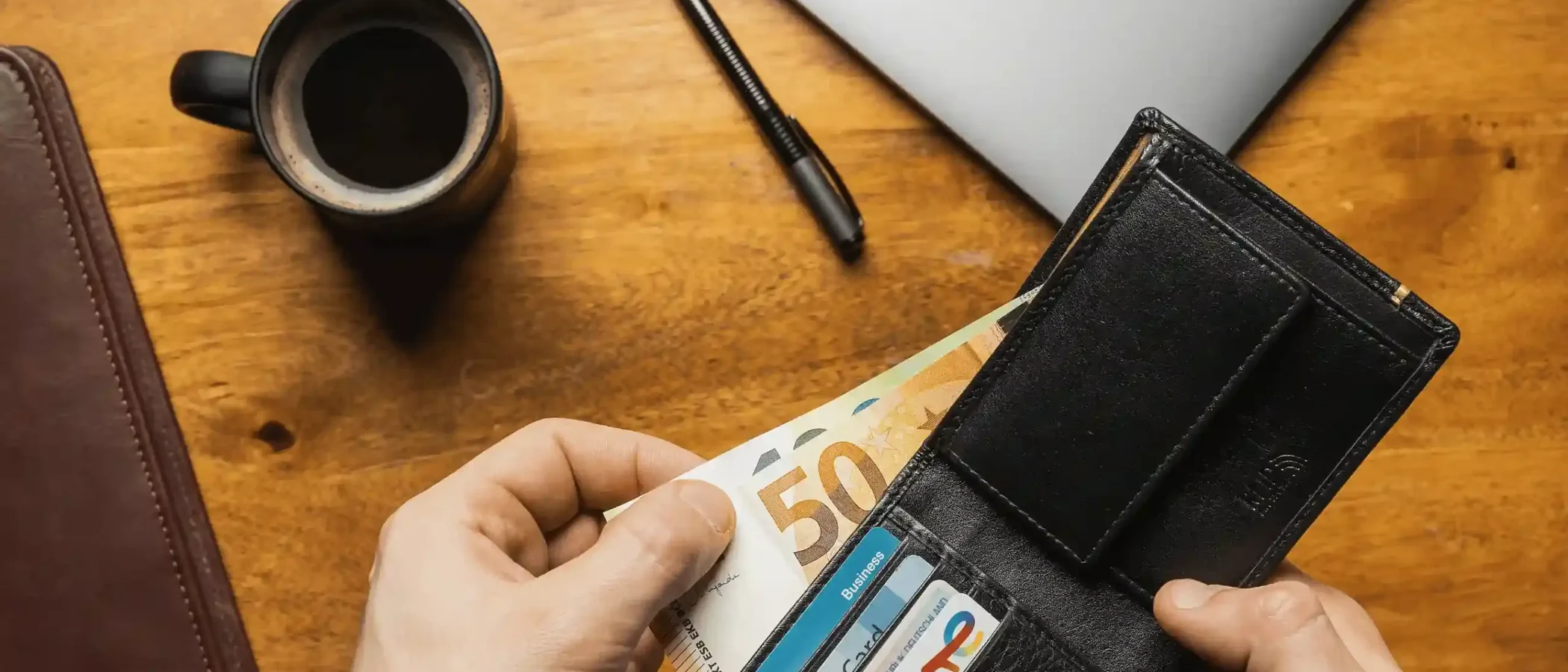
An RFID wallet has a thin metal layer that shields your contactless cards from being read while they are inside. It is worth having, but it is not the threat the marketing implies. Modern contactless cards send a one-time, encrypted token per tap rather than your card number, so skimming a usable card in passing is unlikely, and documented real-world cases are essentially nonexistent. The real value is for older cards without that token system. Treat RFID blocking as sensible peace of mind that often comes included, not as the reason to pick a wallet. Build quality and format matter far more.
Nice to have, not a must.
If you want the answer without the detail: an RFID wallet is a reasonable thing to own, but it solves a problem that is far smaller than the advertising suggests.
The blocking works, and it does no harm. But the risk it guards against, someone wirelessly stealing your card from your pocket, is low in practice, because of how modern contactless cards actually work. Where RFID protection genuinely earns its place is with older cards, and as a bit of peace of mind that often comes built in at no real cost.
So the sensible position is simple: take RFID protection if it comes with a wallet you like, but do not pay a premium for it, and do not let it decide your choice. The rest of this guide explains why, starting with what the feature actually is.
What an RFID wallet actually is.
RFID stands for Radio Frequency Identification, the same family of technology behind tap-to-pay. An RFID wallet simply adds a shield against it.
In a leather wallet, that shield is a thin layer of metal foil built into the construction. Metal blocks the radio waves a contactless reader uses to wake and read a card, so with the wallet closed, the cards inside are screened from any reader nearby. It is entirely passive: there is no battery, no switch, nothing to maintain. The foil is just there, doing its job.
Two useful clarifications. A metal-bodied wallet or card case often blocks the signal by its very construction, without needing a separate layer added. And RFID shielding only works while a card is inside the closed wallet: to pay, you take the card out and tap as normal, so the protection never gets in your way at the till.
How real is the risk?
This is the part the marketing skips, and it is the most important thing to understand. The risk RFID wallets guard against is real in theory and very small in practice.
The reason is in how contactless payment works. When you tap a modern card, it does not hand over your card number. It sends a one-time, encrypted token that is valid for a single transaction. So even if someone did wirelessly capture that signal, what they would get is a used, encrypted token, not a reusable card number. Lifting a working card "in passing" is, for current cards, unlikely.
A contactless card sends a one-time, encrypted token, not your number. Skimming a usable card in passing is unlikely.On the real risk
This is borne out by the simple fact that clear, documented real-world cases of cards being stolen this way are very hard to find. The advertising around RFID wallets leans on a dramatic worst case; the measured reality is that wireless card theft has never become a meaningful everyday problem. That does not make shielding worthless, but it does put it in proportion.
Who actually benefits.
There is one group for whom RFID protection is more than a comfort feature, and it is worth knowing whether you are in it.
The one-time-token system that makes modern contactless cards safe is not universal. Older cards without it carry a real residual risk, and for those, an RFID shield genuinely removes it from the equation. If your wallet still holds an older contactless card, building, work or transit cards that have been in service a long time, that is the case where shielding does concrete good.
For everyone carrying current, token-based bank cards, the practical benefit is small. So the honest way to think about RFID protection is as cover for the edge case: useful to have in your corner, rather than a defense against an everyday threat. And if your cards live in a metal-bodied holder, they are likely shielded already.
So, should you buy one?
Put it all together and the buying advice is straightforward. RFID protection is a sensible extra, but rarely the right reason to choose a wallet.
If it comes built into a wallet you like, at no real extra cost, take it gladly. It is genuine peace of mind and it helps with older cards. What is not worth doing is paying a premium for RFID on its own, or settling for a poorly made wallet because it carries the label. A flimsy RFID wallet is still a flimsy wallet.
Choose a wallet on the things you will live with every day: the right format for how many cards you carry and whether you carry cash, and the build quality, even stitching, sealed edges, and card slots that hold securely without stretching. Get those right and you will be happy with the wallet for years. Treat RFID shielding as a welcome bonus on top, not the headline. Our guide on how to choose a wallet covers the rest.
RFID at Hörner.
We took a simple position on this, and it is the same one this guide argues for: include the protection quietly, and do not use it to sell fear.
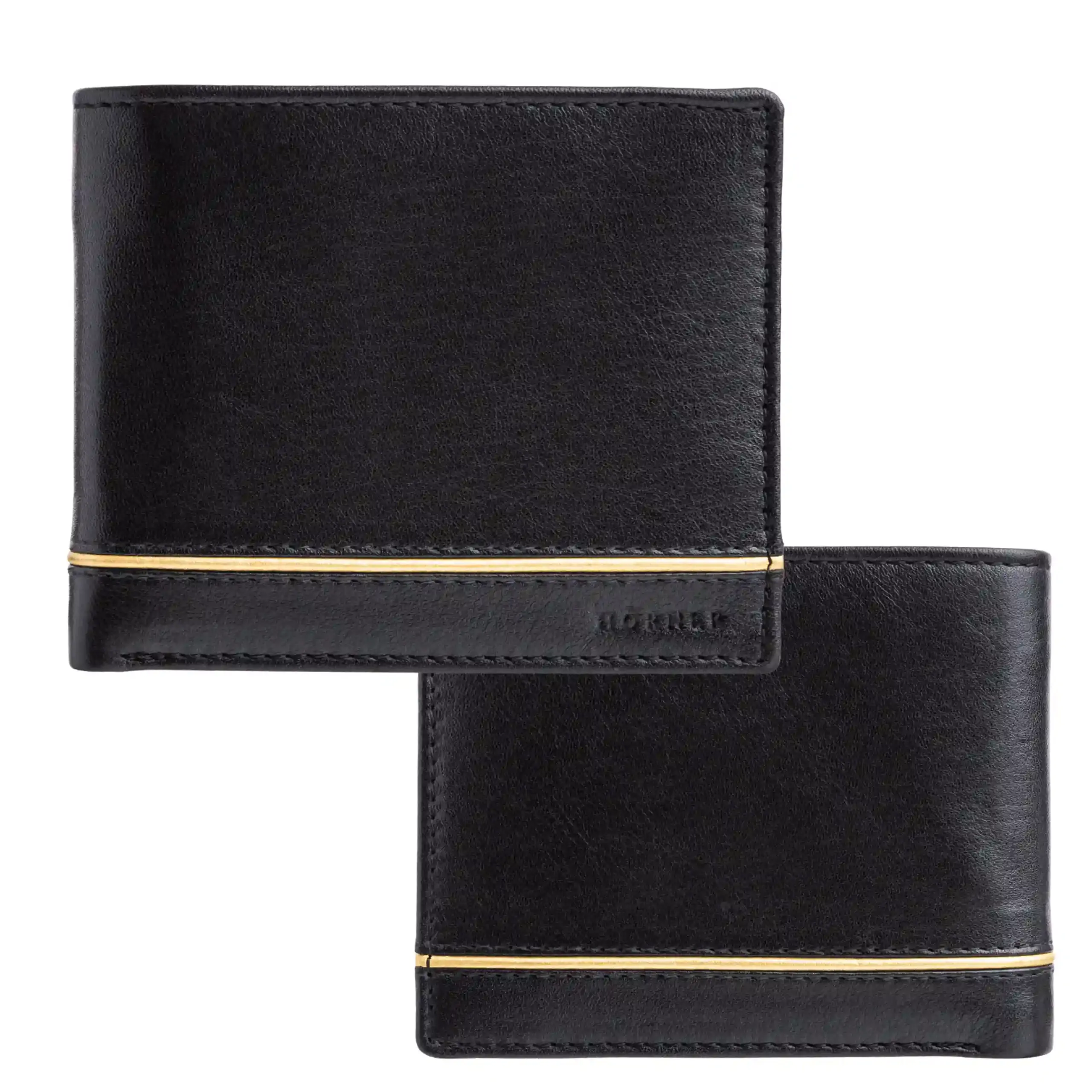
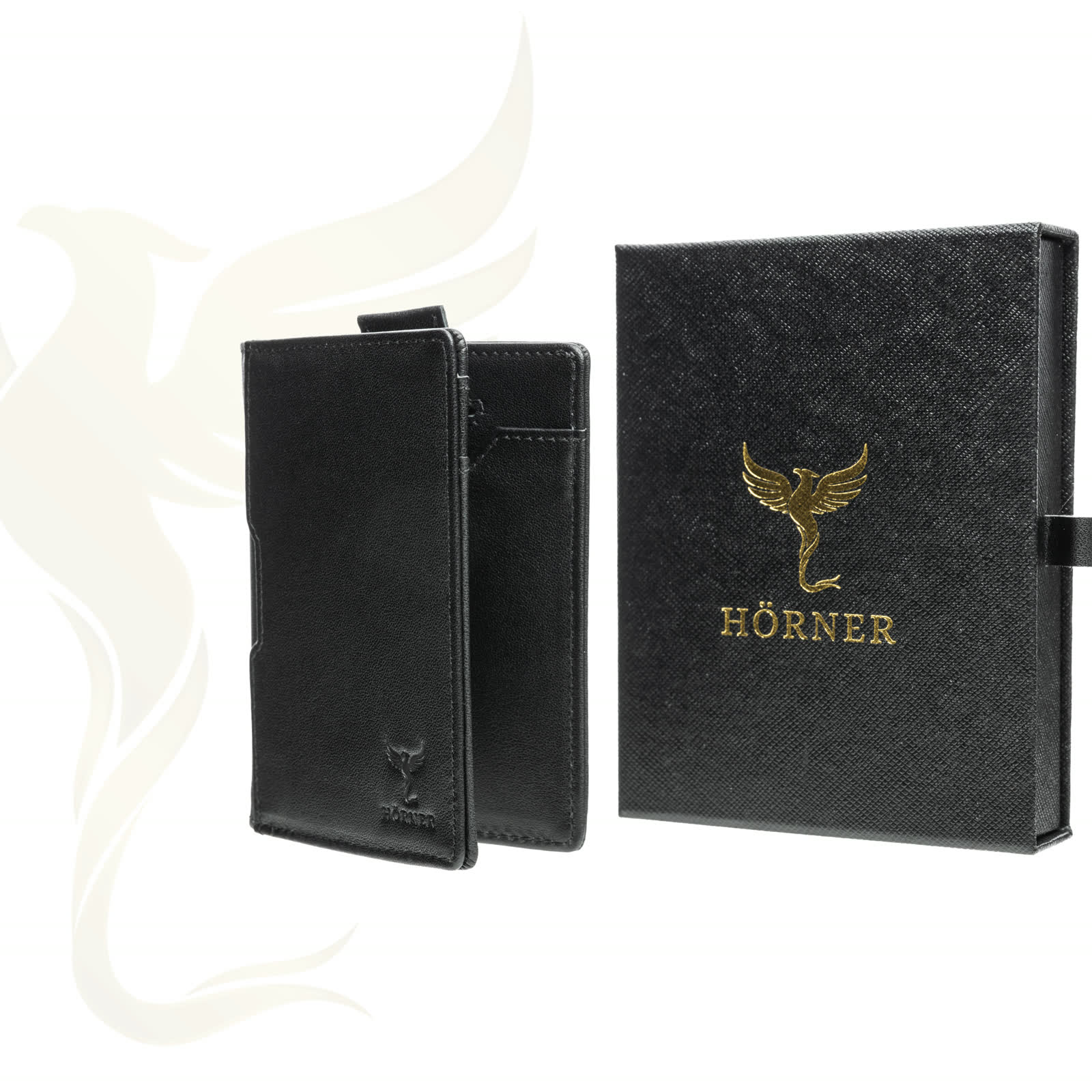
We build RFID shielding into our wallets across the range, from the compact card holders to the vegetable-tanned Fortis. The reasoning is plain: the added cost in making them is minimal, and the residual risk on older cards is real, so it is worth doing. The practical upshot for you is that you do not need a separate RFID sleeve or any discussion about which model has it, the protection is simply there.
Beyond that, we would rather you chose a wallet on the things that matter day to day. If you want help with that, our guide on how to choose a wallet walks through the formats, and the full wallet collection is below, every model named with its leather and built with RFID shielding as standard.