The minimalist wallet: how little can you carry?
Minimalist is not a shape, it is a subtraction problem: carry only what you actually use. This guide gives you the honest floor of how few cards you can really live with, reconciles the contradictory card-count advice online, weighs leather against metal and money clips, settles the front-pocket and back-pain questions, and tells you the RFID truth, before a short word on a few of ours.
A minimalist wallet is defined by subtraction, not by being the thinnest object you can find. The honest floor is about three to four cards plus a way to carry cash; four to six is the everyday sweet spot, and slot counts overstate real capacity. Choose the format by how you pay: leather for quiet everyday carry, metal for durability, a money clip for cash-first. Carry it in the front pocket if you sit a lot. And treat RFID blocking as optional peace of mind, not a requirement.
Minimalist is subtraction.
The word gets used for a look, but the useful definition is a behavior: carry only what you actually use, and the thinness follows.
Slim describes the profile of the wallet. Minimalist describes the intent behind what goes in it. That distinction matters, because a slim wallet stuffed with twelve cards is neither slim in the pocket nor minimalist in spirit. Start from what you take out, not from the thinnest object on the shelf.
Minimalism is not the thinnest wallet you can buy. It is the fewest things you can carry and still get through your day.On carrying less
Hold that idea and the rest of this guide falls into place: the honest number of cards, the formats and their trade-offs, where to carry it, and which of the internet's contradictory rules are actually true. Our own wallets are a small part of this, kept to the end. If you want the broader format decision first, our guide on how to choose a wallet covers cardholder, slim and bifold side by side.
How many cards, really.
The single most useful thing to settle is the number, because almost every source gives you a different one and none of them explains why.
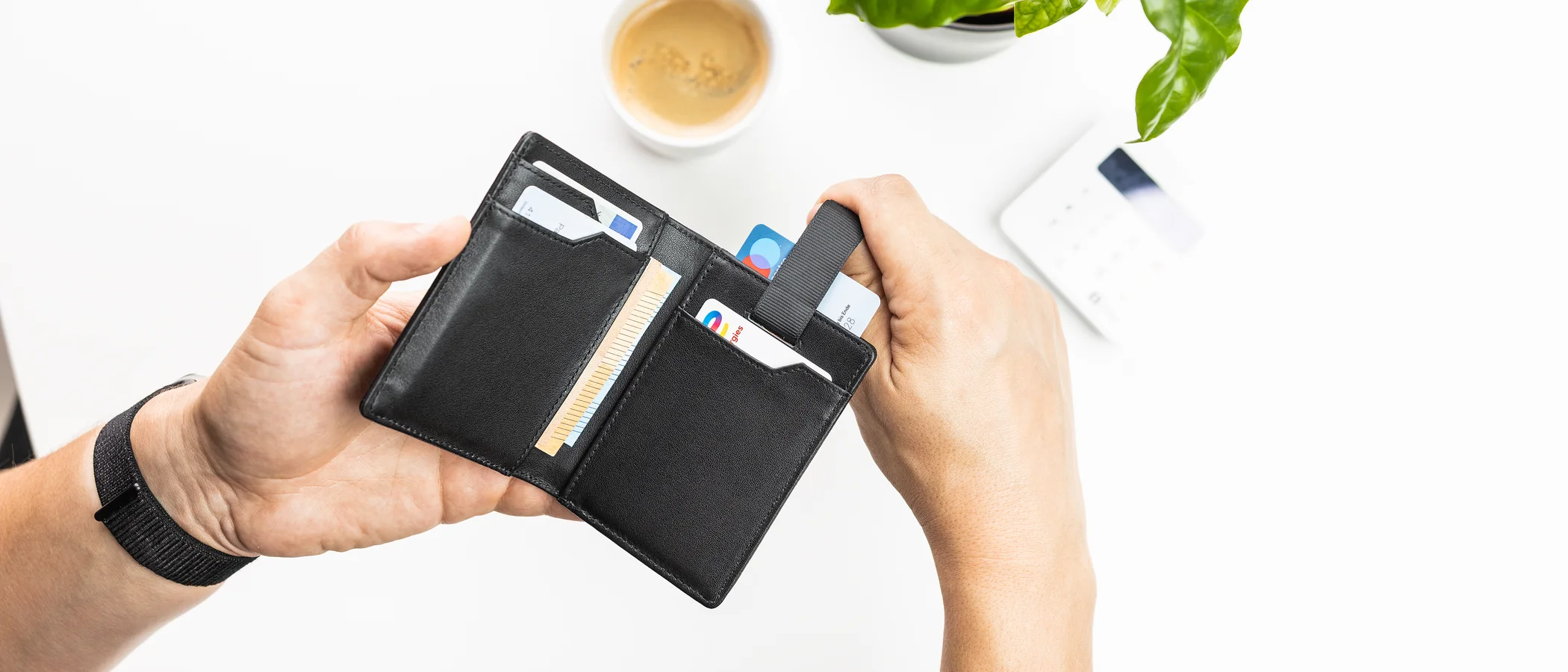
Start with the floor. Realistically three or four cards cover most modern days: a driver's license, one credit card, one debit card, and perhaps an insurance or transit card. You can go lower, but you still need physical ID, and if you use cash you need a way to carry a few bills. Above that, four to six is the practical everyday sweet spot. The reason the advice online contradicts itself is that the numbers measure different things.
| The number you will see | Where it comes from | What it actually measures |
|---|---|---|
| Up to 8, even 9 to 16 | Marketing and marketplace listings | A stated maximum with no standard test, not a comfortable daily number |
| Really only 3 to 4 | Consumer testing | What still closes flat and slides cleanly into a pocket |
| 5 to 6 is the sweet spot | Editorial roundups | A practical middle for mixed cards and a little cash |
| Over 10 and it strains | Slim-wallet makers | Where leather stretches and stitching starts to give |
There is one physical fact under all of it. A payment card is a fixed 0.76 mm thick, so a stack adds up fast, and embossed cards fill only about four or five slots even in a holder rated for more. The honest limit is not the slot count printed on the box; it is whatever still closes flat and pockets cleanly. Buy for the number you actually carry, then leave a slot spare.
Empty the wallet. Make three piles: use weekly, use rarely, never use. Put the weekly pile back, photograph the insurance and loyalty cards so you can leave the plastic at home, and keep one backup card somewhere separate. Most people land at four to six, and the wallet you need becomes obvious once the pile is honest.
Leather, metal or money clip.
The US search results for minimalist wallets are dominated by metal cardholders and money clips, so it is worth being honest about all of the formats rather than pretending leather is the only answer.
Leather card holders and small wallets are the quiet default: soft on tailored pockets, warm in the hand, and easy to slim down. They stretch if you overstuff them, which is the one rule that matters. Metal and aluminum cardholders, in the Ridge, Fantom or Groove style, hold cards between plates under a band or spring. They are genuinely durable and protective, and very thin at a low card count. The honest costs: they are heavier than leather at the same count, carry no coins and only clip on bills, their edges wear tailored-pocket fabric over time, and a solid metal core can block your own 125 kHz office or gym fob.
Money clips are the cash-first format: instant access to bills, extremely flat, but no coin capacity and a clip whose tension can loosen with time. Many people end up combining, a card holder with a clip on the back, which is exactly what our Codex does. Choose metal for durability, leather for feel, a clip for cash, and do not choose any of them for a signal-safety benefit, which the next sections put in its place.
Front pocket, back pocket or bag.
How you carry the wallet matters as much as what is in it, and this is where a genuinely useful, and slightly medical, point gets skipped.
A thick wallet sat on all day is a documented cause of sciatic-nerve irritation, known since 1974 as wallet neuritis or fat-wallet syndrome. Moving the wallet to a front pocket usually resolves it. The honest caveat, which the wallet blogs leave out, is that the evidence is case reports rather than controlled studies, and there is nothing linking a short sit to a herniated disc. So treat it as plausible and easy to avoid, not as proven medicine: if you sit for a living, a slim wallet in the front pocket is the sensible default.
Front-pocket carry has other advantages: the wallet stays in your line of sight and is harder to pickpocket. If you carry slim, tailored trousers, prioritize the thinnest short profile and avoid protruding metal switches that catch and wear the fabric. And if you carry your wallet in a bag, which is a large share of readers, the back-pain and trouser-fit questions simply do not apply. Choose instead for snag-free access and grip, a flat card holder or slim wallet that will not catch on everything else in the bag, with a wrist strap or lanyard slot if you like to grab and go.
Daily friction, and the RFID truth.
Two things decide whether you keep a minimalist wallet or quietly go back to the old one: the small daily annoyances, and the marketing you can safely ignore.
The friction first. In any stacked holder, the card you use most is the one you buried, so put the card you touch most on the outside. If you carry two contactless cards, a reader can pick the wrong one or reject the tap, a real thing called card clash that transit systems like OMNY and WMATA warn about; the fix is to keep the paying card separate rather than tapping the whole stack. And the number-one killer of slim wallets is overstuffing, which permanently stretches leather and tires elastic straps. Not overstuffing is the single best habit for a wallet that lasts.
Now the marketing. You do not need an RFID-blocking wallet to be safe. Fraud experts call wireless card skimming a largely theoretical risk, because contactless payments use one-time codes that cannot be replayed. And the loose "RFID-blocking card" sold to shield a whole wallet is weak: in a 2023 academic study, eight of eleven reactive blocking cards were bypassed and the card behind them was still read. Likewise, magnets in a clip or phone will not wipe your chip cards; only low-coercivity stripes like hotel keys are at any real risk. For the full case, our RFID wallet guide goes deeper, so we keep it to a paragraph here.
Not shielding, but redundancy. Keep one backup card and a note of your key numbers stored separately from the wallet, or lean on a phone wallet as a fallback. Consolidating your ID, every card and your keys into one tiny wallet is convenient right up until you lose it, and then it is a very bad day.
Choose by how you carry.
Put it together and the right wallet is not the thinnest object, it is the one that matches how you actually pay and carry. Find your row.
| If you | Pick | The trade-off to accept |
|---|---|---|
| Tap for everything, little cash | A card holder, four to six cards, paying card kept in an outer slot | Interior cards mean pulling the whole stack to reach them |
| Want a metal cardholder (Ridge, Fantom style) | Fine for durability and protection over cash convenience | Heavier, no coins, edges wear tailored pockets, a solid core can block your own fob |
| Carry cash first, few cards | A money-clip wallet for instant bill access | No coins, and clip tension loosens over time |
| Still use cash and coins | A slim fold with a small coin area | A little more thickness for real daily function |
| Carry in a bag, no back pocket | A flat card holder or slim wallet chosen for snag-free access | None of the back-pain or trouser-fit concerns apply |
| Wear slim trousers and sit a lot | Front-pocket carry, the thinnest short profile | Avoid protruding metal edges that catch and wear fabric |
Notice what is not on the list: RFID blocking as a deciding factor. It is a preference, not a requirement, and it should never be the reason you accept a heavier, cash-poor wallet than your day actually needs.
A few of ours.
If your carry audit lands you at a handful of cards, a few of ours fit that brief, across the lean-to-fuller range, and each is honest about what it is.
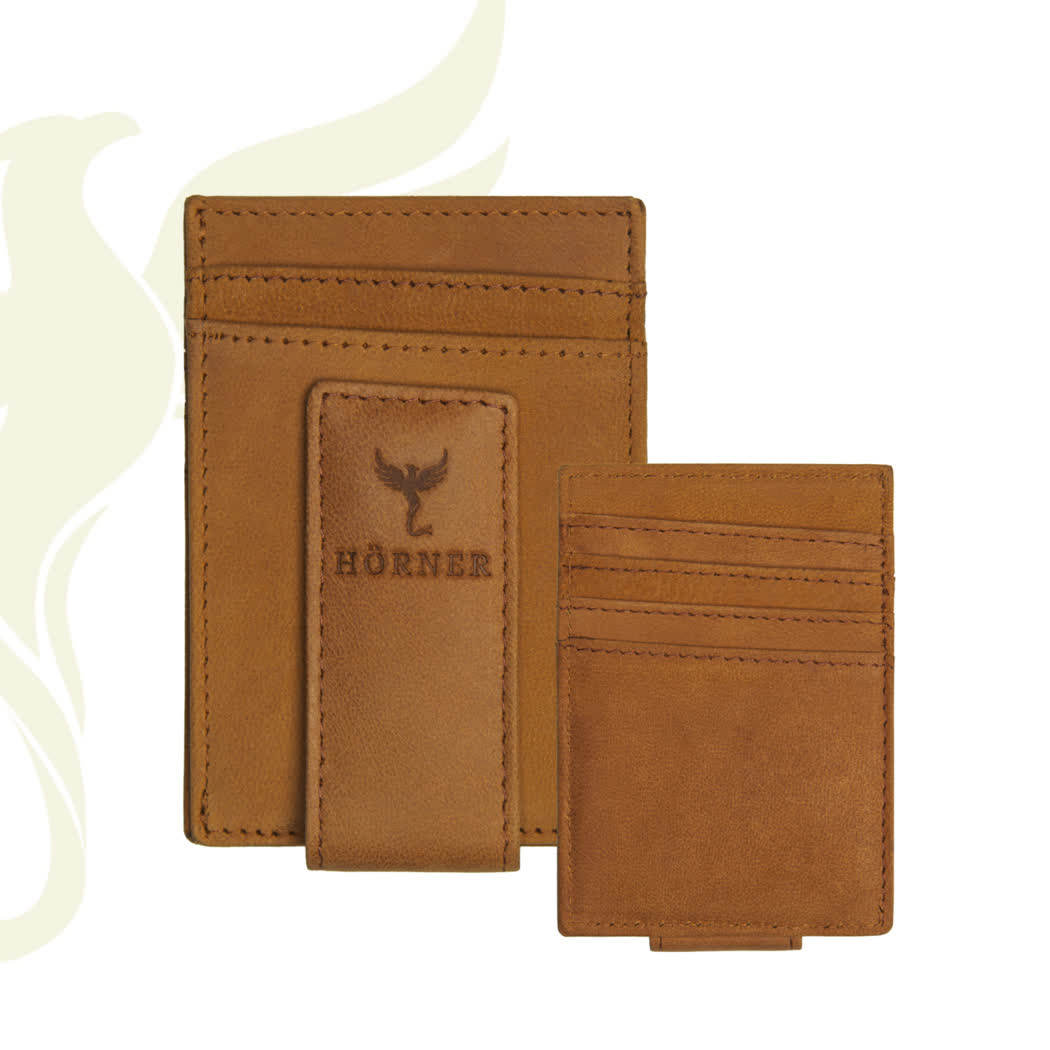
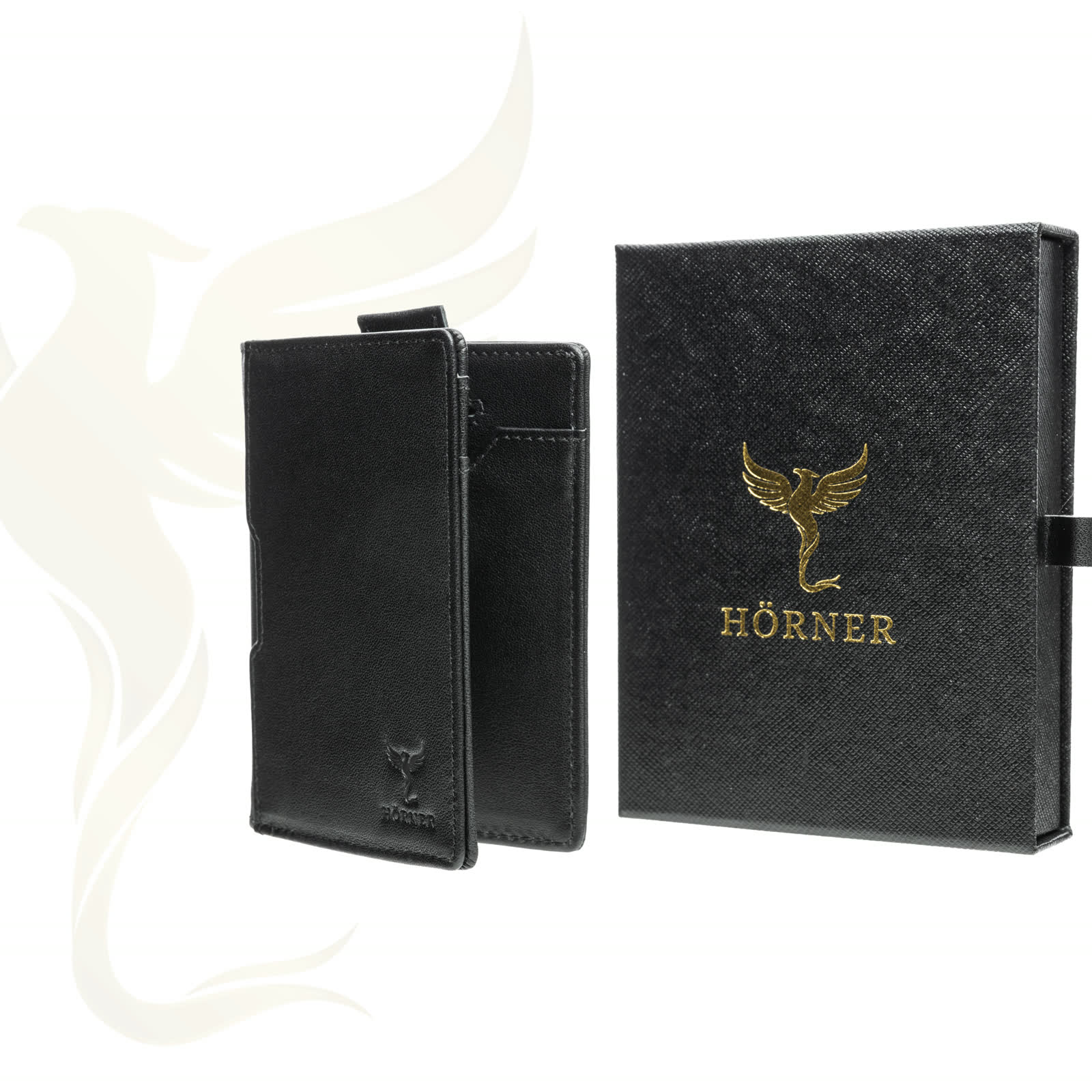
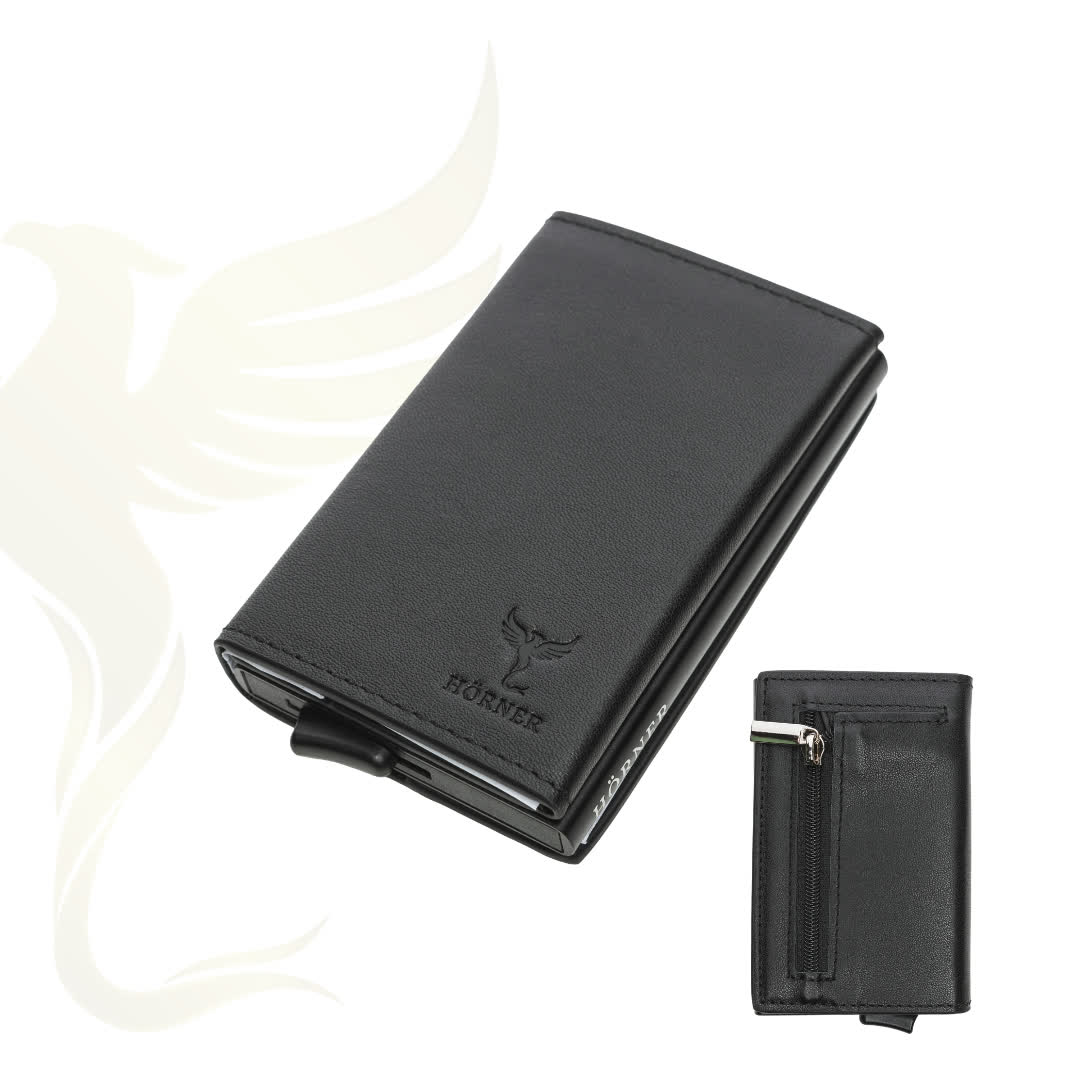
At the leanest end, the Codex is a suede card holder with a money clip on the back, for cards plus a few folded bills. The Nubis Small is a compact nappa cowhide wallet for the small-wallet middle. And the Novus is a slim nappa wallet with quick card access and a zip coin pocket for the days you carry a little of everything; it is the one in this group we offer with engraving, so it doubles as a gift. We are a German brand and design to a German standard; each wallet ships from Germany with duties prepaid, so the price you see is the price you pay.
If you want the wider format decision or the full RFID picture first, our guides on how to choose a wallet and whether you need an RFID wallet go deeper, and the full wallet range is below.