Gifts for writers.
The trouble with shopping for a writer is that everyone reaches for the same things: another notebook, a mug with a pun, a quote on the wall. What a writer actually wants is the tool they write with, made a little finer and made theirs. Here is how to choose it, how to match it to the kind of writer, what to engrave, and what to skip.
The best gift for a writer is the instrument they write with, a step above what they use now, because a pen gets used every day while another notebook joins a stack they already own. Match it to the writer: a fountain pen for someone who loves the ritual, a refined everyday pen for a working writer, or an heirloom-grade piece to mark a milestone. Then engrave a name or a date on the cap to make it theirs. Spend on quality and personalization, not size, and add a handwritten card. Avoid clichés, empty notebooks, and novelty pens that write badly.
Give them the tool they write with.
Ask a writer what they want and most will shrug, because the obvious gifts have all been given to them already. The way through is simple: give them a better version of the one thing they use every single day, the pen in their hand.
A notebook gets filled and replaced, or worse, kept blank because it is too nice to use. A pen is different. A fine pen becomes the instrument a writer reaches for on every page, for years, and it carries something a blank notebook cannot: a personalization. Engrave their name or a date on the cap and a good object becomes a keepsake that is unmistakably theirs.
Give a writer another notebook and it joins the pile. Give them the pen and it goes to work the next morning.On shopping for people who write
The rest of this guide is how to do it well: why the pen beats the notebook, how to match the pen to the kind of writer, why a fountain pen is the classic choice, what to engrave, how much to spend, and what to avoid.
Why a fine pen beats another notebook.
Notebooks are the default gift for writers, and that is exactly the problem. A person who writes already owns a drawer of them, half unused, and one more does not change their day.
A pen changes the day. It is the point of contact between the writer and the page, and a better one makes the writing itself feel better, smoother, more deliberate, more of a pleasure to sit down to. It is also the part a writer is least likely to upgrade for themselves, because a working pen already writes, so they never get around to buying a finer one. That gap is the opening.
And a pen holds a personalization a notebook cannot. A name, a set of initials, or a date on the cap turns a fine object into a keepsake tied to the person and the moment. That is the difference between a gift that is used and forgotten and one that is used and kept.
The gift-guide shelves are full of writer-themed things: cozy slippers, literary candles, a Scrabble set, a subscription, the tote bag. Plenty of them are lovely, and if you want to add one, go ahead. But most are about the idea of a writer rather than the writing, and they blur together within a year. A fine pen is the rare pick that is both personal and used, which is why it outlasts the rest of the basket.
Match the pen to the writer.
Not every writer wants the same pen, and this is where most gift guides go generic. A poet who fills notebooks by hand and a screenwriter who lives in Final Draft want very different things. Match the gift to how they actually work and it lands far harder.
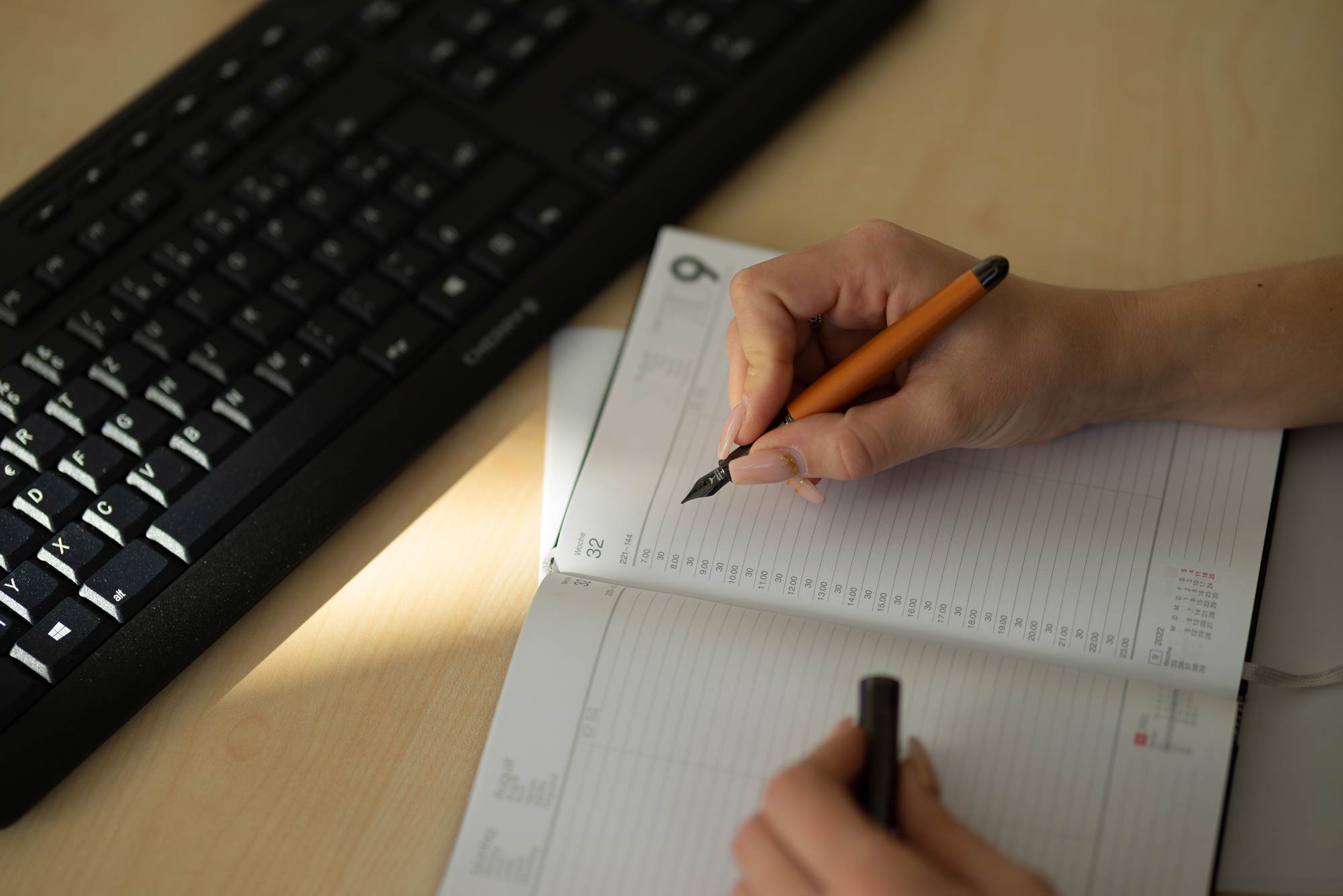
The one who drafts by hand. The novelist writing longhand, the poet, the journal-keeper, anyone who still puts ink on paper. For them a fountain pen is close to unbeatable: it lays down ink with almost no pressure and rewards a slower hand, more on that below. The aspiring writer. Someone at the start, filling their first notebooks. A fine pen says you take the ambition seriously, which is a gift in itself. The published author. A pen to sign copies with is the classic move here, ideally engraved with their name or a book year, so the tool they autograph with is theirs. The working or remote writer. Someone who fills pages fast and wants no fuss. A smooth rollerball or a well-weighted ballpoint, a clear step up from a desk pen, fits the daily grind. The one marking a milestone. A finished manuscript, a book deal, a graduation into a writing life. Here an heirloom-grade piece, real wood or black and gold, reads as an occasion rather than a supply.
One honest caveat: some writers type everything and rarely touch a pen. Even then a fine pen has a place, for signing, for the notebook they keep beside the keyboard, for the ideas that only come longhand, but if they never write by hand at all, lean toward the milestone or signing angle rather than an everyday driver. If you are unsure which kind they are, a fountain pen or a boxed writing set covers the most ground, and the engraving does the rest of the work of making it personal.
Find the pen for your writer.
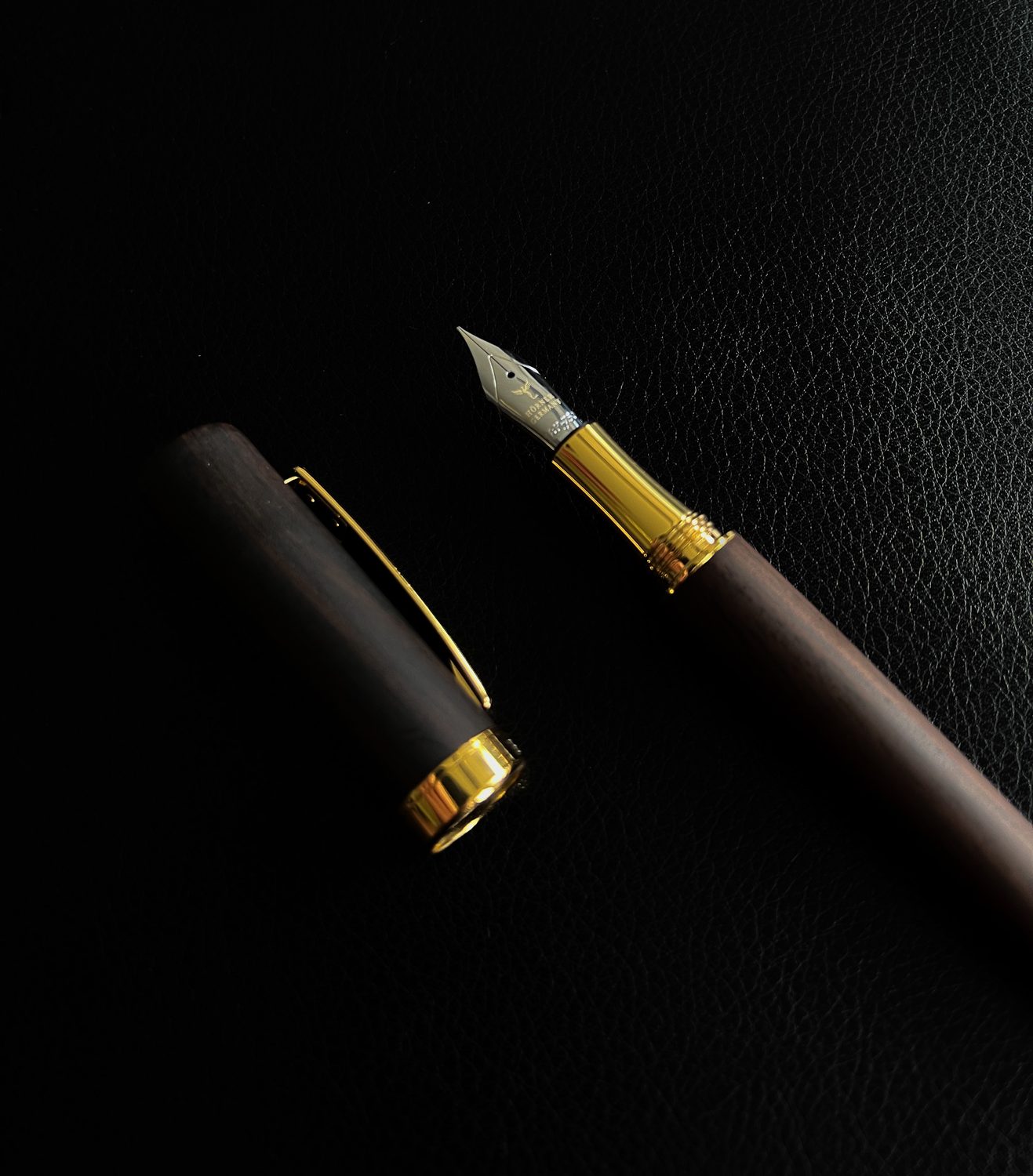
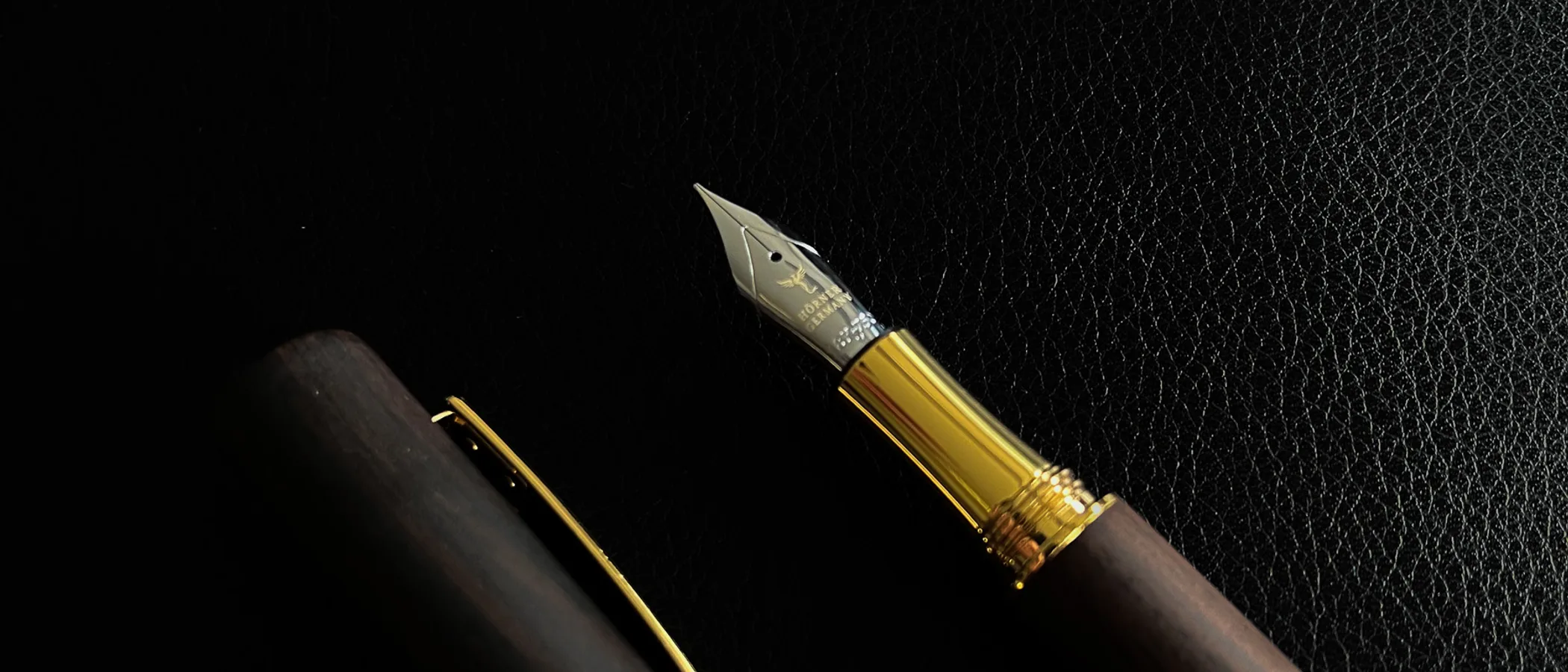
For someone who still drafts longhand, a fountain pen is close to unbeatable. The real-ebony Scriptum writes with almost no pressure, so the hand guides rather than presses, and no two grains are alike.
For a writer at the beginning, a fine pen says you take the ambition seriously without overspending. The Auerus is a clear step up from a desk supply, the pen they write their first real pages with.
A pen to sign copies with is the classic gift for a published author. The black and gold Nobilis turns every signing into a small ritual with a tool that is unmistakably theirs.
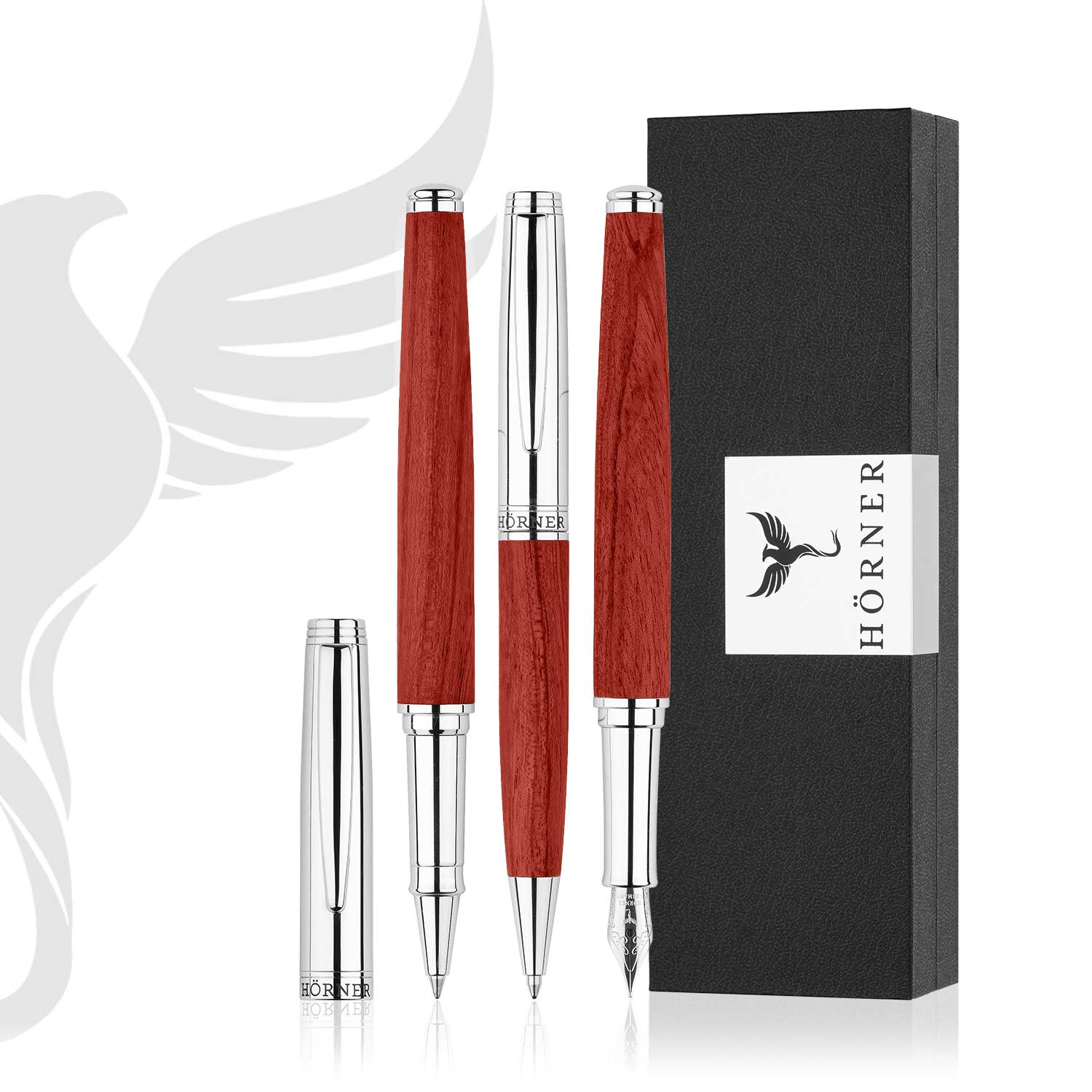
If they rarely touch a pen, skip the everyday driver and lean into keepsake. The real-wood Legno set sits beside the keyboard for the notes that only come by hand, a gift about the milestone rather than the daily grind.
A finished manuscript or a book deal calls for an heirloom, not a supply. The ebony Scriptum has a grain no other shares and reads as an occasion, the piece they keep and tie to the moment you gave it.
Why a fountain pen is the writer's gift.
The fountain pen has been the archetypal gift for writers for a century, and the reason is in the writing itself.
A fountain pen writes with almost no pressure. The nib carries the ink to the page, so the hand guides rather than presses, which is easier over a long writing session and gives the letters a character a disposable pen cannot. It asks for a little in return, filling it, capping it, the small rituals of ownership, and for a writer that care is part of the appeal rather than a chore. For someone who has never owned a proper one, it is often the gift they did not know to ask for.
A fountain pen is a wonderful first gift for a writer who has only used ballpoints, but say a word about it. A medium nib is the friendliest starting point, it writes on ordinary paper without fuss. Show them to cap it after writing and to store it nib-up, and the pen rewards them for years. If you would rather play it safe, a fine rollerball gives some of the same smooth feel with none of the learning curve.
For more on what separates a good one, our guide on what makes a good fountain pen covers the nib, the balance, and the feel. If you are weighing it against a simpler option, fountain pen versus ballpoint lays out the trade-off.
Make it theirs.
If you take one idea from this guide, take this one. An engraving is what turns a fine pen into a gift only you could have given, and for a writer it is the detail that means the most.
An engraving does the work, and a pen is what takes it. Their initials, their name, or a short date sit permanently on the metal cap or barrel, where they stay for good. The rule is that short beats long, since up to 30 characters fit on a pen and shorter reads cleaner, so initials and a date usually say it best. For a writer, a private line, the year of a first book, or the date of a milestone turns the pen into a keepsake tied to their work.
Our guide on how to get a pen engraved covers what works and how it is done. The point is the same throughout: a writer already has pens, so give them the one with their name on it.
How much to spend.
Less than you might fear. The instinct is to reach for something grand, but with a pen the lever is thoughtfulness, not price, and a well-chosen piece does more than an expensive impersonal one.
A fine, engraved pen in the range of roughly 100 to 130 dollars reads as a real gift without tipping into extravagant, and it will outlast almost anything else on a writer's desk. Put the money into quality and personalization rather than sheer size, and always add a handwritten card. The pen is used every day; the card says what the pen is for.
That also makes a writer one of the easier people to shop for once you know the move. You are not hunting for something clever; you are picking one well-made pen and making it theirs.
What to avoid.
Most misfires with writers come from buying the idea of a writer rather than the person. The themed aisle is full of them.
The deepest pitfall is the cliché that says nothing: a mug with a writing pun, a generic quote print, the tote bag, the empty notebook that joins the stack. After that comes the novelty pen that looks the part but writes badly, which a writer notices on the first line. Both fail for the same reason, they are about the theme, not the person.
Skip these and you are most of the way there: another empty notebook they will not use; a punny mug or a generic quote print; a novelty pen chosen for looks over how it writes; and anything bought only because it says writer on it. A writer feels the difference between a gift about them and a gift about the aisle. Choose one well-made pen, engrave it, and write a few honest words.
Gifts for writers, at Hörner.
A fine, engravable pen is close to ideal for a writer, and it is what we make, so this is a gift we help people choose every week.
For the writer who loves the ritual, the real-ebony Scriptum fountain pen writes with almost no pressure and has a grain no other shares, the heirloom piece to mark a book or a milestone. For an everyday writer, the Auerus fountain pen is a refined step up from a desk supply, at home on pages or a signature. And for a writer who wants a set on the desk, the real-wood Legno brings a matched pair of hardwood pens together in a gift box, with a wood fountain pen among the options. Each engraves with a name or a date, and each comes ready to give.
With any of them, the engraving is what turns a fine pen into theirs, and a handwritten card carries the rest. Browse the writing collection below, all shipped from Germany with duties prepaid. For an occasion-led pick instead, our gifts for him and retirement gifts guides sort ideas by moment.