Fountain pen ink: what it is, and how to choose it.
Ink is the one thing no fountain pen can do without, yet few people know what is actually in the bottle. Here is the plain version: what ink is made of, the main types and how they differ, which suits a fountain pen, and what archival really means.
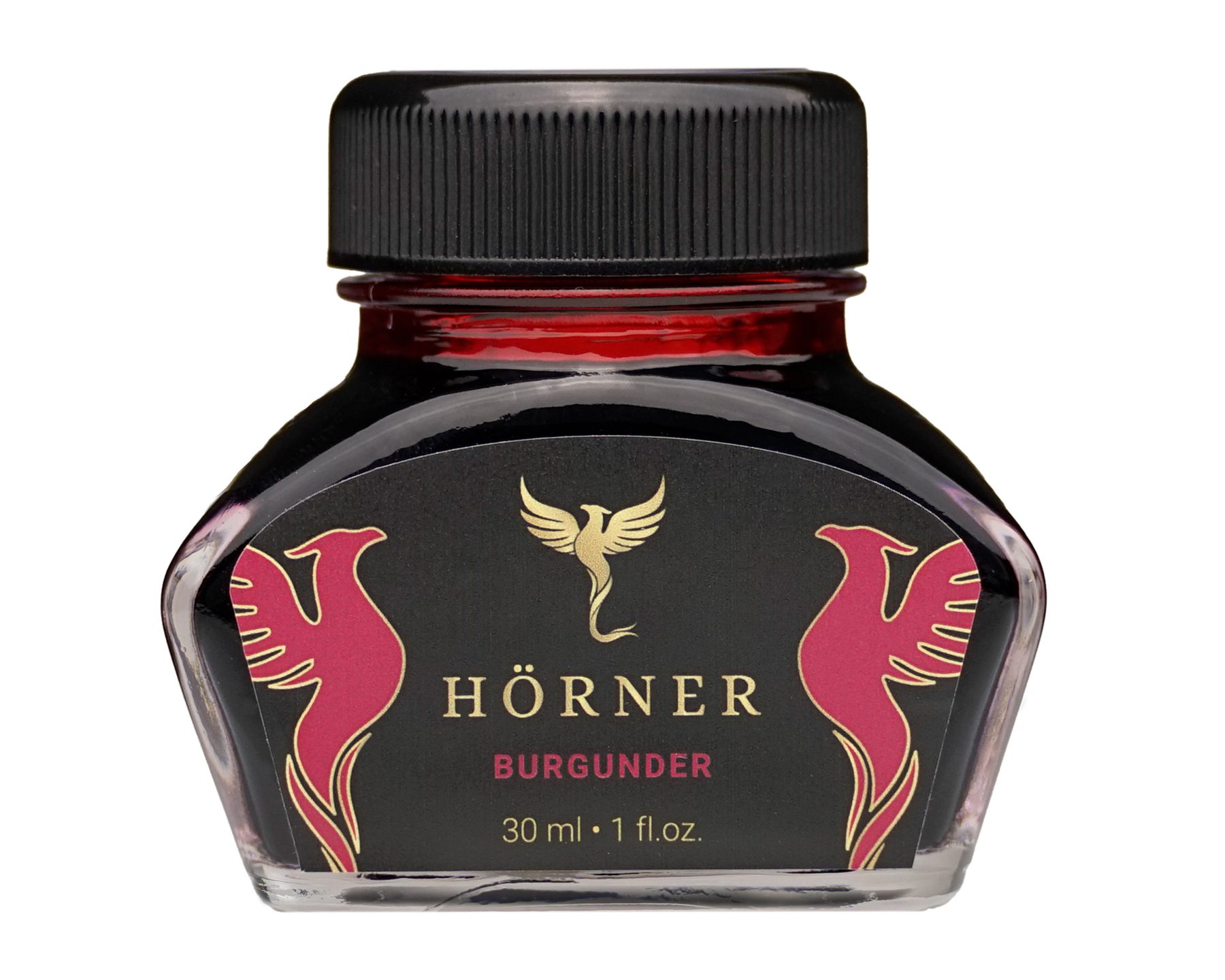
Ink is colorant carried in a liquid, almost always water, either as a dye that dissolves fully or a pigment held as fine particles. A good fountain pen ink dries reasonably fast, resists water once dry, still washes out of fabric, and will not clog the feed. Archival ink is built to survive water and light so writing stays legible for years. Hörner does not make ink; it sells bottled ink and a converter so every Hörner fountain pen can use it.
What ink is, and what it is made of.
Trace the word back to its Latin root and ink simply means colored water. That is still the heart of it: a mixture of water and colorant, with the exact colorant and how it is carried changing by type and by maker.
Two things go into almost any ink. First, the liquid carrier, usually water. Second, the colorant, which is either a dye that dissolves completely so the ink stays uniform, or a pigment that sits in the liquid as fine particles. On top of that, makers blend in small amounts of other ingredients, such as preservatives, so the ink keeps and behaves well in a pen.
History tells the same story. Around 5,000 years ago, people in Egypt and China were already writing with ink made from soot and gum water, a liquid drawn from certain trees. Another old recipe used the ink sacs of cuttlefish to make sepia, a black-brown colorant whose principle still turns up in food coloring today. Different ingredients, the same idea: colorant in a liquid that flows onto the page and stays.
The main types of ink, side by side.
There are far too many inks, in far too many colors, to list in full. But most fall into a handful of families, and knowing them tells you a lot about how an ink will behave.
The split that matters most is dye versus pigment. Dye inks dissolve fully in the carrier, so nothing settles and the color stays even. Pigmented inks hold their color as insoluble particles, which makes them vivid and lasting but prone to settling. Here is the short tour.
| Type | Colorant | Strengths | Watch-outs |
|---|---|---|---|
| Water-based | Soluble dye | Stays uniform, rarely bleeds through | Dries slowly, smudges more easily |
| Solvent-based | Soluble dye | Dries fast, used on film and glass | Tends to spread on paper |
| Iron gall | Iron and gallic acid | Very durable, good for archives | Hard to wash out, can clog pens |
| Pigmented | Insoluble pigment | Vivid, lightfast, water-resistant | Pigments settle over time |
| Gel | Pigmented water-based | Soft, smooth flow, shows through less | Made for gel pens, not fountain pens |
Iron gall sits a little apart from the rest. It has been in use for more than two thousand years, made historically from iron sulfate and oak galls boiled for their gallic acid. It is prized for durability, but it is difficult to wash out and not always fountain-pen friendly, though some modern versions are formulated to be. Only a few makers still offer it. Drawing inks, by contrast, are usually thick and pigment-based: lovely on paper, but too heavy for a fountain pen feed.
Which ink suits a fountain pen.
There is no single perfect fountain pen ink, because so much comes down to your own preferences and what you care about most. But a few qualities make an ink easy to live with in a pen.
A good fountain pen ink should:
- dry reasonably fast, so it does not spread or feather on the page,
- resist water and hold to the paper once dry,
- still wash out of fabric, in case a blot lands on a shirt,
- and above all not clog the feed.
Each maker keeps its own recipe for cartridges and bottled inks, and naturally does not share it. The practical advice is simple: buy ink sold for fountain pens. Specialist retailers carry plenty of well-behaved, water-resistant fountain pen inks made for writing on paper. Steer clear of drawing inks and heavily pigmented inks that can settle and block the nib. If a pen does clog, it is usually time to clean it, not to blame the ink, and our guide to cleaning a fountain pen walks through a safe flush.
What archival ink really means.
Archival permanence comes up again and again once you start reading about pens and ink. Stripped of jargon, it means the writing is built to last.
An archival ink resists both water and light, so the line stays legible over a long stretch of time, at least in its essential form. That matters most for official documents and signatures on contracts, where a faded or smudged line is a real problem. Pigmented inks and traditional iron gall inks are generally regarded as suitable for archival use, precisely because their color holds against water and sunlight.
Archival ink is not about looking special. It is about still being readable years from now.From experience · Hörner
For everyday writing you rarely need a dedicated archival ink. But if you are signing something that has to endure, it is worth reaching for an ink described as water-resistant and lightfast.
How long ink lasts, and a page count.
Ink has no true expiry date. Stored well, in the dark rather than in light, neither too warm nor too cold and at a stable temperature, a bottle can still write after ten years. As a rule, though, makers advise using ink within about twelve months.
What ages an ink is mostly evaporation and settling. Over time the water content can dry off, leaving the ink thicker than it should be. With pigment-based inks, the pigments may settle at the bottom and refuse to mix back in. Either way the risk is a clogged, and in the worst case damaged, pen, so it pays to flush a pen you have left sitting.
As for how far a fill goes: a classic fountain pen cartridge holds 1 ml of ink and writes, on average, around 300 meters with a medium nib, the grade Hörner pens use. That comfortably covers 10 to 20 A4 pages, and with a fine nib quite possibly the opening chapters of a first novel. Finer nibs lay down less ink per word, so they stretch a fill further; broad nibs use it up faster.
Do not mix different bought inks together to chase a new color. Their chemistry is not always compatible, and in the worst case the blend can damage your pen. If you want a new shade, rinse the converter and nib section with cool water until it runs clear, then fill with the new ink on its own.
Bleeding, sheen, ghosting: a short glossary.
Read about ink for long and you meet terms that are not self-explanatory. Here are the ones that come up most.
Bleeding is ink pressing through to the back of the sheet, and in the worst case onto the next page. Sometimes the ink is too watery, but often the paper is the real cause. Ghosting is the milder version: the ink does not go through, but the writing still shows faintly from the reverse.
Sheen is when an ink reveals a second hue, for example a blue ink with a red cast in heavy strokes. Shimmering looks similar but comes from glitter particles in the ink. Shading is the shadow effect you get where more ink pools and dries darker than the thinner strokes around it. None of these is a flaw; they are simply ink behaving like ink.
Two more worth knowing: pigment, the insoluble colorant behind vivid, water-resistant inks, and viscosity, how thick or thin an ink flows. Water-based inks are more fluid than a thick drawing ink, and that flow is a large part of how a pen feels in the hand.
How our pens take ink.
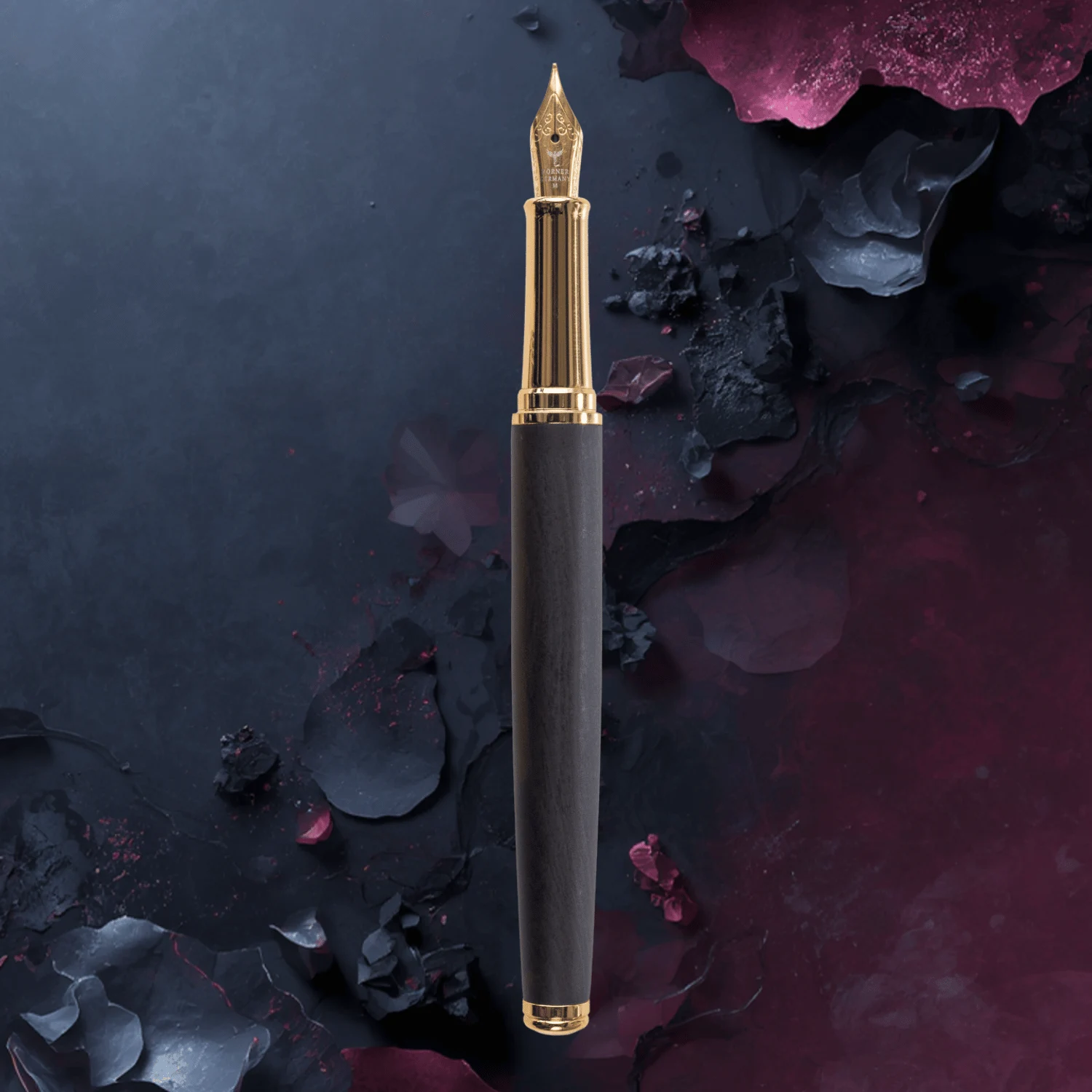
Hörner does not make ink, and never has. What we do is sell bottled ink and a converter so every Hörner fountain pen can use the full range of colors, paired with a German JoWo nib that does the writing.
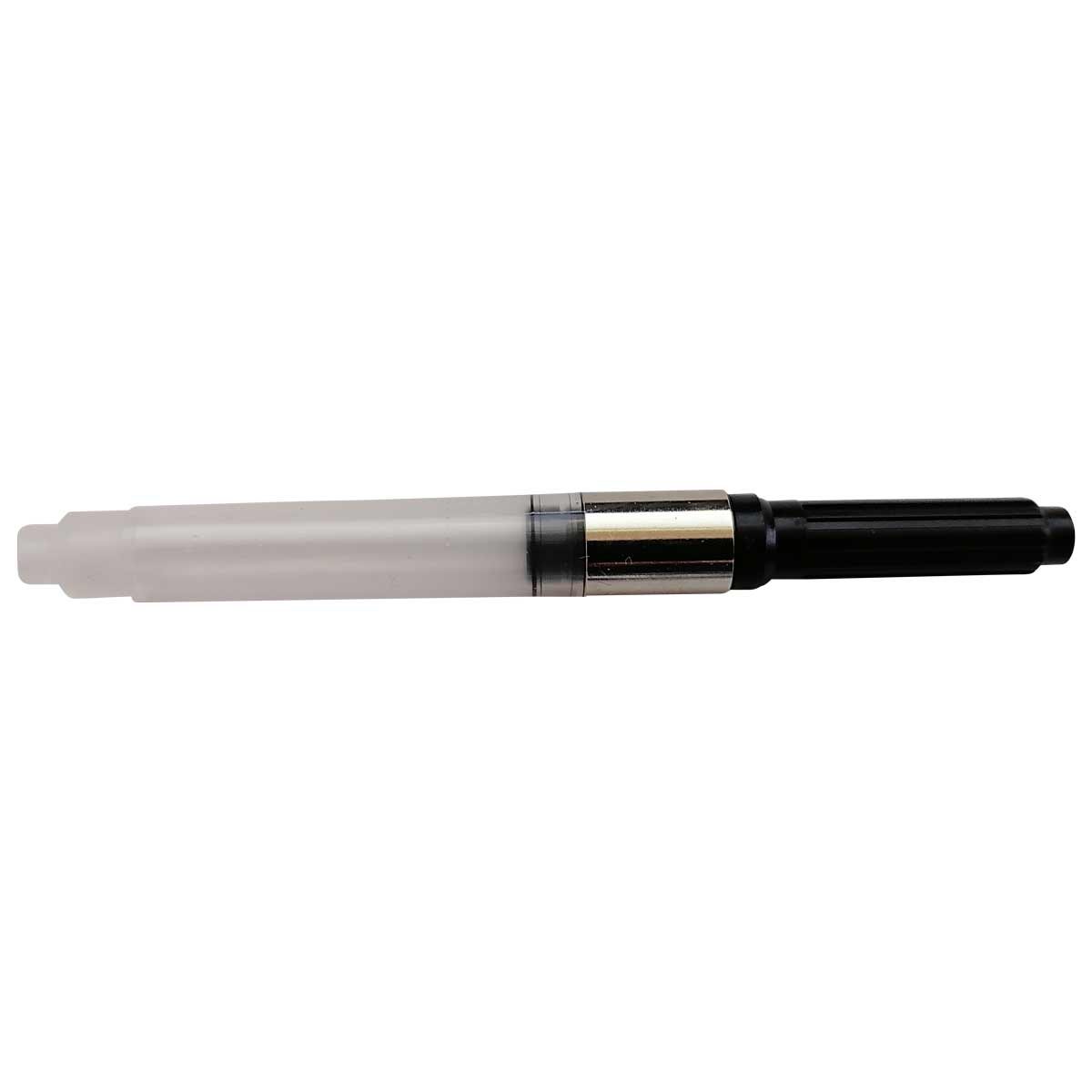
Every Hörner fountain pen takes standard cartridges and a converter; none are piston fillers. The choice is yours each time you fill: a cartridge when you want to grab the pen and go, or the converter and a bottle of ink when you want a particular shade. Both are easy to clean and easy to refill, which is exactly why this is the system we stand behind for everyday writing. If you are weighing the mechanism itself, our cartridge, converter and piston filler guide lays the three out side by side.
Start with the converter that comes with the pen and a single bottle of a color you like. Twist the converter knob down, dip the whole nib in the ink, then twist back to draw it up, and wipe the nib clean. When you want to switch colors, rinse the converter and nib section with cool water until it runs clear, then refill. No special kit required.
Three good places to start, from the bottle to the pen: