Brown and black together: it is the sheen, not the hue.
Almost every answer to this question is a formality rule: match your belt to your shoes for business, relax for everything else. That rule is roughly right and it explains none of the cases where it fails. The better test is what the two leathers do with light, and you can run it in under a minute.
Brown and black go together. What breaks a combination is a difference in sheen, not in hue: a matte brown next to a high-gloss black reads as a mistake, while two matte leathers in different colors usually read as a choice. Keep the brown dark or clearly light, keep the finishes close, keep the metals consistent, and remember the watch strap is the third leather surface.
Does brown go with black? The short answer.
Yes. The pairing fails on sheen far more often than on color, and once you know that, most of the cases that look wrong are easy to explain and easy to fix.
The traditional rule, match the belt to the shoes, is not wrong. It is a shortcut that happens to be right for business dress, because business shoes are usually polished and business belts usually match them in finish as well as color. Take the same rule into a smart-casual outfit and it starts producing bad advice: it will bless a glossy black belt with glossy black boots that fight the rest of the outfit, and it will forbid a matte brown belt with matte black chelsea boots that look completely at home together.
So the question worth asking is not "are these two colors allowed together." It is: do these two leathers handle light the same way? If they do, brown next to black is a decision. If they do not, even black next to black can look wrong.
There is one place where the old rule should be followed without argument, and it is worth naming now rather than burying at the end. In an interview, at a wedding where the dress code is stated, in a courtroom, in any setting where someone is reading you for signals of care, match your belt to your shoes. Not because the sheen argument stops being true, but because in those rooms an unusual choice is read as an oversight regardless of whether it was one.
Large surface, small surface: where the question bites.
Not every brown and black pairing is the same problem. What matters is how the two surfaces sit relative to each other and how often they appear in the same glance.
Belt and shoes are the hard case, because they appear in the same vertical line and the eye travels between them constantly. Two pieces of similar size, similar function, both leather, both in view. That is the pairing everyone asks about, and it is the pairing that deserves the most care.
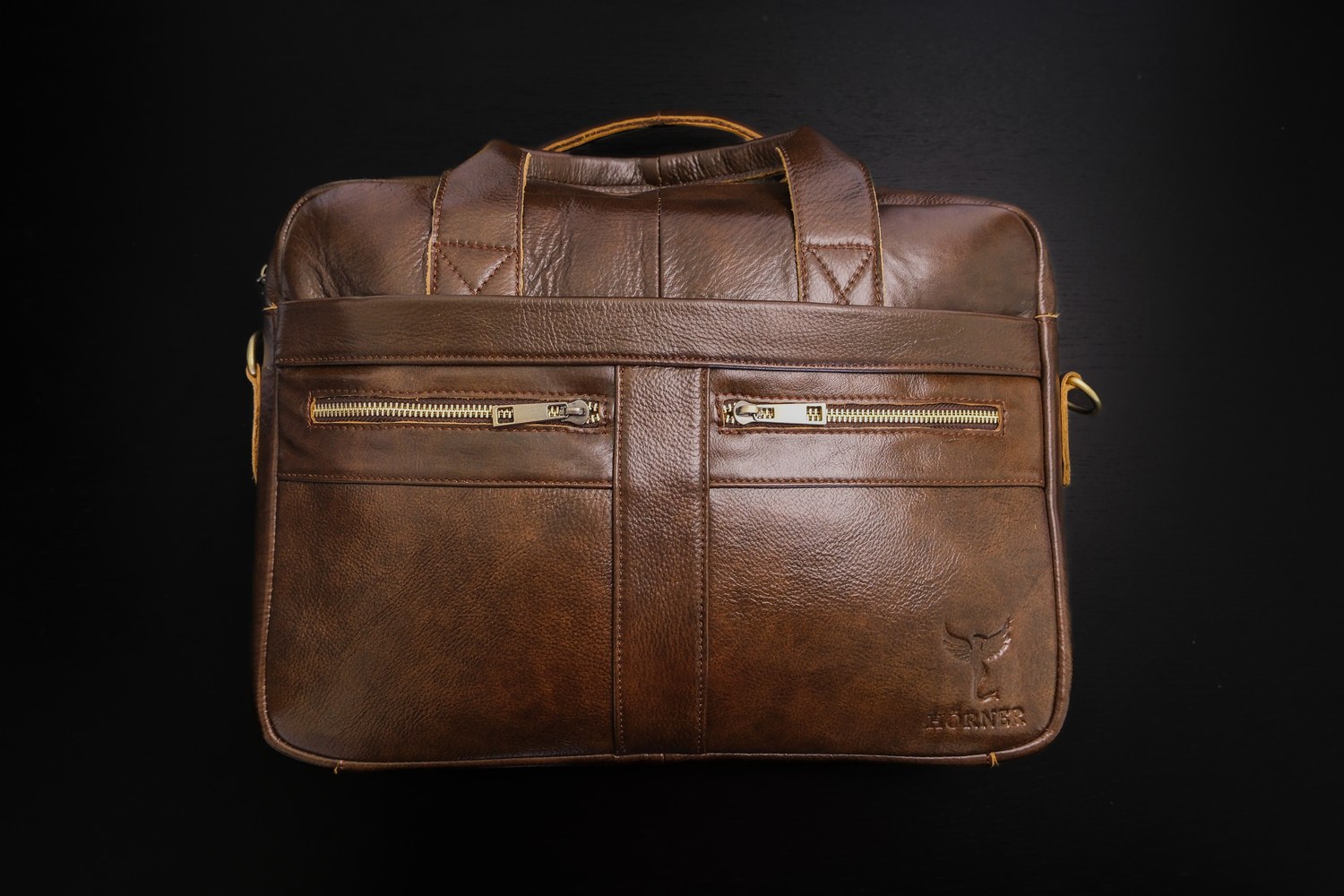
Bag and shoes are the easy case. A bag hangs at a different height, moves independently, and is usually a much larger surface. The eye reads it as its own object rather than as a failed match for the shoe. This is why a cognac bag with black shoes is a standard, entirely uncontroversial combination while a cognac belt with black shoes still makes people hesitate.
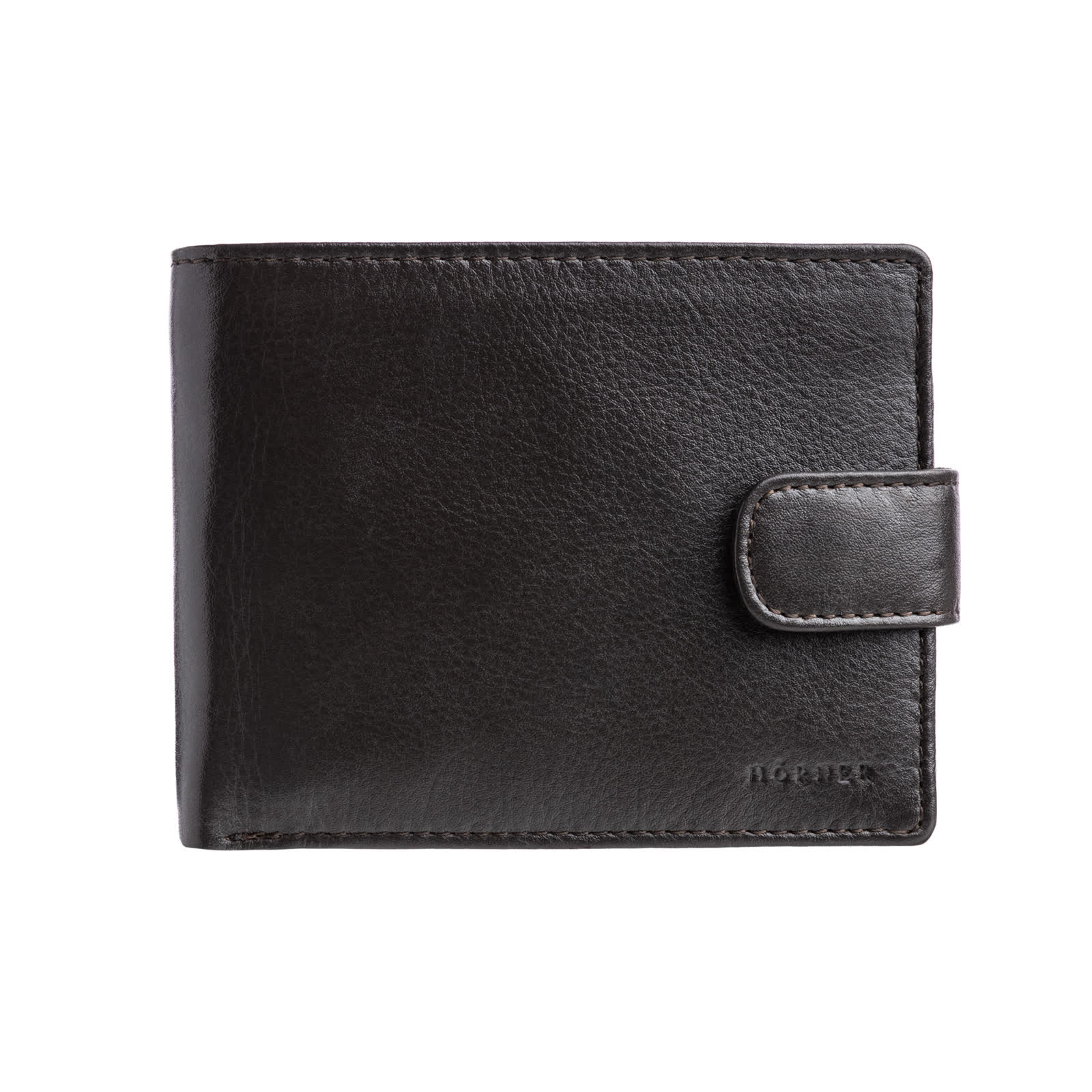
Wallet and card holder are effectively free. They appear for four seconds at a register, next to nothing else leather. Almost nobody will ever see your wallet and your shoes in the same frame. Choose those on preference, not on coordination.
| The pair | Seen together? | How strict to be |
|---|---|---|
| Belt and shoes | Constantly, in the same line of sight | Strict. Match the finish, keep the colors close or deliberately distant. |
| Watch and belt | Often, when the hands are at the waist | Moderate. Agreeing with one of the other two is enough. |
| Bag and shoes | Occasionally, at a distance | Loose. Contrast is fine and often better. |
| Bag and belt | Rarely in the same glance | Loose. |
| Wallet and anything | Almost never | None. Buy the one you like. |
| Shoes and a leather jacket | Yes, and both are large | Moderate. Two large surfaces in different finishes is the visible mistake. |
This table is the fastest way to stop overthinking. Most of the anxiety about brown and black is spent on pairings that nobody ever sees together.
Sheen, not hue: the axis it breaks on.
Sheen is not a property of the hide. It is produced in three consecutive steps: the finishing recipe, which contains matting or gloss components; the mechanical work of ironing, pressing and polishing; and then years of care or neglect. The gloss on fine calf leather comes from glazing, classically with an agate stone that aligns the fibers and compacts the surface.
Two consequences follow, and both are useful.
First, gloss says nothing about quality. Patent leather shines because there is a film on it. A matte, open-pored leather is frequently the more demanding material, precisely because there is no top coat to hide flaws behind. Anyone who has been told that shinier means better has been told something about a finishing decision, not about a hide.
Second, and this is the practical part, sheen is the axis on which a combination breaks. A high-gloss black shoe and a matte cognac belt belong, to the eye, to two different material classes. Two matte pieces in different colors will often sit together more comfortably than two identically colored pieces in different finishes. Your eye sorts by how a surface behaves in light before it sorts by hue, which is also why an outfit that looked fine in the hallway mirror can look wrong in a photograph taken under a different light.
Two matte leathers in different colors usually look better together than two leathers in the same color with different finishes.Aus der Praxis · Andre Hörner
There is no leather-specific gloss standard and no reliable published numbers for the sheen of individual finishes, so this is not something you can look up on a spec sheet. It is something you check with your eyes, which is what the next chapter is for.
| Finish | How to recognize it | How it ages | Pairs with |
|---|---|---|---|
| Pigmented | Even surface, regular grain pattern, water beads on top | Stays roughly where it started | Other pigmented pieces. The most predictable partner. |
| Semi-aniline | Grain visible, slight color variation across the surface | Moves slowly | Pigmented and other semi-aniline pieces. |
| Aniline | Pores fully visible, a drop soaks straight in and darkens | Moves noticeably | Other aniline pieces, with care. Two moving targets are hard to keep matched. |
| Pull-up, oiled or waxed | Color lightens where the leather is bent | Shows use from day one | Itself. Best as the one living piece in a set. |
If you want the longer version of what these finishes are and how they are made, that sits in types of leather. For this question, the four-row summary above is enough.
Three tests, under a minute.
All three are done in daylight with both pieces in your hands. None of them requires knowing what either leather is.
1. The reflection edge. Lay both pieces side by side and tilt them slowly. Watch the bright edge travel across each surface. If it moves noticeably faster and lands sharper on one of them, you have two different sheen levels. This is the most informative of the three, because it measures the exact thing that matters.
2. The squint. Step back, half close your eyes until detail drops out and only values remain. If the two pieces separate into two clearly different brightnesses, the pairing will read as a contrast, which is fine and often good. If they sit at almost the same brightness but obviously different colors, that is the uncomfortable middle: close enough to look like an attempted match, far enough to fail it.
3. The photograph. Take one picture with a phone, with the flash off, and look at it. A camera flattens exactly the depth cues your eye uses to forgive a mismatch. If it survives the photo, it will survive the day.
Test two is the one that changes minds. Most failed brown and black combinations are not too contrasty, they are not contrasty enough: a mid brown sitting a half step from black, which the eye reads as a match that missed. Going darker, or going clearly lighter, fixes more outfits than going more neutral does.
Dark brown next to black.
Espresso, dark chocolate, deep walnut. These are the browns that sit next to black with the least friction, for a simple reason: the visual step between them and black is small, so the pairing does not have to be justified by anything else in the outfit.
A dark brown belt with black shoes, both in a low sheen, is close to invisible as a decision. Nobody notices it, which is exactly the goal in most situations. The same belt against a high-shine black oxford is a different story, and that is the sheen rule doing its work again rather than any rule about brown.
Dark brown is also the more useful color to own if you are only buying one. For most people outside daily business dress, a dark brown belt works with more real outfits than a black one: it goes with jeans, with olive and tan chinos, with navy, and with black when the finishes agree. A black belt is more restricted than its reputation suggests.
Cognac and tan: the built-in distance.
The second reliable zone is at the opposite end. Cognac, tan and light chestnut are far enough from black that nobody could mistake the pairing for a failed match. The distance is the argument: this is obviously a contrast, therefore it is obviously deliberate.
This is why a cognac bag with black shoes is unremarkable, and why a cognac watch strap works against a black leather jacket. The eye is not being asked to decide whether the colors match. It has already concluded that they are not trying to.
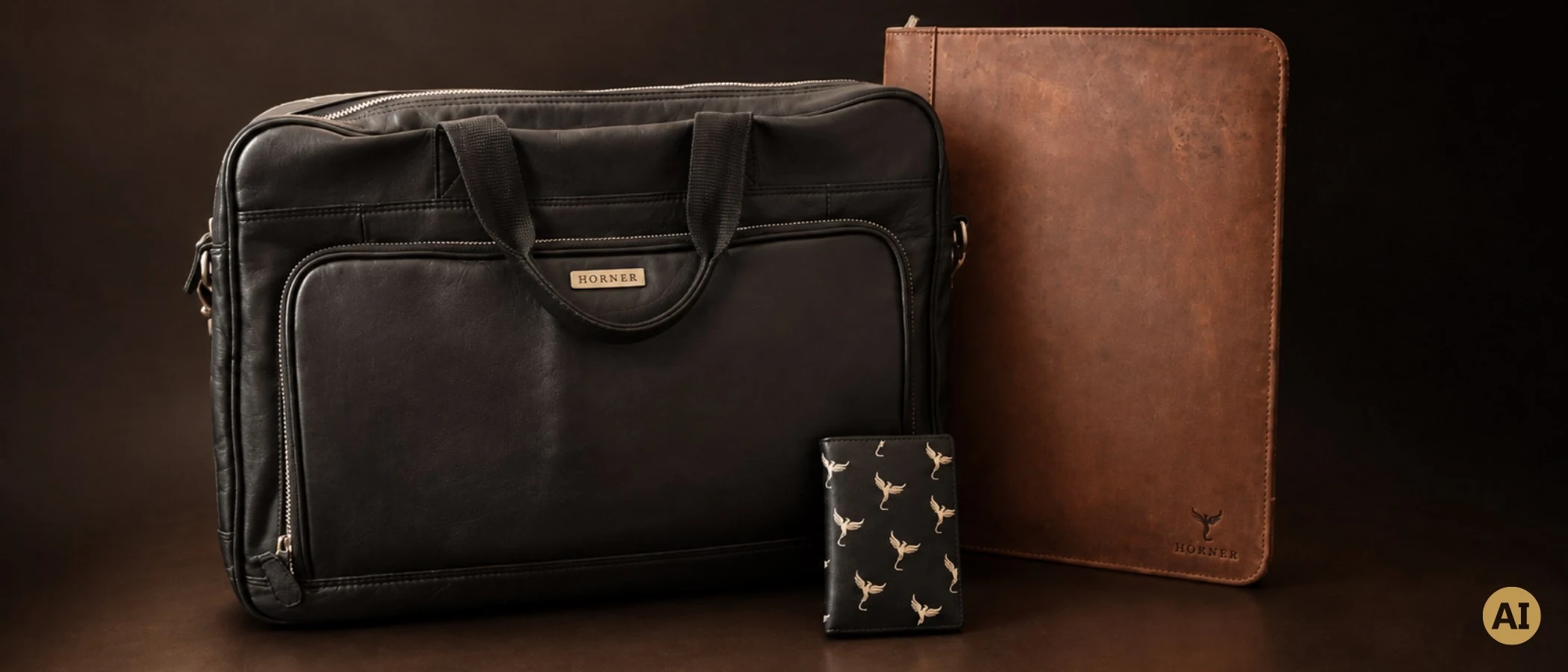
What cognac does need is a second point of contact. One warm brown item alone in an otherwise black outfit can look stranded. A cognac bag reads better when something else on you, a strap, a folder, a pair of boots, carries a related tone. That is not a matching requirement, only a way of making the choice look like a scheme rather than an accident.
The zone to avoid remains the middle. A mid brown, mid sheen, sitting a half step away from black, with nothing else warm in the outfit. That is the combination that produces the reaction the traditional rule was written to prevent.
Brown shoes with black pants.
This one is asked constantly and the answer is more relaxed than the belt question, for a reason worth stating: fabric is not leather. Wool, cotton and denim do not throw a specular highlight, so the sheen test barely applies. You are comparing a matte surface with a leather one, and the eye expects them to differ.
Brown shoes with black pants works. It is a staple of smart-casual dressing and has been for years. Three things make it work better:
Keep the brown medium to dark. A very light tan shoe under black trousers puts all the visual weight at the floor and reads as unbalanced rather than as contrast.
Give the brown a friend. A belt in a related tone, a watch strap, a bag. One brown item alone at the bottom of an all-black outfit is the version that looks accidental.
Watch the trouser fabric. Black suit trousers have a formality that pulls back toward the matching rule. Black jeans, black chinos and black wool casual trousers do not, and those are where brown shoes are at their best.
The one context to stay conservative in is a genuine black suit. Not because it cannot be done, but because a black suit is worn almost exclusively for occasions that are formal, and formality is where an unusual choice gets read as an error.
The watch as the third leather surface.
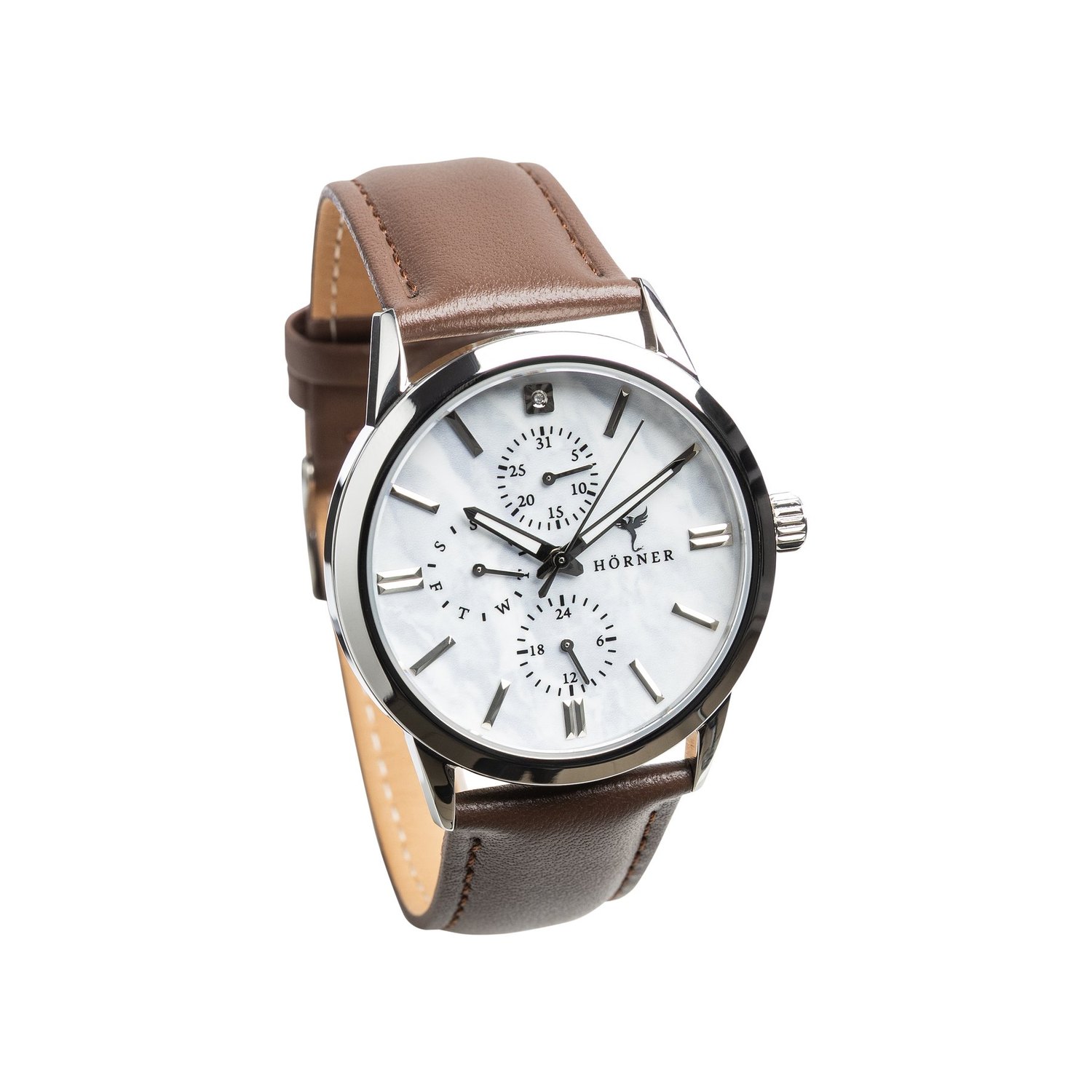
People plan belt and shoes and forget that there is a third piece of leather on them, sitting at the end of the arm where it enters almost every gesture. The watch strap is doing more coordinating work than its size suggests.
Two practical rules. If your belt and shoes disagree, let the strap agree with one of them, and the disagreement stops looking like an oversight and starts looking like a scheme. If everything already matches, the strap is where you are free, because it is the one leather item small enough to be the deliberate exception.
The strap is also the cheapest correction available. Changing a strap is a five-minute job on most watches and costs a fraction of a new belt or new shoes. If a brown and black outfit is nearly working, the strap is usually where to spend the effort rather than replacing something larger.
One thing to check while you are there: the metal. A steel case, a yellow-gold buckle and silver bag hardware split three ways is more noticeable than mixed leathers, and it is the miss people make while carefully solving the leather question. Pick a metal family and hold it across the visible pieces.
Five ways out when it is only these two pieces.
You are dressed, you have one brown item and one black item, and there is no third option in the closet. Five things that work, roughly in order of how often they save the outfit.
| The move | What it does |
|---|---|
| 1. Change the trousers, not the leather | Navy or mid gray gives brown far more room than black does. Often a thirty-second fix for a problem you were about to solve by buying a belt. |
| 2. Add a second warm point | A strap, a folder, a bag in a related brown. One brown item alone looks accidental; two look like a scheme. |
| 3. Push the contrast further apart | If the brown is mid and the sheen is close, going to the lightest brown you own often reads better than the near match. |
| 4. Take the shine down | A brush and a matte conditioner on the glossier of the two pieces closes the sheen gap. Slow, but it fixes the cause. |
| 5. Drop the belt entirely | With a jacket on, or with trousers that fit properly, no belt is a legitimate answer and removes the pairing from the picture. |
Note that only one of these five involves buying anything. The question feels like a shopping problem and is usually a wardrobe problem, and the answer for most people is a dark brown belt and a low-sheen black shoe, after which the question stops coming up.