The best pens for left-handed writers.
Left-handers do not write worse, they write into a problem right-handers never meet: the hand passes over the ink it just laid down. Solve that and the smearing stops. It comes down to the pen, the ink and a couple of small changes in how you hold the page. Here is what actually works.
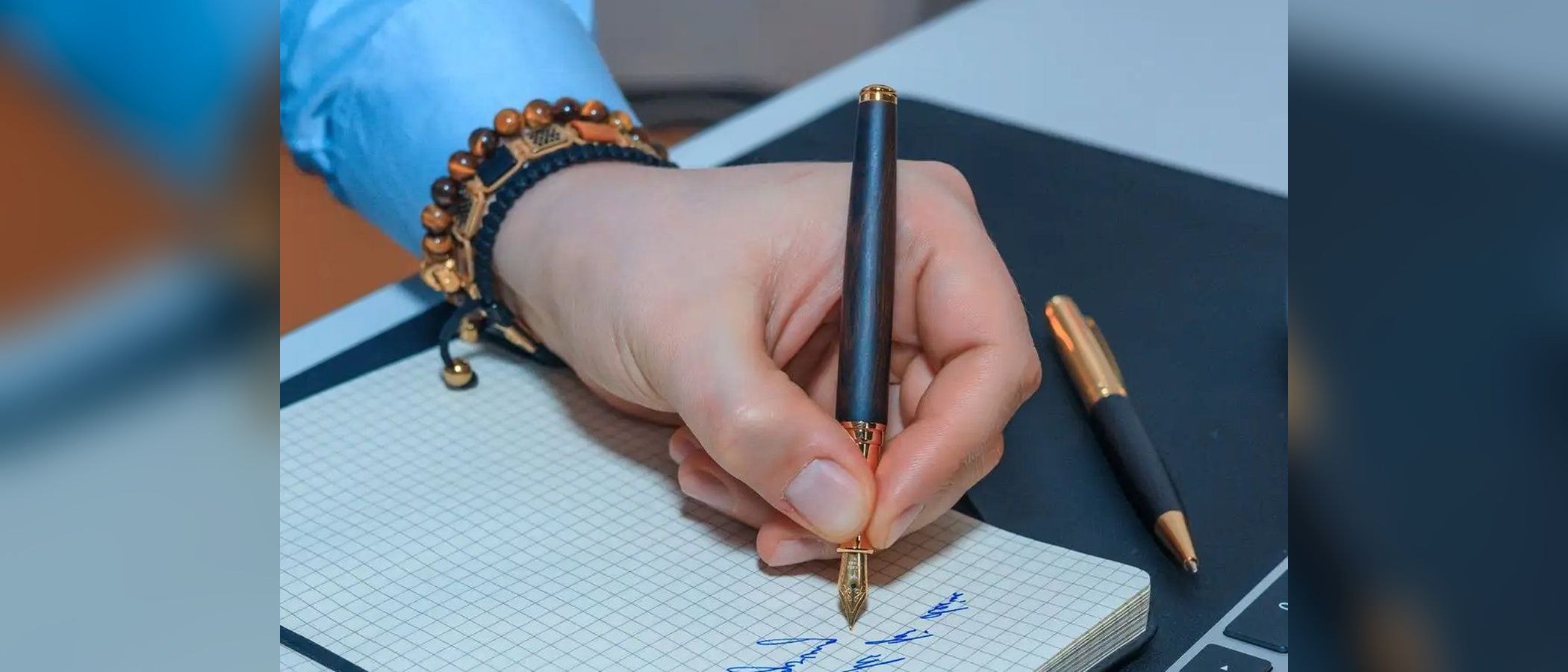
Left-handers smudge because the hand crosses the line it just wrote, over ink that is still wet. The fastest fix is an oil-based ballpoint, whose ink dries almost on contact. If you want a fountain pen, choose a smooth medium nib and a fast-drying ink. Rollerball and gel pens, which lay down a wetter, slower line, smear the most. Then turn the paper 30 to 45 degrees and keep your hand below the writing line.
What works for left-handers.
If you only change one thing, change the ink. A left-hander writes left to right with the hand following along the line, so the hand keeps meeting ink that has not set. The drier the ink, the cleaner the page.
That points to one pen above the rest: an oil-based ballpoint. Its ink is thick and dries almost the moment it touches paper, so there is little left for your hand to lift. A fountain pen can absolutely work, but its water-based ink dries slower, so it asks more of your nib choice, your ink and your technique. A rollerball, wetter still, is the hardest of the three to keep clean.
None of this is about left-handers writing badly. It is a simple matter of physics, and once you account for it, the result is the same neat line a right-hander takes for granted.
Why left-handers smudge.
A right-hander pulls the pen away from the words already written and trails their hand over dry, empty paper. A left-hander does the opposite.
Writing left to right, a left-hander pushes the pen across the page and drags the side of the hand straight over the freshly inked words. If that ink is still wet, it smears, and it transfers onto the hand as well. This is the whole of the so-called left-handed writing problem, and it has nothing to do with skill.
Pushing instead of pulling has a second effect: a sharp or scratchy nib tends to catch and dig into the paper on the push, where it would glide on the pull. So a left-hander is fighting two things at once, wet ink under the hand and a nib that can snag. The good news is that both have the same kinds of fixes, in the pen and in how you hold the page.
A left-hander is not writing worse. They are simply writing into ink that a right-hander never has to touch.From experience · Hörner
Why an oil-based ballpoint wins.
If you want the surest, lowest-effort answer, reach for a ballpoint. The reason is the ink.
A ballpoint uses a thick, oil-based paste that sets almost as soon as it meets the paper. Aim for ink that dries in under ten seconds and a ballpoint clears that easily, often instantly, so by the time your hand reaches a word it is already fixed. There is no nib to catch, the line is consistent, and you can write at speed without leaving a trail across the page.
It is also the most forgiving choice while a hand position is still developing, which is why it is the pen most often recommended for left-handed children moving on from a pencil. You get clean results without having to think about angle or ink at all.
The faster the ink dries, the less a left-hander smears. Oil-based ballpoint ink is fastest, water-based fountain pen ink is slower, and the thin liquid ink in a rollerball or gel pen is slowest of all. When in doubt, the thicker and oilier the ink, the safer it is for a left hand.
Fountain pens for left-handers.
Plenty of left-handers write beautifully with a fountain pen. It just needs setting up for the way a left hand moves, and there are three things to get right.
The nib must be smooth. Because you push the pen, a sharp or poorly finished nib will catch and scratch. A smooth, well-made nib glides on the push as easily as on the pull. This matters far more for a left-hander than the exact width does.
Favor a controlled nib width. A finer line lays down less wet ink, so it dries faster and smears less. A medium nib is a sensible middle ground: enough character to enjoy, not so wet that it sits on the page. A broad or stub nib floods more ink and is the hardest to keep clean as a lefty.
Choose a fast-drying ink. Fountain pen inks vary a lot in dry time. Our own bottled ink is formulated to dry quickly, which makes it well suited to left-handers, and it pairs with any Hörner fountain pen. Write on absorbent rather than glossy paper too, so the page itself pulls the ink in. If you need to clean and refill between inks, our guide on how to clean a fountain pen covers it.
Get those three right, turn the paper, and a fountain pen rewards a left-hander as much as anyone. For a deeper look at widths, see fountain pen nib sizes.
Why rollerballs smear the most.
A rollerball writes with a wonderfully smooth, dark line, which is exactly why it is the riskiest pen for a left-hander.
That smoothness comes from a thin, water-based ink that flows freely and sits wet on the surface for a beat longer than ballpoint paste. For a right-hander moving away from the line, that is no problem. For a left-hander whose hand follows along the line, it is the longest window for a smear. Gel pens behave much the same way.
It does not mean a left-hander can never use one, only that a rollerball or gel pen is the format that demands the most from your paper, your angle and your patience. If you love the rollerball feel, lean on absorbent paper and a turned page. If you want the cleanest result with the least fuss, a ballpoint will serve you better. The difference between the formats is laid out in our guide on ballpoint vs rollerball.
Paper angle, grip and hand position.
The right pen does most of the work, but a few habits finish the job. None of them cost anything, and the first one helps almost every left-hander immediately.
Turn the paper. Rotate the page clockwise, somewhere between 30 and 45 degrees. This drops your hand below the line of writing instead of across it, so it stops dragging over fresh ink. Of every tip here, this is the one to try first.
Hold the pen a little higher. Gripping the barrel slightly further from the tip than a right-hander would lets you see the words as you form them, rather than covering them with your hand. It also relaxes the wrist.
Keep the wrist straight. Try not to hook the hand over the top of the line, a posture many left-handers fall into to see their writing. With the paper turned, you do not need to, and a straight wrist is more comfortable over a long page.
Mind the paper itself. Rough, uncoated paper absorbs ink faster than smooth, glossy stock, so it dries quicker under the hand. And a spiral notebook bound on the right, rather than the left, keeps the coil out from under your writing hand.
Try a few pens. Barrel thickness, balance and the grip material all change how a pen sits in a left hand. It is worth testing two or three to find the one that feels natural, rather than assuming the first is as good as it gets.
Teaching a left-handed child.
A left-handed child is not learning anything harder than a right-handed one, they just need tools that suit the hand from the start, so a good hold forms before any habit sets in.
Begin with a pencil, not ink, and choose a triangular or grip-indented barrel that guides small fingers into a relaxed, three-point hold. Once the hold is steady, an oil-based ballpoint is the natural next step, because it dries fast and forgives a hand that still rests on the line.
From there it is the same advice as for adults, scaled down: turn the page, hold the pen high enough to see the words, and use absorbent paper. Specialist left-handed stationery is easy to find now, including spiral pads bound on the right and left-oriented grips, if you want tools made for the hand. Get the basics right early and the smudging problem mostly never takes hold.
What to pick from Hörner.
We do not make a separate left-handed pen, because the honest answer is that the right standard pen, chosen for fast-drying ink and a smooth nib, serves a left-hander well. Here is how the range maps onto the advice above.
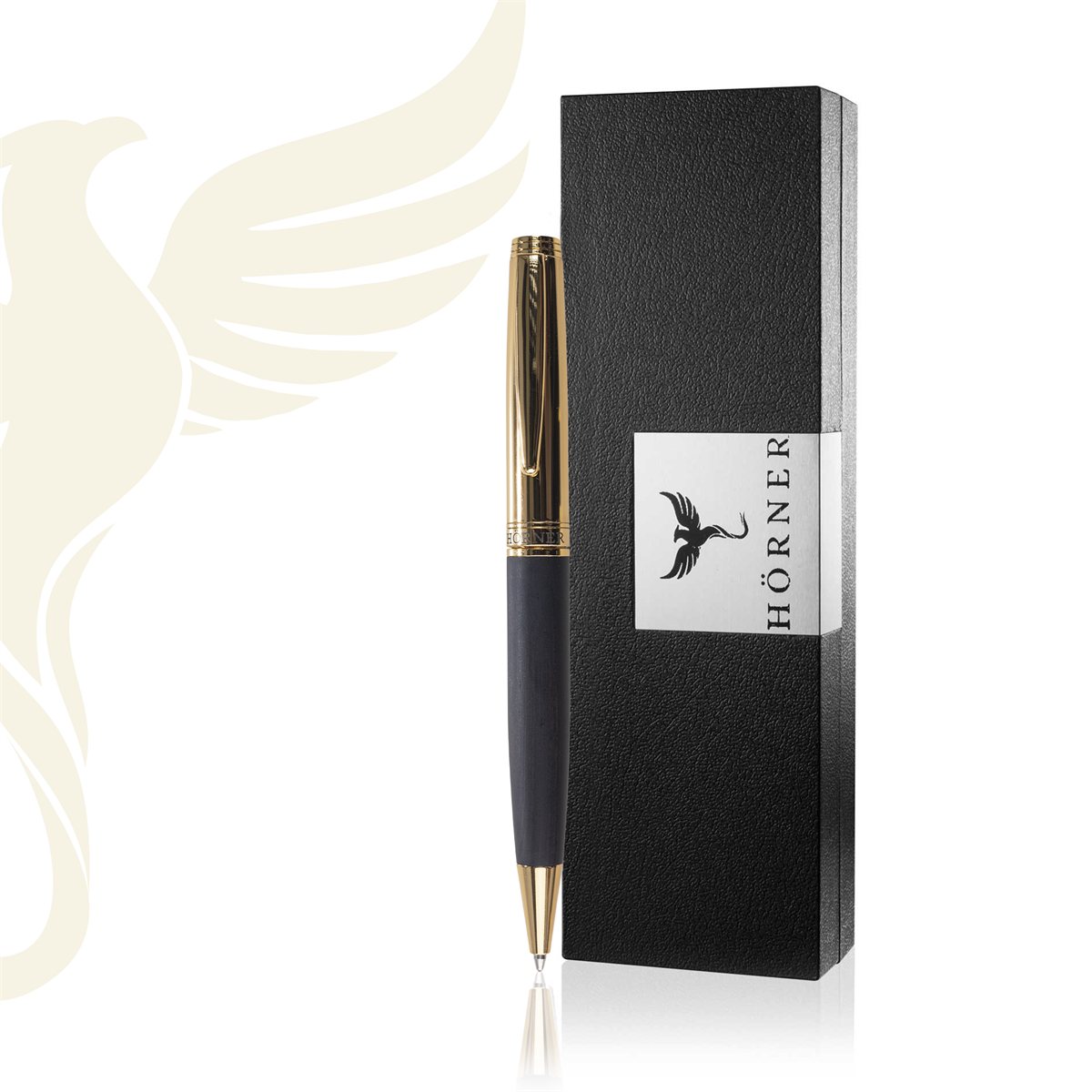
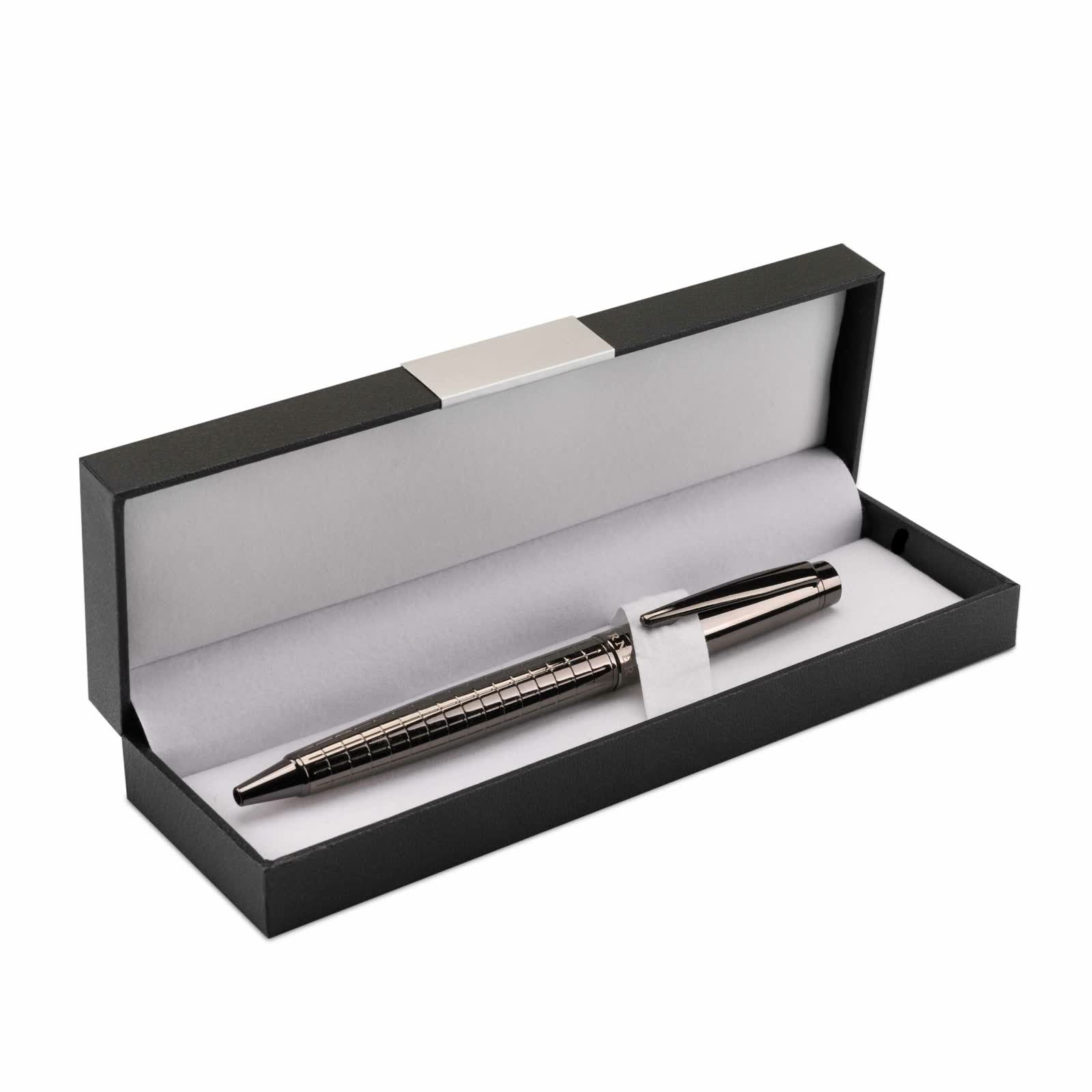
If you want the cleanest result with the least thought, take a ballpoint. The oil-based ink dries almost on contact, so it sidesteps the smearing problem before it starts, and a solid metal or wood body gives a left hand something balanced to push. It is the pen we would point most left-handers to first.
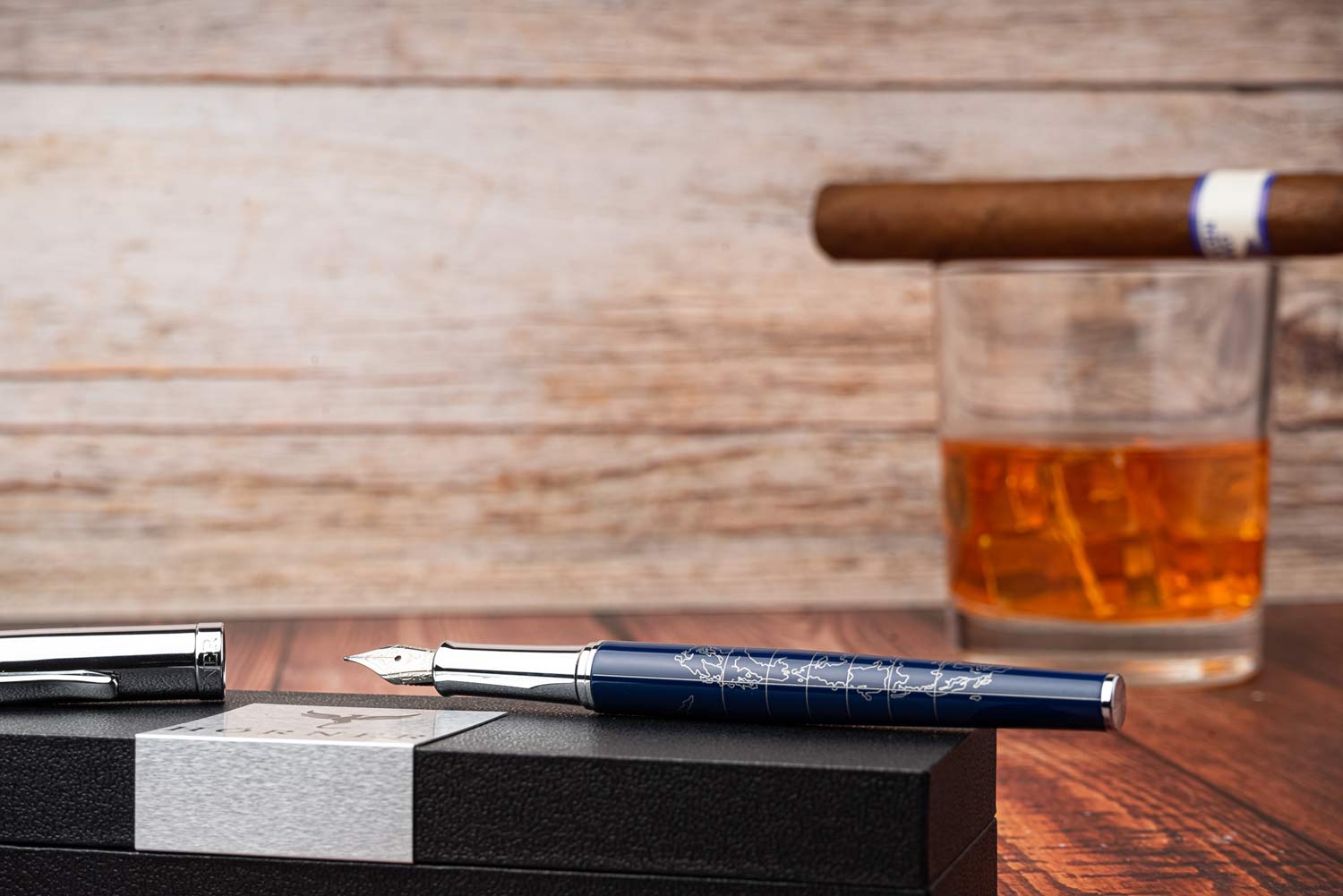
If you love a fountain pen, our fountain pens pair a smooth German JoWo medium nib with the cartridge and converter system. The medium nib glides on the push rather than catching, which is the part lefties tend to struggle with, and the trade-off, a slightly wetter line, is handled by our own fast-drying bottled ink, which suits a left hand, and a turned page. Most Hörner pens can also be engraved, which makes one a lasting gift for the left-hander in your life.
Whichever you choose, it is a traceable pen from a named retailer with duties prepaid, not an anonymous import, so what writes clean today keeps writing clean for years.