Watch crystals: sapphire, mineral or acrylic?
The crystal is the clear cover over a watch dial, and the one part you look through every time you check the time. It comes in three materials, and they behave very differently: one resists scratches, one resists impacts, and one resists nothing but never breaks. Knowing the difference is the difference between a watch that ages well and one that does not. Here is how they compare.
Watch crystals come in three materials. Sapphire is the hardest and clearest, almost scratchproof, but pricier and a little brittle. Mineral glass is the tough all-rounder, more impact-tolerant and cheaper, though it scratches more easily. Acrylic is soft and scratches readily, but it polishes out, never shatters, and costs the least. Match the crystal to how you wear the watch, not to a hardness ranking alone.
Three crystals, at a glance.
A watch crystal is the transparent disc protecting the dial. Despite the name, only one of the three common types is an actual crystal. Each has a clear personality.
Sapphire is synthetic sapphire, the hardest of the three and almost impossible to scratch in normal wear, which makes it the choice for watches you want to keep looking new. Mineral glass is hardened glass that takes an impact better than sapphire and costs far less, the sensible middle ground. Acrylic is essentially a clear plastic: soft and easily scuffed, but it never shatters and any scratch polishes right out.
There is no overall winner, only the right fit for how you live with the watch. The rest of this guide takes each in turn, then helps you choose.
| Crystal | Scratch resistance | Impact resistance | Cost |
|---|---|---|---|
| Sapphire | Excellent (Mohs 9) | Lower, can crack | Highest |
| Mineral glass | Moderate (Mohs 5 to 7) | Good | Low |
| Acrylic | Poor, but polishes out | Excellent, never shatters | Lowest |
Sapphire: hardest and clearest.
Sapphire crystal is grown synthetically from the same material as the gemstone, and it sits near the very top of the hardness scale.
On the Mohs scale it rates 9, second only to diamond at 10. In practice that means the everyday things that scuff other crystals, keys, coins, a desk edge, a stone wall, simply do not mark it. A sapphire watch can look new for decades. It is also usually treated with an anti-reflective coating, on one or both sides, so the dial reads clearly with very little glare.
The trade-offs are two. It is the most expensive crystal to make and to replace. And hardness is not the same as toughness: sapphire is harder than mineral glass but more brittle, so a sharp, concentrated impact that mineral glass would survive can chip or crack it. For a dress watch or a daily wearer, those are easy trade-offs to accept.
Hardness resists scratches; toughness resists breaks. Sapphire wins the first and concedes a little of the second. That single fact explains the whole comparison.On watch crystals
Mineral glass: the tough middle ground.
Mineral glass is ordinary glass that has been hardened, often by heat or chemical tempering, and it is the most common watch crystal for good reason.
It rates roughly 5 to 7 on the Mohs scale, so it scratches more easily than sapphire. But it makes up for that with toughness: a hardened mineral crystal flexes and absorbs a knock that might crack sapphire, which is why it is a smart pick for a sport or everyday watch that lives an active life. It is also far cheaper to replace if it does get marked or chipped.
The main visible difference is glare. Mineral glass is less often anti-reflective coated, so it catches and bounces more light than a coated sapphire crystal. For many people that is a fair price for a crystal that takes a beating and costs little to fix.
Acrylic: soft but shatterproof.
Acrylic crystal, also called plexiglass or by the trade name Hesalite, is essentially a clear, hard plastic. It is the softest of the three, and the toughest in one specific way.
It scratches the most readily of any crystal, so an acrylic watch picks up fine swirls over time. The saving grace is that those scratches polish out completely with a dab of plastic polish and a cloth, something neither glass crystal allows. And acrylic does not shatter: under a hard blow it deforms rather than breaking into shards.
That safety is exactly why NASA chose acrylic for the watches worn on its space missions, where a shattered glass crystal floating in a capsule would be a hazard. Acrylic is also the cheapest crystal by far, and it gives vintage and tool watches their warm, gently domed character. The one long-term downside is that it can yellow slightly after many years of UV exposure, though a replacement costs very little.
The single idea that makes sense of all three: a hard material resists scratches, a tough material resists breaking, and they are not the same property. Sapphire is hard but relatively brittle. Acrylic is soft but nearly unbreakable. Mineral glass sits in between on both. Pick the property that matches the risks your watch actually faces.
Which crystal should you choose?
Do not just chase the hardest material. Choose the crystal whose strengths match how and where you actually wear the watch.
For a dress or daily watch, sapphire is the natural choice. You are unlikely to subject it to a sharp impact, and its scratch resistance keeps the watch looking new for years of office and everyday wear.
For a sport, outdoor or knockabout watch, hardened mineral glass is often the smarter pick. It tolerates the bumps and drops that active use brings, and replacing it if needed costs little.
For a vintage, tool or budget watch, acrylic earns its place. It is shatterproof, cheap, easy to refinish at home, and gives the watch a period-correct look. The scratches are part of the deal, and they buff away.
In short, the right answer follows the wrist, not the hardness chart.
How to tell them apart.
If you are not sure what your watch has, a few simple checks usually give it away, no tools required.
The water-drop test. Place a small drop of water on the crystal and tilt it. On sapphire the drop stays tight and beaded; on mineral glass and acrylic it spreads out more.
The tap test. Tap the crystal lightly against a fingernail or a tooth. Sapphire and mineral glass sound hard and glassy. Acrylic sounds duller and feels noticeably warmer to the touch, because it is plastic.
The look. Fine surface swirls usually mean acrylic. A crystal with almost no glare and a faint blue or violet tint at an angle is likely anti-reflective sapphire. A clear but more reflective face is typically mineral glass. None of these is foolproof alone, but together they point you to the answer.
Caring for a watch crystal.
Each crystal asks for slightly different care, and none of it is demanding.
Sapphire needs little beyond a wipe with a soft cloth. It will not scratch in normal wear, but because it is brittle, avoid sharp knocks against hard corners. Mineral glass is similar to live with; a light scratch can sometimes be reduced, and a deeper one is an inexpensive replacement. Acrylic is the most hands-on and the most forgiving: surface scratches buff out at home with a plastic polish, so it always comes back clear.
For any crystal, keep the watch away from prolonged direct sun and hard impacts, and have a cracked or deeply marked crystal replaced with the same material it came with. That last point matters more than upgrading, since the crystal is matched to the case and the look of the watch.
The crystal in a Hörner watch.
Our two watch lines, designed in Dresden, make the choice in this guide concrete: each uses the crystal that fits what the watch is for.
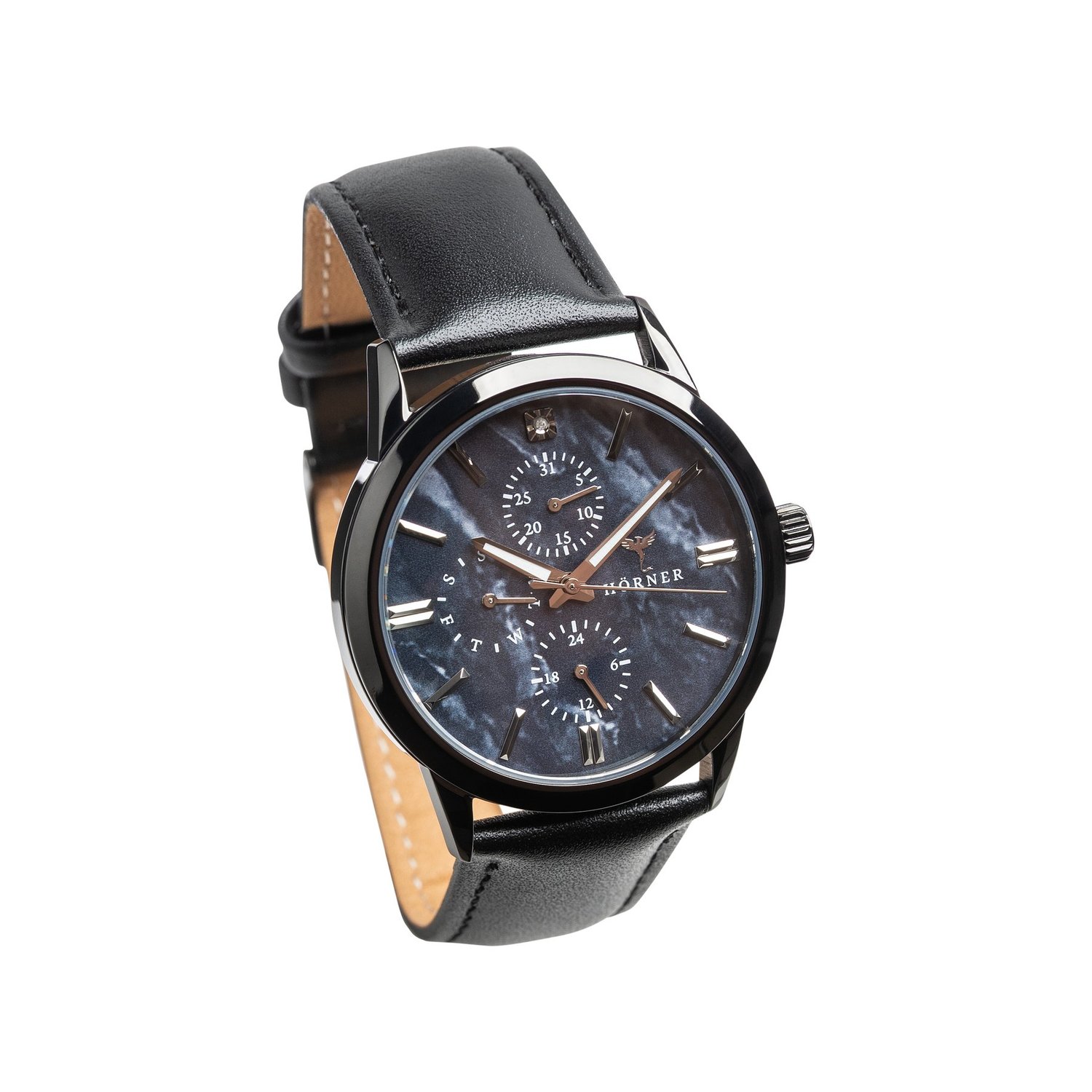
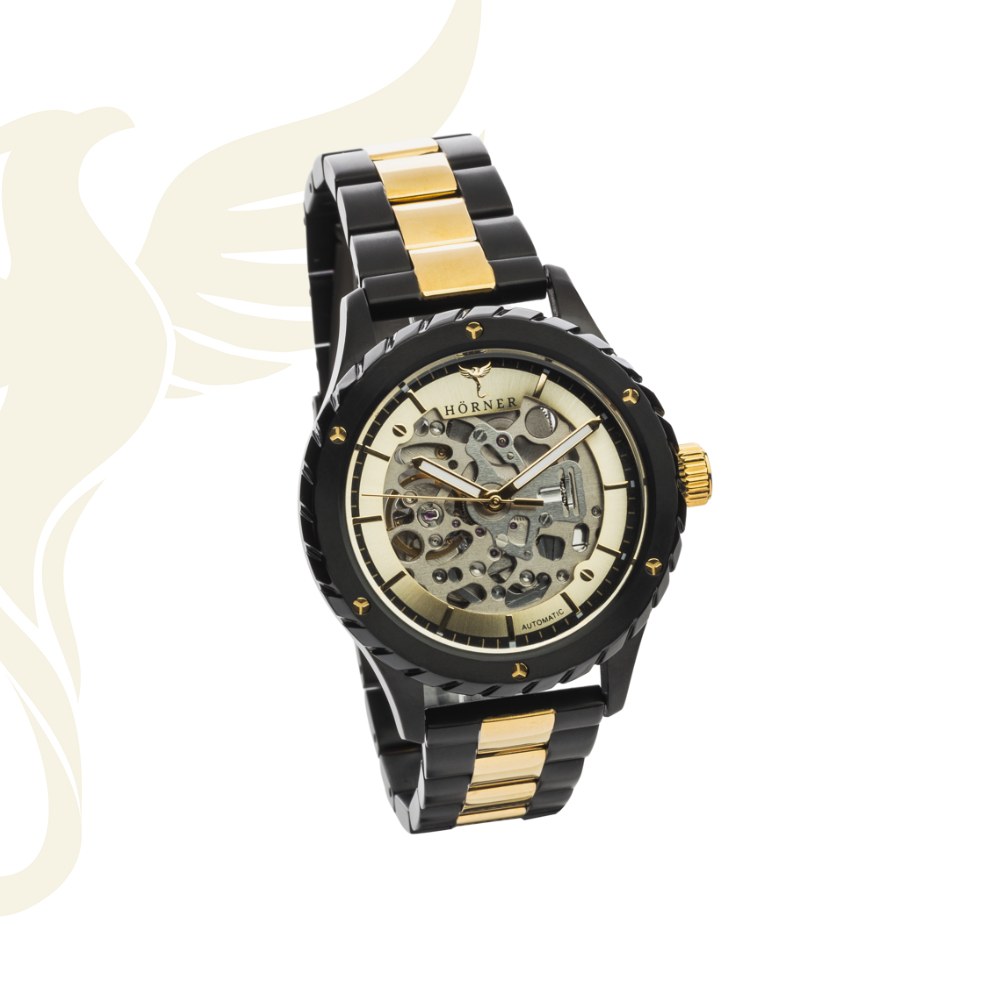
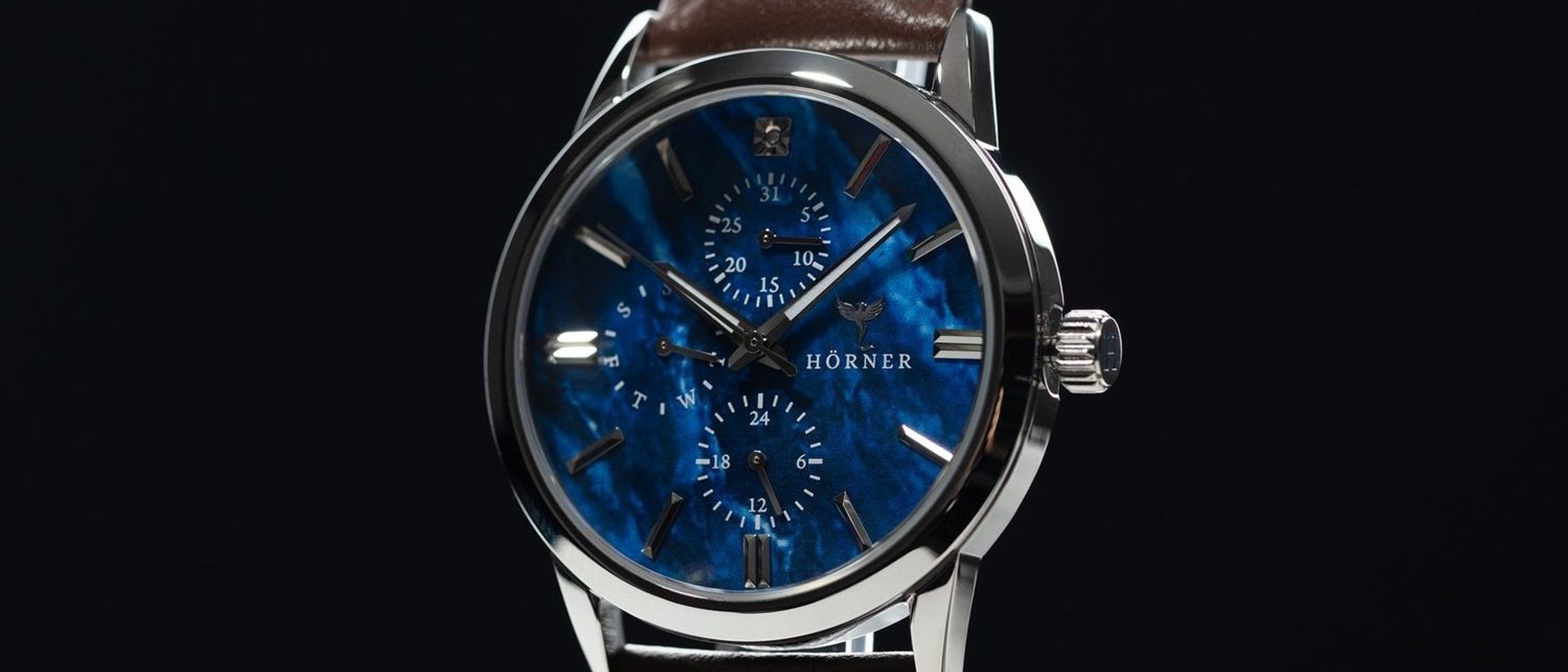
The Hörner Nova is a quartz dress watch, so it wears a sapphire crystal with anti-reflective coating. It is the watch you keep clear and scratch-free through daily wear, exactly the case sapphire is made for. The Pulsar is a skeletonized automatic with its movement on display, and it uses hardened mineral glass on purpose: the tougher, more impact-tolerant crystal suits a watch built to be worn and moved in.
Same brand, two deliberate choices, for the same reason this guide lays out: the best crystal is the one matched to the watch. Both are stainless steel, both shipped with duties prepaid. The crystal is only one of five marks of quality; our guide on how to spot a good watch walks through all five, from the movement to the finishing.