How to start journaling, and actually keep it up.
Journaling is easy to start and just as easy to let slide. Here is why the habit is worth the trouble, how to write your first honest entry tonight, which methods actually hold up, and why the pen in your hand matters more than the notebook you chose.
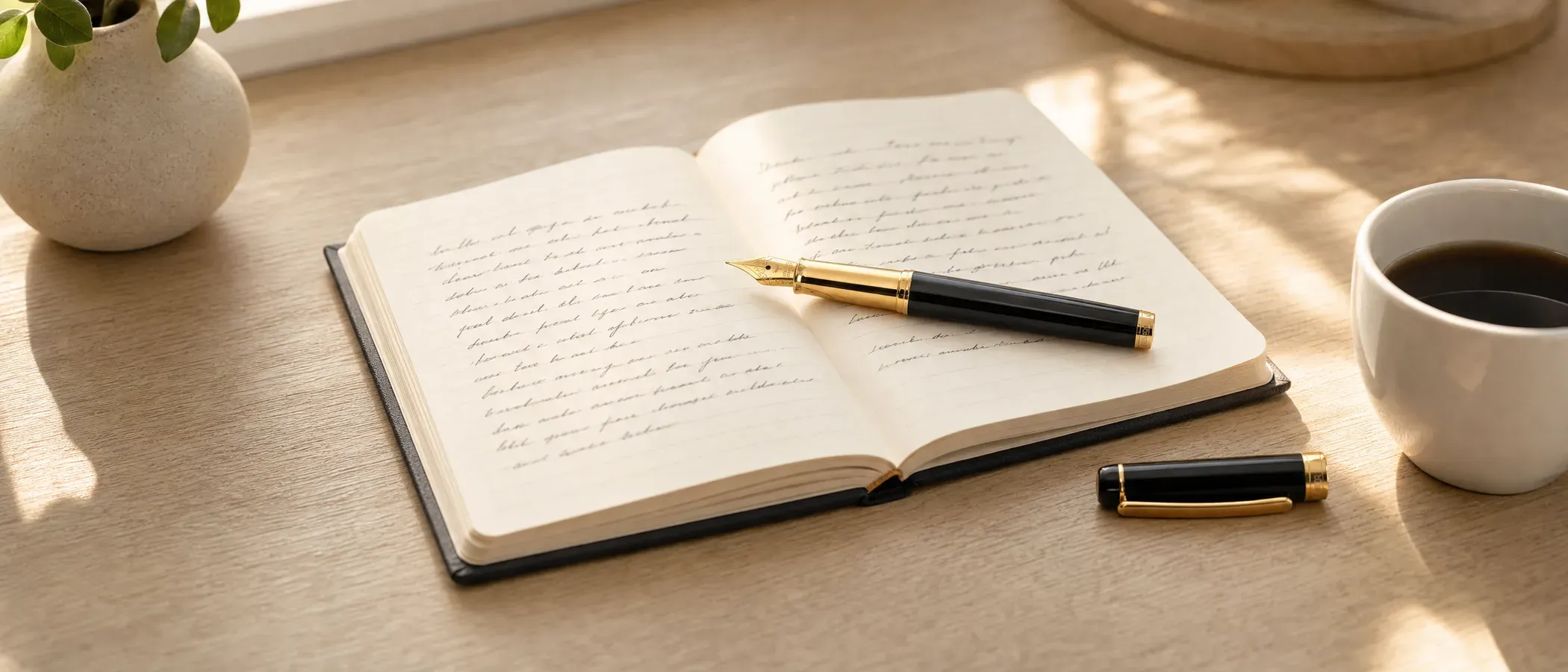
Journaling means regularly writing down what happened and what you thought about it, and research on expressive writing has found a small but real benefit from as little as 15 to 20 minutes over a few days. The easiest way in is a fixed time, a simple method, and a pen you actually enjoy using. The hard part isn't day one, it's a few weeks in, which is a consistency problem, not a writing problem.
Why journaling actually helps.
A journal is more than a record of your day. It's a place to think, remember and sort things out, and that's exactly where its value sits.
Three reasons keep coming up. First, memory: what's written down survives, what isn't quietly fades. Second, reflection: putting a day into words again tends to surface patterns, progress and open questions you'd otherwise miss. Third, release: for a lot of people, a journal functions as a quiet listener for whatever nobody else is hearing.
A few more jobs come up just as often. A journal is where a goal gets tracked and actually followed through, since a goal written down is harder to quietly drop than one left in your head. It's also where a good idea gets caught before it disappears, and where a hard decision gets thought through on paper instead of circling in your mind. Read back over old entries and mood patterns tend to surface too, the kind of thing that's invisible day to day but obvious in hindsight.
The benefit goes beyond feeling good, according to the research. Psychologist James Pennebaker had people write about difficult experiences for 15 to 20 minutes across four consecutive days. They went on to make fewer visits to the doctor, and a 2006 review of 146 studies found a small but real benefit across the research. What mattered wasn't elegant prose, it was writing honestly, without a filter.
What matters here isn't whether a sentence sounds good, it's whether it's true. A journal is the one piece of writing nobody grades.Aus der Praxis · Andre Hörner
How to start.
The blank page is the biggest obstacle. It shrinks fast once you lower the bar and settle three things in advance:
- When? A fixed time carries the habit. The evening, right before bed, is the classic choice, because the day is already effectively over.
- With what? A notebook you like opening, and a pen that moves across the page without effort. Liking your tools makes you more likely to pick them up.
- About what? One question is enough to start: what was today's best moment, and what was the hardest one?
Let go of the idea of a polished entry entirely. The first one is allowed to be rough, it only has to exist. Three honest sentences are a complete journal entry.
Write exactly three sentences: one about what happened today, one about how it felt, one about what you're looking forward to tomorrow. That's the whole assignment. Build from there once writing has become automatic rather than an effort.
The methods worth knowing.
If you don't need structure, write freely. If you do, these methods give an entry a clear shape, they mainly differ in time and purpose.
| Method | How it works | Time |
|---|---|---|
| Free-form | Write out the day in your own words, no structure | flexible |
| 3-3-3 method | Three things you're grateful for, three that went well, three goals | a few minutes |
| Morning Pages | Three full pages, written freely, right after waking | 15-20 minutes |
| Five-minute journal | Fixed prompts, morning and evening, deliberately brief | under 5 minutes |
| Bullet journal | Short, symbol-marked entries combining journal, to-do list and calendar | variable |
The 3-3-3 method is a fast route to quick reflection. Morning Pages, from Julia Cameron's The Artist's Way, clear the mind first thing in the morning through unfiltered, free writing. The five-minute journal lowers the bar almost to zero with ready-made prompts.
Some people skip a general journal and keep one with a single job instead. A gratitude journal only logs what you're thankful for, a travel journal follows one trip day by day, and a reading log is a line or two on every book you finish. Any of the methods above work just as well inside one of these, the label just narrows the subject.
Prompts, for when nothing comes.
When a day feels too ordinary to write about, a prompt almost always gets things moving:
- What was the best moment of today, and what was the hardest?
- What am I grateful for right now, and who's behind it?
- What did I learn today, about the world or about myself?
- What am I a little nervous about, and what's the next small step?
- If I read this back in a year, what should I know about today?
A journal doesn't have to be text at all. Photos, a ticket stub, or a quick sketch often capture a memory more precisely than words. You can also shift perspective: write to your future self, or write a letter you'll never actually send. Whatever helps is fair game.
The only real mistake is thinking there's a right way to do it. A journal you actually want to open is already doing its job.Aus der Praxis · Andre Hörner
Sticking with it, past the first week.
The hard part comes a few weeks in, not at entry one. A few unglamorous habits close that gap:
- Anchor it to something you already do. Write right after the same daily habit, an evening cup of tea works well, so the trigger reminds you automatically.
- Keep the bar low. On a full day, three lines count exactly as much as a full page. Brevity isn't failure.
- Leave your tools visible. A notebook and pen on the nightstand get used far more than ones tucked in a drawer.
- Keep it within reach during the day. A notebook in your bag or a note open on your phone catches a stray thought before it's gone, instead of asking you to remember it by evening.
- Let gaps happen. A skipped day isn't a broken streak. Just pick back up the next one, without treating the pause as a failure.
That last point matters most. Perfectionism is what quietly silences a journal. A journal doesn't ask for your best work, only your presence.
Paper, screen, and the pen that matters.
Notebook, loose pages, or an app: the best medium is whichever one you'll actually use. Digital is fast, searchable, and always within reach. Writing by hand is slower, and that slowness often helps reflection, since thoughts get a moment to settle before they're down on the page. Many people also find a paper journal feels more personal and calmer to return to.
If you mostly write on the go, digital deserves as much credit as paper. A plain notes app is enough if you just want entries saved and searchable. A dedicated journaling app adds prompts for stuck days, reminders, and a dated timeline instead of a folder of loose notes.
The page format is worth a moment's choice too. Lined suits anyone who mainly writes in sentences, dot grid adds light structure for lists or a quick sketch, grid suits habit tracking, and blank pages give total freedom, which some people love and others find harder to face. A plain notebook lets you write on your own schedule, while a dated daily planner builds the date in for you, though a skipped dated page stays visibly empty, which discourages some people more than it motivates them. Size follows the same logic: pocket-sized travels easily, A5 gives more room to write and tends to stay on a desk rather than in a bag.
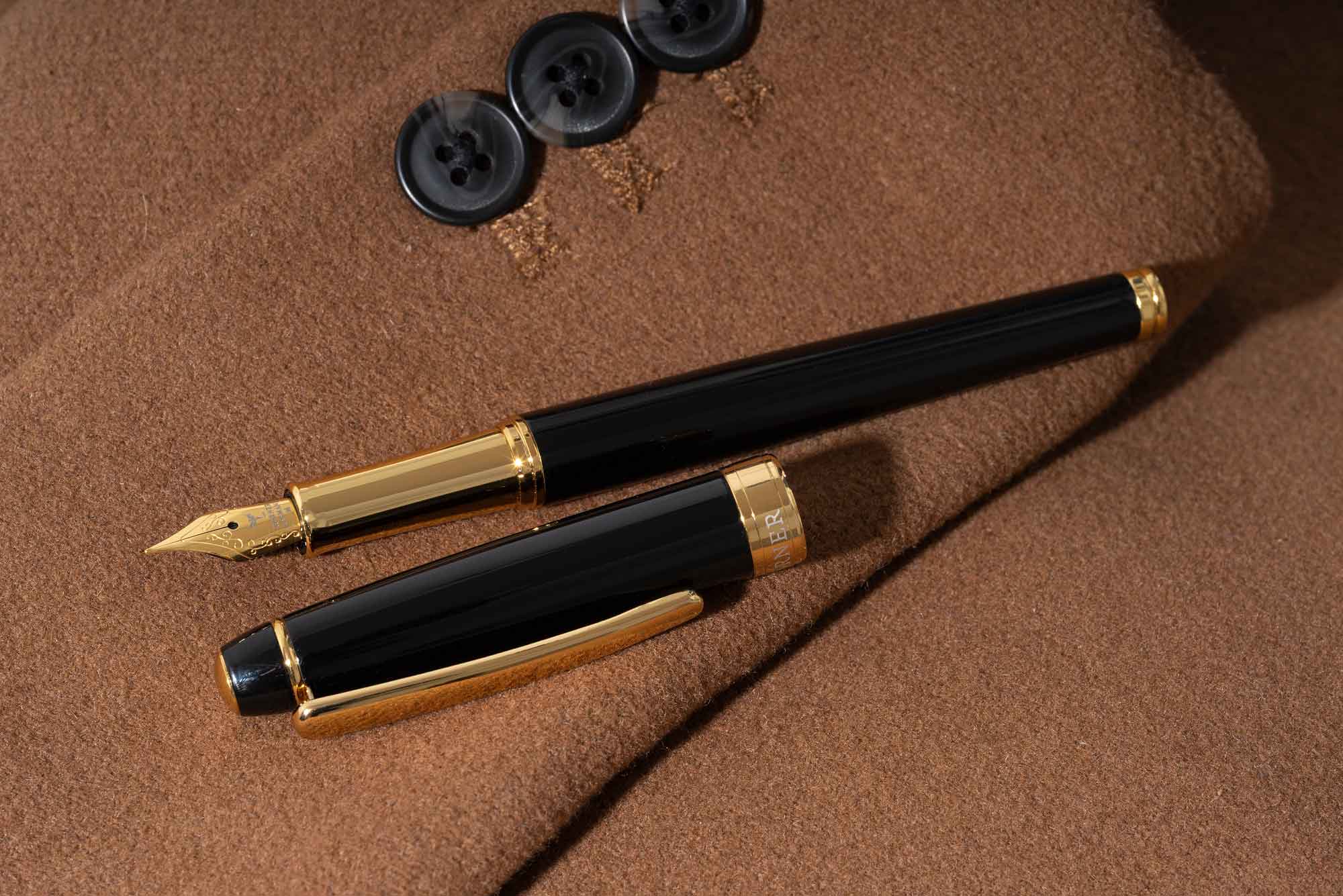
If you land on paper, you'll quickly notice how much the pen matters. A pen that moves without pressure and sits well in the hand turns a few minutes into a small, deliberate pause in the day. A fountain pen makes that pause the most deliberate; a good ballpoint or rollerball is the simpler, always-ready companion for writing on the go. With a fountain pen, smooth paper that doesn't feather or bleed through matters more than how the cover looks.