Housewarming gifts that survive the first year.
The problem with housewarming gifts is that you are buying for a house you have not seen, for people whose taste in furniture you have never had to know. This guide gives you three principles that avoid that trap, what to spend by relationship, thirteen ideas from practical to personal, and the short list of things not to bring.
Good housewarming gifts are consumable, genuinely useful, or specific to these people. Decorative objects are the trap, because they need their taste, their colors and their measurements. Spend $20 to $50 for friends and neighbors, $50 to $100 for close family, and if there is no party, wait two or three weeks until the boxes are gone.
What do you bring? Three principles.
Bring something they will use up, something they will use, or something that could only be for them. Almost every good housewarming gift is in one of those three categories, and almost every bad one is a decorative object.
The reason is structural rather than a matter of taste. A housewarming gift is bought for a room you have not stood in, for a color scheme you have not seen, in a house whose owners are still deciding what it is going to look like. Anything that has to match, fit or suit is a guess made with almost no information, and the recipient then has to display it or explain why they have not.
The three categories all sidestep that.
| Category | Why it works | Examples |
|---|---|---|
| Consumable | Cannot clash with anything, and creates no obligation to keep it | Wine, olive oil, coffee, a food delivery, good candles |
| Useful | Judged on function, so your taste never enters the room | Tools, knives, a fire extinguisher, a ladder, a good doormat |
| Theirs alone | Personal by construction, so it cannot be the wrong style | Anything engraved with the closing date, their initials or their name |
If a gift is in none of those three, ask what happens if they do not like it. With a bottle, nothing. With a rug, a problem that lasts years.
What to spend, and who decides it.
The figure is set by your relationship to the people, not by the house. This is worth saying because a large or expensive home tends to pull people upward, and it should not: the gift is for the household, not a response to the property.
Etiquette coverage converges on roughly $20 to $50 for friends, neighbors and coworkers, and $50 to $100 for close family and closest friends, with the consistent caveat that nobody should spend more than is comfortable. A first home moved into by people who have just been emptied out by closing costs is a case for practical over impressive.
| Your relationship | Usual range | What it buys well |
|---|---|---|
| Coworker or new neighbor | $20 to $40 | A good bottle, a hardy plant, proper candles, a local gift card |
| Friend | $30 to $60 | Kitchen equipment, a decent tool, a food delivery, an engraved keyring |
| Close friend | $50 to $100 | Something they mentioned wanting, or a service they now need |
| Close family | $50 to $100 | The unglamorous large item, or a contribution toward one |
| Group gift from an office | Whatever it comes to | One good thing rather than four small ones. Pooling is the advantage. |
One note about groups: a pooled gift should buy a single item, not a basket of unrelated small ones. Four people spending $25 each can buy something genuinely good; the same money spent separately produces four things that each individually fall short.
Bread and salt, and where it comes from.
The oldest housewarming gift in the European tradition is bread and salt: bread so the household never knows hunger, salt so that life always has flavor. In some tellings a coin is added so the house is never poor, or a candle so it always has light.
Many Americans know it without knowing they know it, from the scene in It's a Wonderful Life where the Martini family is welcomed into their new home with exactly that. It is the reason the custom reads as familiar rather than foreign even to people with no European family connection.
What makes it a genuinely good gift rather than a piece of folklore is the economics: it costs almost nothing, it cannot be the wrong style, it explains itself in one line, and it gets remembered for years. A good loaf, a nice salt, and a card that says what they are for.
A gift that costs eight dollars and gets retold at dinner parties is outperforming most of what people spend a hundred on.Aus der Praxis · Andre Hörner
If you want to build on it, the modern extension is the same idea with more of the pantry: good oil, good vinegar, decent coffee, a jar of something local. It stays consumable, which keeps it in the safest of the three categories, and it fills the specific gap a new kitchen has on day one.
The right gift for your part in it.
| Who you are | What works | What to avoid |
|---|---|---|
| Parent or close family | The expensive unglamorous thing they will not buy themselves: a good ladder, a proper toolkit, a contribution to an appliance | Furniture. It is the one category where the taste gap does the most damage. |
| Close friend | Something specific they have complained about lacking, or a service: cleaners for a day, a locksmith visit | An in-joke object that has to live somewhere visible. |
| Neighbor | Something consumable plus your phone number and what you can help with. The gift is the offer. | Anything that implies an assessment of the house. |
| Coworker | A bottle, a plant, a good local gift card. Keep it light and unfussy. | Anything personal enough to be strange in a work context. |
| Attending as a guest of a guest | Bring something for the evening: wine, flowers, dessert. You are a party guest, not a housewarming gift-giver. | Over-giving to compensate for not knowing them. |
| Not attending | Something consumable that keeps, plus a named date when you will visit | An apology in place of a plan. |
The neighbor row is the one worth taking seriously. For someone who has just moved into a street where they know nobody, a note with a name, a house number and a sentence about what you can help with is worth more than the bottle it came with.
Thirteen ideas, practical to personal.
Sorted roughly from the most useful to the most personal. Most of these are not things we sell, which is deliberate: a housewarming is not a stationery occasion, and a guide that pretended otherwise would be useless to you.
| The gift | Why it lands |
|---|---|
| A fire extinguisher | Nobody buys one for themselves and everybody should have one. Unromantic, genuinely responsible, remembered. |
| A proper toolkit | First homes run on borrowed tools for a year. A decent set ends that on day one. |
| Good kitchen knives | The single most-used object in a house, and the one most people underbuy for a decade. |
| A serious doormat | Cheap, used every day, and the thing people forget until it rains. |
| A hard-to-kill plant | Snake plant, pothos, ZZ. Say which it is and that it forgives neglect. |
| Bread, salt and a good oil | The tradition, updated. Consumable, explains itself, costs little. |
| A local gift card | The hardware store, the garden center, the restaurant three streets away. Specific reads as thought. |
| A cleaner for a day | After a move, the most valuable thing anyone can hand over is a day of not doing something. |
| Good lighting | A decent lamp changes a room and moves house. Rental-safe, unlike anything that needs a drill. |
| A house-shaped meal | Dinner delivered on the second evening, when the novelty has worn off and the kitchen is still boxes. |
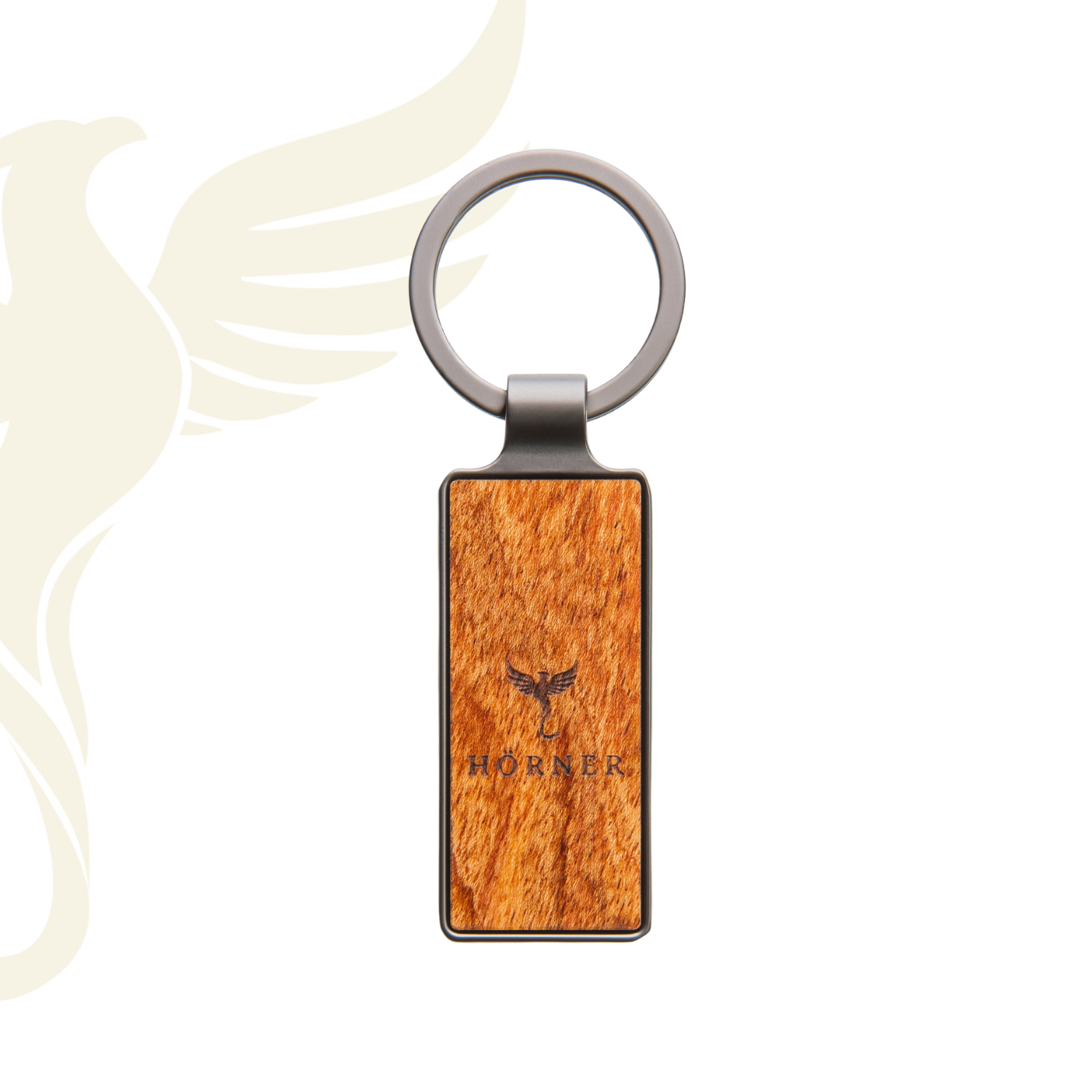
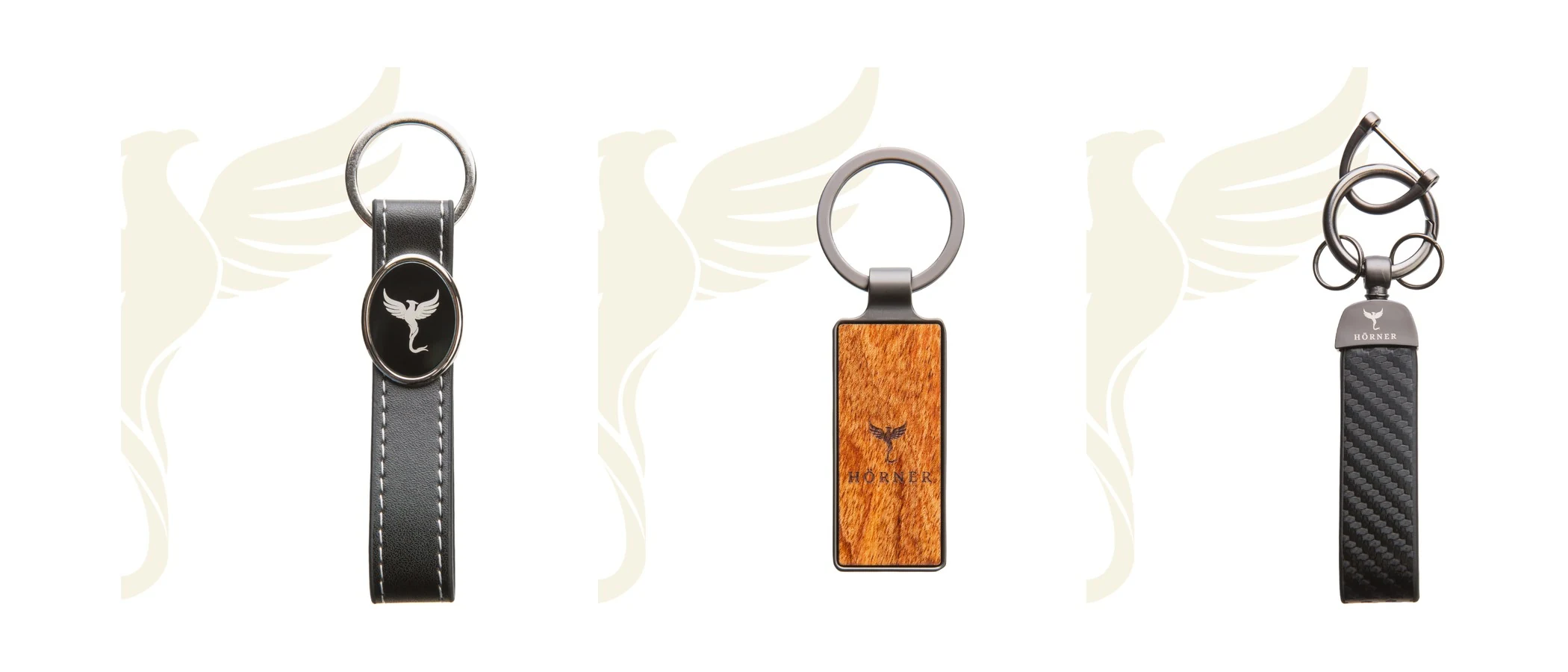
| An engraved keyring | The most predictable gap of the lot. New keys usually arrive on something disposable. |
| A framed map or print of the street | Personal without needing their taste, because the subject is the house itself. |
| A guest book for the new place | Cheap, slightly sentimental, and genuinely good ten years later. |
If you scan that list for a pattern: the strongest entries are either things that get consumed, things that get used weekly, or things that are about this specific address. Nothing on it requires knowing what color the living room is going to be.
The one thing every new home needs.
Here is the one place where our own catalog genuinely belongs on this page, so it gets a chapter and not a mention in every other one.
New keys tend to arrive on something disposable. A builder's split ring, a plastic fob from the realtor with an office logo on it, a paper tag with the lot number. Most new homeowners replace that within the first month or two, and almost none of them plan to. It is the most predictable gap in the whole occasion.
An engraved keyring fills it, and it sits in the third category from the first chapter: personal by construction. Engraved with the date of the closing, it cannot clash with a color scheme and cannot be the wrong style, because the subject is the move rather than the decor.
One thing to get right, and it is the reason we say the date rather than the house. Do not engrave the address. A keyring carries keys. A lost keyring marked with the street it opens hands a stranger both halves at once, which is the same reason our guide to keyrings argues against coordinates. The closing date is just as specific to this house and gives nothing away to anyone who finds it.
Two practical notes beyond that. Buy it in a pair if two people are moving in; one engraved keyring and one person without is an odd result. And keep the engraving short. A date and a set of initials outlasts a sentiment, and it is what still reads well when they have moved again and kept it anyway.
Hand it over with the card rather than in a bag with everything else, and say what the engraving refers to. Engraved gifts are the ones that get properly looked at only if someone points at them, and the date on the back is usually the part that gets missed.
Making it yourself.
Homemade housewarming gifts have a good hit rate, provided they stay inside the same three categories. Consumable and useful both translate directly; decorative still does not, and a handmade decorative object is harder to decline than a bought one.
What works: a box of pantry staples put together properly, a jar of something you actually make well, a printed and framed map of their street, a booklet of the neighborhood recommendations you would give a friend, a set of labeled keys with a hand-drawn plan of which one opens what. That last one sounds trivial and is repeatedly the most used gift in this whole guide.
What to be careful with: anything that has to be displayed, anything that carries an obligation to use it in front of you, and anything perishable that arrives while the fridge is still in a van.
What to write in the card.
Congratulate them on the house, then write about the people rather than the property. The most common housewarming card is four lines about square footage, which is a strange thing to keep.
| Situation | Message |
|---|---|
| Always correct | "Congratulations on the keys. Wishing you both many good years in it." |
| A first home | "Congratulations on the first one. May everything that breaks in it be cheap and easy to reach." |
| With bread and salt | "Bread so you are never hungry, salt so it always has flavor. Congratulations on the house." |
| To a neighbor | "Welcome to the street. We are at number [x], the wifi password is on the back of this card, and the trash goes out Thursday." |
| After a hard move | "You made it. May this be the last time either of you touches a box for a very long while." |
| With an engraved gift | "For the new keys, so they stop living on that plastic thing from the realtor. Congratulations." |
The neighbor line is only partly a joke. Practical information handed to somebody in their first week somewhere unfamiliar is a real gift, and it is the one nobody else on the street thought to give.
What you'd better not bring.
| Better left | Why |
|---|---|
| Art and bold decor | Requires their taste, their colors and their wall. The highest-risk category by a distance. |
| Rugs, cushions, curtains | Same problem plus measurements. Nobody can guess these. |
| Anything strongly scented | Candles are fine; a scent someone dislikes in a small home is a problem they cannot escape. |
| Pets | A ten-year commitment is not a gift you get to choose on someone else's behalf. |
| Anything needing assembly on the day | The last thing a moving week needs is a task in a box. |
| Large furniture without asking | Even when generous, it dictates a room they are still working out. |
| A gift given during the move itself | Nothing has a place yet. Two or three weeks later it gets enjoyed rather than stacked. |
The through line is the same as the opening principle. If a gift needs to fit into a house that does not exist yet in its final form, it is a guess. If it gets eaten, used, or is marked with the day they got the keys, it does not.